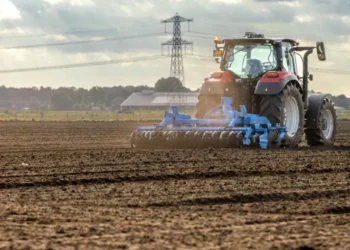
For many UK arable farms, machinery fleets represent substantial capital investments with years of productive life remaining. Tractors, sprayers, and implements built over the past decade often remain mechanically sound, but lack the precision agriculture capabilities increasingly viewed as essential for competitive farming. This creates a strategic question: replace serviceable equipment at considerable expense, or retrofit modern precision systems to extend technological capability while preserving capital?
Research and industry experience increasingly demonstrate that precision agriculture retrofitting delivers compelling economics for operations with mid-life equipment fleets. Understanding the investment requirements, realistic return expectations, and implementation considerations helps farms evaluate whether retrofitting represents a viable pathway to modern precision agriculture capabilities.
The Economic Case for Retrofit Technology
Studies indicate GPS-guided tractors can reduce operational overlap by up to 90%, resulting in substantial fuel and time savings. Tractor guidance systems can be profitable for small farms and improve efficiency gains by 20 percent. These documented efficiency improvements translate directly to reduced input costs and improved operational economics.
According to National Precision Agriculture Research Foundation studies, farms implementing comprehensive GPS farming systems report average annual savings of 8-12% on fuel and input costs within the first operational year. When applied to typical UK arable operations, these savings can substantially offset retrofit investment costs within reasonable timeframes.
The retrofit approach addresses a fundamental farm economics challenge. New tractors with factory-fitted precision systems typically cost £150,000 to £300,000 depending on specification and horsepower. For farms operating 10 to 15-year-old tractors with 4,000 to 6,000 hours (roughly mid-life for well-maintained equipment), replacement represents significant capital deployment that may not be economically justified based solely on mechanical condition.
Retrofit precision systems, in contrast, represent a more modest investment compared to complete equipment replacement. This investment disparity creates opportunity for farms to access precision agriculture benefits while preserving capital for other operational needs.
Core Retrofit Technologies and Investment Requirements
Precision agriculture retrofitting typically centres on three core technology categories, each addressing specific operational inefficiencies and providing measurable economic returns.
AutoSteer Guidance Systems
GPS guidance systems represent the foundation technology for precision agriculture retrofitting. These systems use satellite positioning to steer tractors and self-propelled equipment along predetermined paths with centimetre-level accuracy, eliminating the overlap and gaps that occur with manual steering.
John Deere offers precision agriculture hardware including G5 Plus Universal Display with a 32.5 cm touchscreen and full AEF ISOBUS compatibility, plus StarFire 7500 Universal Receiver with SF1 correction signal for accuracy within +/-15 cm, priced at €2,990 (approximately £2,550 at current exchange rates). This package provides entry-level precision guidance suitable for most arable operations, though annual feature licences (ranging from €1,490 to €2,990) are required to activate guidance and advanced functionality.
Higher accuracy systems using RTK (Real-Time Kinematic) correction signals achieve 2.5cm accuracy but require either subscription services or investment in base stations. For most UK arable applications, mid-tier accuracy of 10 to 15cm proves sufficient for spraying, fertiliser application, and cultivation, reserving high-precision systems for operations like drilling where exact row placement matters.
Installation requires mounting GPS receivers on tractor roofs, installing cab display screens, and integrating steering control with existing hydraulic systems. Professional installation typically requires one to two days per tractor, with costs varying based on equipment age and hydraulic system compatibility.
The economic justification for guidance systems centres primarily on overlap elimination. Producer tests showed an average 3.3 percent overlap during planting operations and 7 percent overlap during spring tillage. These overlaps represent direct waste of inputs applied in previously covered areas, plus additional fuel consumption for covering ground multiple times.
Farms in the Upper Midwest U.S. employing autosteer experienced a 5.33% reduction in fuel consumption. Applied to a typical 400 to 500 hectare UK arable operation, this reduction represents meaningful annual savings. AHDB data shows dairy farmers are now paying an annual average of 80.84 ppl for red diesel in 2024 , providing a baseline for calculating fuel cost reductions.
Beyond measurable fuel savings, guidance systems provide operational benefits including reduced operator fatigue (enabling longer working days during critical periods), improved ability to work in low visibility conditions, and more consistent field patterns that support subsequent operations.
Yield Monitoring Systems
Yield mapping technology retrofits combine harvesters with sensors that measure and record crop mass flow, moisture content, and GPS position to create georeferenced yield maps. These maps reveal within-field yield variation that typically remains invisible when harvesting reports only whole-field averages.
Retrofit yield monitoring systems cost several thousand pounds installed depending on combine age and model. Installation requires mass flow sensors (typically impact plate or optical sensors mounted in the clean grain elevator), moisture sensors, GPS receivers, and display integration with existing cab electronics. Professional calibration ensures accurate yield measurement across different crop types.
The economic value of yield mapping is more indirect than guidance systems. Yield maps do not themselves reduce costs or increase yields, but provide data that informs management decisions capable of delivering both benefits. Documented yield variation within fields frequently exceeds 30% to 40%, revealing substantial differences in production potential that uniform management approaches cannot optimise.
Among corn farmers using precision agriculture technologies, those using yield mapping independently or with variable rate technology reported the largest cost savings (about $25 per acre). The UK context differs somewhat from US corn production, but the fundamental principle holds: understanding where fields perform well versus poorly enables more efficient input allocation.
Yield maps identify zones consistently underperforming despite adequate input applications, suggesting fundamental limitations (poor drainage, shallow soils, compaction) that no amount of additional inputs will overcome. Reducing inputs in these zones to levels matching realistic yield potential eliminates waste without sacrificing production. Conversely, maps identify high-performing zones where additional inputs may profitably increase yields further.
Variable Rate Application Controllers
Variable rate technology (VRT) enables equipment to adjust application rates section by section based on GPS position and pre-loaded prescription maps. This technology converts yield mapping data and soil sampling information into operational decisions, applying differential rates of seed, fertiliser, lime, and crop protection products according to documented field variation.
Retrofitting VRT capability requires controllers that integrate with existing equipment. Installation costs vary significantly based on equipment type and age, but represent meaningful investments that operations should evaluate against anticipated savings.
Growers report an average savings of about 15% on several crop inputs such as seed, fertilizer and chemicals when using precision farming technologies. For context, the average cost of fertiliser for wheat crops grown in 2022/23 (harvest 2023) was £432/ha according to AHDB data, though prices fluctuate based on global nitrogen markets.
The savings arise from multiple sources. VRT eliminates over-application in lower-potential zones where inputs exceed what crops can utilise productively. It prevents under-application in high-potential zones that previously received insufficient inputs to achieve full yield potential. Combined with guidance system overlap elimination, VRT substantially reduces total input consumption while maintaining or improving crop performance.
A study on potential impact of site-specific application implemented on larger farms in Denmark stressed how 3-5% savings in fertiliser and pesticide in cereals can be obtained in comparison to conventional application , demonstrating documented European performance supporting expected UK results.
Evaluating Retrofit Economics for Your Operation
While specific financial returns vary significantly based on individual circumstances, research provides frameworks for evaluating potential retrofit economics. The savings derive from multiple documented sources:
Input Cost Reductions: Tractor guidance systems can improve efficiency gains by 20 percent , primarily through overlap elimination and optimised field patterns. Growers report an average savings of about 15% on several crop inputs such as seed, fertilizer and chemicals when implementing comprehensive precision agriculture systems including variable rate technology.
For context, the average cost of fertiliser for wheat crops grown in 2022/23 (harvest 2023) was £432/ha according to AHDB data, though this has fluctuated significantly in recent years. Dairy farmers are now paying an annual average of 80.84 ppl for red diesel in 2024 , down from higher 2022-2023 levels. These input costs represent the baseline against which percentage savings apply.
Fuel Efficiency Improvements: Farms in the Upper Midwest U.S. employing autosteer experienced a 5.33% reduction in fuel consumption. Additional research shows farms using GPS navigation achieving average fuel consumption reductions of 6.32%. The fuel savings result from multiple factors including reduced overlap, optimised field patterns, and ability to maintain higher working speeds with precision guidance.
Overlap Reduction: Producer tests showed an average 3.3 percent overlap during planting operations and 7 percent overlap during spring tillage. This overlap represents direct waste of inputs applied in previously covered areas. Studies indicate GPS-guided tractors can reduce operational overlap by up to 90% , converting this waste into measurable savings.
Return on Investment Timeframes: According to National Precision Agriculture Research Foundation studies, farms implementing comprehensive GPS farming systems report average annual savings of 8-12% on fuel and input costs within the first operational year. These savings, applied against typical retrofit investment costs of £30,000 to £45,000 for comprehensive systems, generally produce payback periods of 3 to 5 years depending on operation scale and existing efficiency levels.
Calculating Your Potential Returns:
To estimate retrofit viability for a specific operation:
- Establish baseline input costs (fertiliser, crop protection, fuel consumption)
- Apply conservative percentage reductions based on documented research (8-12% for inputs, 5-7% for fuel)
- Calculate annual savings and compare against retrofit investment costs
- Account for farm-specific factors (field size, soil variability, current efficiency)
- Consider financing costs if using loans rather than cash purchase
Operations with higher baseline input costs, larger acreages, more variable soils, and significant existing overlap problems achieve faster payback. Smaller operations, farms already operating efficiently, and those with relatively uniform fields may experience longer payback periods or decide retrofit economics don’t justify investment.
Implementation Considerations and Success Factors
Research and industry experience identify several critical factors determining retrofit technology success.
Equipment Compatibility Assessment
Not all equipment retrofits equally well. Most GPS farming systems can retrofit tractors manufactured after 1990 with proper hydraulic and electrical systems. Key compatibility factors include adequate hydraulic flow capacity for auto-steer motor operation (typically 15 to 25 litres per minute), 12-volt electrical supply with sufficient amperage capacity, and ISOBUS compatibility for implement control integration.
Older equipment may require hydraulic system upgrades or additional electrical circuits before retrofit installation. Professional assessment by precision agriculture dealers determines specific compatibility and identifies necessary modifications. This assessment should occur before committing to equipment purchases.
Dealer Support Quality
Farmers and growers should seek advice and tap into independent support when implementing precision technologies. Technology complexity requires reliable dealer support particularly during initial implementation and calibration periods. Dealers providing comprehensive installation, training, and ongoing technical support deliver substantially better outcomes than those simply selling equipment.
Support requirements include initial system configuration, operator training (typically requiring several days for full capability development), calibration assistance for variable rate equipment, and troubleshooting during the first growing season. Dealer responsiveness during critical field operation periods proves especially valuable.
Operator Training and Adoption
Precision farming needs a team-wide approach instilled in staff from the outset, otherwise staff will feel they are just being asked to do more work without understanding why. Technology effectiveness depends on operator understanding and consistent use. Systems producing high-quality data only when operated correctly require training investment.
Effective training covers system operation, basic troubleshooting, data management workflows, and the agronomic rationale behind precision agriculture approaches. Younger operators typically adapt quickly to touchscreen interfaces and GPS technology, while experienced operators may require additional patience and emphasise how technology supports rather than replaces their expertise.
Data Management Infrastructure
Precision agriculture generates substantial data requiring systematic management. Yield maps, application records, soil sampling results, and field operation logs must be collected, stored, analysed, and converted into actionable management decisions. Without proper data management, expensive technology produces unused information providing no operational value.
Farm management software platforms provide tools for data analysis, prescription map generation, and record keeping. These platforms integrate information from multiple sources and present it in formats supporting management decisions. Subscription-based platforms represent essential infrastructure for effective precision agriculture implementation rather than optional enhancement.
Realistic Expectation Setting
Producers must monitor the financial returns on investment and understand what value it’s contributing over time. Establishing baseline performance metrics before technology implementation enables accurate measurement of improvements. Without baseline data, attributing changes to specific technologies becomes difficult.
First-season performance typically falls below long-term potential as operators develop proficiency and management approaches adapt to available data. Planning for 6 to 12-month learning curves produces more realistic expectations than assuming immediate optimal performance.
UK Market Context and Adoption Trends
About 60% of the UK’s farmland is farmed using precision technology, though the number of farmers is low by comparison because bigger farms can make the technology more cost-effective. This adoption pattern reflects the economic reality that larger operations spreading fixed technology costs across more hectares achieve faster payback than smaller farms.
However, The European market is expected to continue growing as more customers recognize the benefits of precision farming, including comfort and convenience, potential for cost savings, increased efficiency and productivity, plus enhanced sustainability. Regulatory pressures and input cost increases continue driving adoption beyond early adopter farms.
UK farms lag behind in precision agriculture tech adoption due to smaller-scale farms than the US and Canada, with systematic cost inefficiencies limiting uptake. The UK’s smaller average field sizes and more complex field shapes reduce some precision agriculture benefits compared to North American operations with large rectangular fields. However, input cost savings and regulatory compliance drivers remain relevant regardless of field configuration.
The retrofit market specifically addresses UK adoption barriers by reducing capital requirements compared to equipment replacement. Many countries need to update their tractors with autosteer systems, driving short-term market growth, though long-term the market will experience negative evolution as most markets become saturated and new tractors come with guidance systems. This creates a time-limited opportunity window for retrofit adoption before equipment naturally cycles to factory-equipped replacements.
Alternative Approaches and Considerations
Retrofit precision agriculture represents one pathway among several options for accessing modern farming capabilities. Alternative approaches include:
Complete Equipment Replacement: New machinery with factory-integrated precision systems provides warranty coverage, latest technology, and potential operational improvements beyond precision capabilities alone. However, capital requirements typically exceed retrofit by factor of 5 to 10, requiring either substantial cash reserves or significant debt capacity.
Contractor Services: Hiring precision-equipped contractors for specific operations (spraying, fertiliser application, drilling) provides access to modern technology without capital investment. This approach suits farms unable to justify ownership economics but requires contractor availability during time-critical periods and surrenders some management control.
Phased Technology Adoption: Implementing guidance systems initially, adding yield monitoring in subsequent seasons, and eventually incorporating variable rate capability spreads investment over multiple years while delivering incremental benefits. This approach matches cash flow capacity and reduces learning curve overwhelm from simultaneous multiple technology implementation.
Used Precision Equipment: Used precision agriculture technology is available from UK dealers, offering cost savings versus new systems. However, technology obsolescence risk increases with used equipment, particularly for systems requiring software updates or integration with current farm management platforms.
Each approach involves tradeoffs between capital requirements, operational flexibility, technology currency, and management control. The optimal choice depends on farm-specific financial position, management capability, operator skill levels, and strategic objectives.
Looking Forward: Technology Evolution and Future Considerations
Precision agriculture technology continues evolving rapidly. Artificial intelligence advances could help interrogate data better and set it out for farmers in useable format , potentially addressing current data management challenges that limit technology effectiveness.
Future developments likely include improved sensor technology for real-time crop health monitoring, enhanced machine learning algorithms for prescription generation, and better integration between disparate data sources currently requiring manual consolidation. These advances promise to increase precision agriculture value propositions over time.
For farms considering retrofit investments, technology evolution creates both opportunity and risk. Opportunity exists to access current-generation capabilities at reasonable cost, delivering immediate operational benefits. Risk exists that future technological developments may render current systems obsolete sooner than equipment’s physical lifespan would suggest.
Managing this balance requires realistic assessment of technology lifecycle expectations. Planning for 5 to 7 year useful technology life (even if physically functional longer) helps ensure retrofit investments deliver sufficient returns before obsolescence rather than assuming indefinite utility.
Economic Viability Assessment Framework
Farms evaluating precision agriculture retrofit feasibility should systematically assess several key factors:
Equipment Condition and Remaining Service Life: Retrofit makes most sense for equipment with 5 to 15 years remaining useful life. Equipment nearing replacement makes poor retrofit candidates, while very new equipment may already include some precision capabilities reducing retrofit requirements.
Operation Scale and Field Configuration: Larger operations spreading technology costs across more hectares achieve faster payback. Farms below 200 to 250 hectares may struggle to justify comprehensive precision systems economically, though specific technologies (particularly guidance systems) may still prove viable.
Input Cost Baseline: Operations with high per-hectare input costs (intensive cropping, high fertiliser use, significant crop protection expenditure) benefit more from percentage reductions than those already operating with minimal inputs.
Soil and Yield Variability: Fields with substantial documented variability provide greater opportunity for variable rate technology benefits. Relatively uniform fields reduce variable rate value proposition, though guidance overlap elimination remains beneficial regardless.
Management Capacity and Interest: Precision agriculture requires ongoing management attention for data analysis and decision-making. Operations lacking time or interest for active data engagement may not fully capture potential benefits regardless of technology investment.
Financial Position: Retrofit requires capital deployment that should not compromise financial stability. Operations should maintain adequate working capital reserves and debt capacity for operational needs rather than extending financial position excessively for technology investment.
Way Forward
Precision agriculture retrofitting provides economically viable pathways for UK arable farms to access modern farming capabilities without complete equipment replacement. Research demonstrates that guidance systems, yield monitoring, and variable rate technologies deliver measurable cost reductions through overlap elimination, optimised input application, and improved operational efficiency.
Financial models based on verified research data suggest that comprehensive retrofit investments can deliver meaningful annual savings for typical 400 to 500 hectare operations, producing payback periods of 3 to 4 years when conditions favour adoption. These returns improve farm profitability while reducing environmental impact through decreased input use.
Success requires careful technology selection matched to farm-specific requirements, quality dealer support for implementation and training, systematic data management supporting informed decisions, and realistic expectations during initial learning periods. Farms meeting these criteria and possessing suitable equipment, adequate scale, and management capacity find retrofit technology provides compelling economics supporting competitive modern agriculture.
For the many UK farms operating mechanically sound but technologically dated equipment, precision agriculture retrofitting represents a practical alternative to the binary choice between expensive replacement and technological stagnation. Strategic retrofit investment enables participation in precision agriculture’s demonstrated benefits within realistic financial parameters while preserving capital for other operational priorities.