Artificial intelligence (AI)-powered vision systems are fundamentally changing how UK farmers manage crop and livestock health. Recent advancements demonstrate the potential for extremely high accuracy in detecting diseases and pests well before symptoms are visible to the human eye. This technological shift moves agricultural management from reactive problem-solving to proactive, predictive intervention, which is essential for preserving yield potential and optimizing input use in an era of increasing climate variability and financial pressure.
Farms integrating these platforms are realizing substantial benefits, including the potential for significant yield improvements and measurable reductions in reliance on inputs like pesticides. As farming margins tighten, AI vision technology offers a critical pathway toward more resilient and profitable operations.
The Technology Behind Modern Agricultural Vision Systems
Modern agricultural vision systems are built upon a fusion of advanced sensing and machine learning. High-resolution cameras—whether mounted on ground-based vehicles, aerial platforms, or fixed infrastructure—capture vast amounts of visual data daily. This data is fed into sophisticated machine learning algorithms, specifically convolutional neural networks, which have been trained on extensive datasets of healthy and affected plants.
The core breakthrough in accuracy lies in the algorithms’ ability to identify subtle stress indicators—such as minute color shifts, texture anomalies, or deviations in growth patterns—that are undetectable by human observation. Agronomic research has confirmed that AI systems can identify the onset of critical plant diseases, such as blight, weeks before visual confirmation is possible, granting farmers crucial time for targeted intervention.
Furthermore, integrating these systems with multispectral and hyperspectral imaging extends detection capabilities beyond the visible light spectrum. By measuring light reflection across narrow wavelength bands, these systems reveal physiological stress in crops, such as early-stage nutrient deficiencies, days before any physical symptoms manifest in the foliage.
Categories of AI Vision Systems
The adoption of AI vision spans both crop and livestock sectors, relying on three primary deployment methods:
1. High-Resolution Aerial Systems
This category includes both drone-based services and fixed-wing aircraft equipped with high-precision cameras. These systems deliver centimeter-scale resolution, enabling detailed plant-level analysis. Their AI algorithms are capable of counting individual plants, assessing stand establishment, and identifying specific pest species or early weed infestations. This granular detail supports highly precise intervention, allowing for targeted application strategies rather than broadcast spraying.
2. Satellite-Based Platforms
Offering cost-effective, broad-area coverage, satellite platforms provide field-scale context through regularly updated imagery. The AI on these platforms analyzes vegetation index maps, highlighting areas of variation in crop vigor. This approach is highly effective for identifying large zones that require closer scrutiny, helping farmers optimize where to deploy more expensive, high-resolution scouting methods.
3. Ground-Based and Fixed Installations
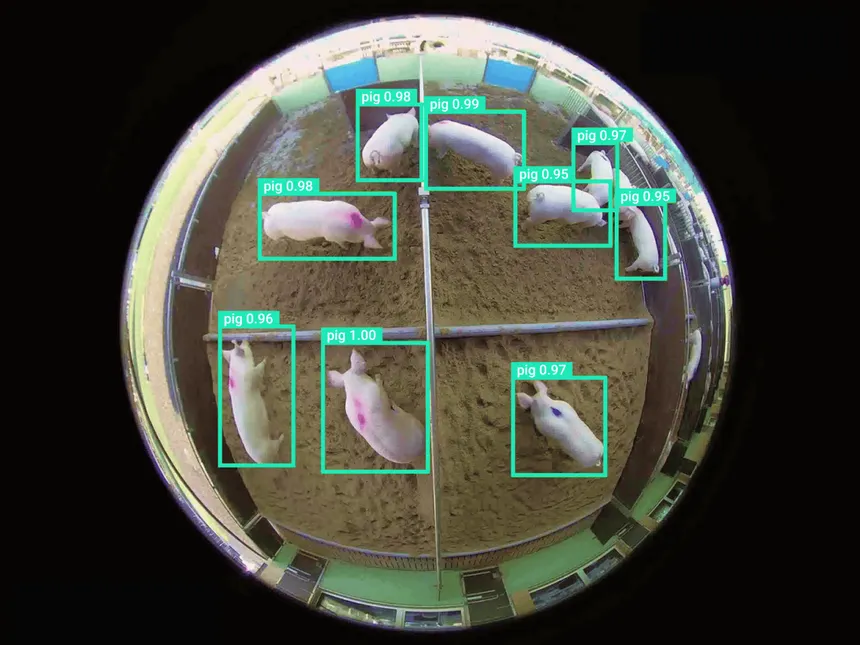
For intensive monitoring and livestock management, fixed camera systems are deployed in barns or attached to milking parlors. In the dairy and beef sectors, these computer vision systems capture data on animal gait, posture, and behavior. AI models, trained on veterinary health indicators, can automatically identify early signs of lameness, mastitis indicators, and heat cycles with consistently higher efficiency than manual observation. In high-value field crops or controlled environments, ground-based systems provide continuous monitoring for rapid, real-time responses.
Key Advantages: Precision, Timing, and Input Optimization
The high performance of AI vision systems translates into three major practical benefits for the farm business:
Unparalleled Detection Timing
The ability to detect problems weeks earlier than conventional scouting methods is perhaps the most significant advantage. This early warning window allows protective treatments to be applied at a sub-symptomatic stage, preventing the large-scale disease spread that can destroy crops rapidly. This is crucial for maximizing the effectiveness of interventions while minimizing the required chemical load.
Targeted Input Reduction
Weed recognition technology allows for species-specific herbicide application, moving away from broad-spectrum chemistry. In trials, camera-equipped sprayers that apply herbicide only to identified weeds have demonstrated the capacity for substantial reductions in total herbicide usage while maintaining effective control. Similar precision is applied to nutrient management, ensuring fertilizer is only delivered to areas scientifically determined to benefit most.
Enhanced Labour Efficiency
AI monitoring significantly reduces the time required for field scouting and visual crop inspection, a labor-intensive process that traditionally samples only a small fraction of the field. By automating this assessment, management time is freed up for other critical activities, and the assessment accuracy is standardized across the entire operation.
Integration for Predictive Farm Management
AI vision systems deliver maximum value when integrated into a unified farm management framework. They complement other data sources by providing visual context:
- Environmental Data: Soil moisture sensors and weather stations provide context that informs AI interpretation. A stressed crop may receive different recommendations depending on whether the stress is drought-related or disease-related.
- Predictive Modeling: Integrating weather forecasts with historical disease development data enables machine learning to forecast infection risks. This prompts an increase in monitoring frequency during high-risk periods, ensuring fungicide timing is perfect.
- Closed-Loop Application: Advanced systems connect AI-generated prescription maps directly to application equipment. Variable rate sprayers and spreaders automatically adjust input delivery in real-time based on the assessed health variation across the field, effectively automating the translation of data into management action.
Representative Scenarios of Economic Benefit (Hypothetical Analysis)
The following scenarios are provided as an illustrative analysis of potential economic benefits and do not represent specific, verified farm data or guaranteed outcomes.
Scenario A: Arable Operation Disease Protection: A large-scale arable farm implements high-resolution aerial AI monitoring for its cereal crops. The system flags early-stage fungal development in the wheat several weeks before traditional field walking would have detected it. By applying targeted fungicide only to the affected zones, the operation manages to prevent potential yield loss—which is often substantial under high disease pressure—while concurrently reducing the overall fungicide volume used across the farm. The combined value of protected yield and input saving significantly outweighs the annual service cost of the monitoring platform.
Scenario B: High-Value Vegetable Production: A mixed farming enterprise with intensive vegetable production adopts a satellite and ground-based AI monitoring system. The system detects subtle hydration issues across several beds, which were not visible during routine inspection. The analysis indicates inconsistent water delivery rather than a general lack of rain. Correcting the specific irrigation distribution problems prevents a severe quality downgrade in the high-value crop, avoiding a major financial loss and establishing a basis for long-term water conservation.
Scenario C: Dairy Herd Health Management: A dairy operation installs a ground-based AI vision system to monitor its herd. Over the first year, the system consistently detects indicators of lameness and subclinical health issues significantly earlier than human observation. This early detection allows for immediate, low-cost intervention, substantially reducing the average recovery time for affected animals and preventing the productivity losses and veterinary costs associated with advanced conditions. The system also optimizes reproductive cycles through precise heat detection, improving overall herd efficiency.
Investment and Selection Considerations
The economic analysis of AI vision systems must weigh the cost against the potential for prevented losses and efficiency gains. The initial investment can range from affordable subscription models for basic monitoring to substantial capital outlay for comprehensive integrated systems.
Selecting the right platform requires careful consideration:
- Match Capability to Need: Satellite platforms suit large-scale field-level analysis; drone/aerial systems are necessary for high-resolution, plant-level detail in high-value crops; and ground-based systems are ideal for continuous monitoring in barns or greenhouses.
- Integration and Interoperability: Prioritize systems that offer open data sharing capabilities (APIs) and established integrations with existing farm management software and machinery controllers to avoid data silos.
- Support and Training: Given the technical knowledge required, choose vendors that provide local agronomic expertise and comprehensive training to ensure the analysis translates effectively into management decisions on the ground.
AI vision is fundamentally reshaping risk management in UK farming. By automating complex data interpretation and enabling timely, precise interventions, these systems are becoming indispensable tools for managing the volatility of modern agriculture.