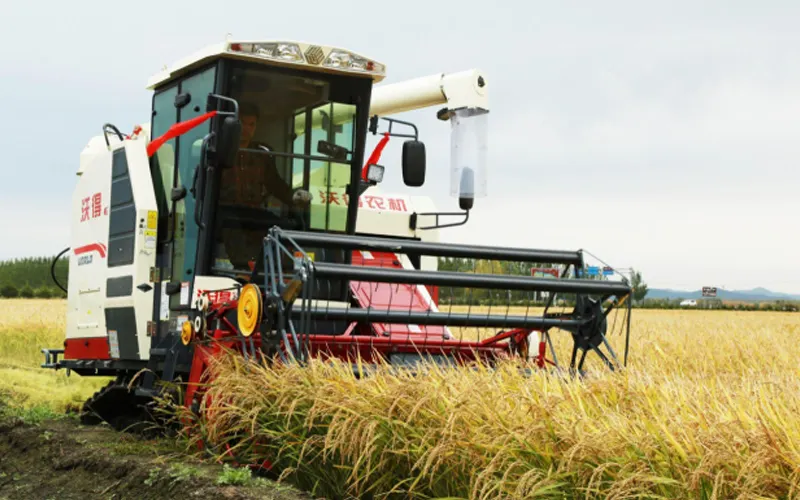
Every harvest season, combine operators face the same fundamental challenge: extracting maximum grain yield while maintaining quality, regardless of crop conditions. The difference between a successful harvest and costly grain losses often comes down to understanding how to properly adjust your combine’s critical systems.
This guide provides practical, field-tested approaches to optimising your combine harvester settings across different crops and conditions. Whether you’re running wheat through in perfect August weather or battling damp barley in September, mastering these adjustments will help you maximise returns and minimise waste.
Understanding the Three Core Systems
Modern combine harvesters operate through three interconnected systems, each playing a distinct role in grain processing. Getting these right requires understanding how they work together.
The threshing system separates grain from the ear using a rotating cylinder (or rotor) working against a concave. This initial separation is the most critical phase, as poor settings here create problems that cannot be corrected downstream. The cylinder speed and concave clearance must match the crop being harvested and its moisture content.
The separation system, whether using straw walkers or a rotary design, continues extracting grain from the material flow. This stage catches grain that wasn’t separated during threshing, making it essential for maximising yield. On modern rotary combines, the separation rotor works continuously on the crop material as it travels through the machine.
The cleaning system uses airflow and sieves to remove chaff and debris from the grain sample. The fan provides air stream velocity while upper and lower sieves filter material by size. Getting this balance right determines final grain quality and sample cleanliness.
Concave Clearance: The Foundation of Good Threshing
Concave clearance governs how aggressively the cylinder processes crop material. Set too tight, you’ll crack grains and create excessive fines. Set too wide, you’ll leave grain in the heads and see unacceptable losses over the straw walkers or out the back.
For wheat under normal UK harvest conditions, start with 15-20mm clearance at the front and 8-12mm at the rear. This creates a progressive threshing action as material moves through the concave. Dry, free-threshing wheat may allow you to open the clearance slightly, while tough or damp conditions require tightening.
Barley responds differently to wheat. Being more fragile, barley needs gentler treatment. Begin with 20-25mm front clearance and 12-15mm rear. Monitor grain damage carefully, as cracked barley significantly reduces malting quality and value. Spring barley typically threshes more easily than winter varieties, allowing for wider clearances.
Oilseed rape presents unique challenges due to its small seed size and fragile pods. Clearances of 3-6mm at the front and 2-4mm at the rear are typical starting points. The seeds bruise easily, so err on the side of wider clearances and rely more on cylinder speed for threshing action. Black pods in dry conditions may require tighter settings, while green material needs wider clearances to avoid crushing unripe seeds.
When adjusting concave clearance in the field, make changes in 2-3mm increments and allow several combine loads to assess the impact. Check grain samples regularly and examine material on the straw walkers to verify settings are appropriate. Never adjust based on a single sample, as crop conditions vary across the field.
Cylinder Speed Settings for Different Crops
Cylinder speed determines the aggressiveness of the threshing action. Too slow, and grain remains in the heads. Too fast, and you crack grains and create dust that overloads the cleaning system.
Standard wheat threshing requires 850-1050 RPM under typical conditions. Start at the lower end of this range and increase speed only if you observe unthreshed heads in the sample or on walkers. Dry wheat below 15% moisture often threshes effectively at 850-900 RPM, while tougher material approaching 20% moisture may need 1000-1050 RPM.
For barley, reduce cylinder speeds to protect grain integrity. Begin at 700-850 RPM for winter barley and 650-800 RPM for spring barley. Malting barley demands particular care, as grain damage directly impacts premium payments. If you’re seeing skinned or cracked grains, reduce speed before widening concave clearance, as this often solves the problem without sacrificing threshing efficiency.
Oats present their own requirements, needing 600-750 RPM to avoid hull damage while achieving adequate threshing. The lighter grain and looser attachment to the panicle means oats thresh relatively easily, so resist the temptation to speed up the cylinder when you encounter tougher patches. Address those areas by tightening concave clearance slightly instead.
Oilseed rape threshes at significantly higher cylinder speeds, typically 950-1100 RPM. The crop requires impact to release seeds from pods, but excessive speed creates dust and seed damage. Start at 1000 RPM and adjust based on pod condition. Very ripe, dry rape may need only 950 RPM, while greener pods might require 1050-1100 RPM.
Monitor your grain tank sample every 15-20 minutes when operating. Cracked grains, excessive awns in the sample, or visible dust from the cleaning shoe all indicate cylinder speed needs reduction. Conversely, whole heads or pods in the sample mean you need more threshing action through increased speed or tighter clearances.
Fan Speed Optimisation for Clean Samples
The cleaning fan creates the air stream that separates grain from lighter chaff and debris. Getting fan speed right produces clean samples without blowing good grain out the back of the machine.
Fan speed settings depend heavily on crop type and grain weight. Wheat responds well to 1050-1200 RPM in the fan, providing sufficient air velocity to float chaff away while retaining heavy wheat grains. In very dry conditions or with lightweight grain, reduce fan speed to 1000-1100 RPM to prevent grain loss.
Barley, being lighter than wheat, requires reduced fan speeds of 900-1100 RPM. Start conservatively at 950 RPM and increase speed only if you see excessive chaff in the grain sample. Check behind the combine regularly during the first few rounds. Whole barley grains visible on the ground indicate excessive fan speed blowing grain from the cleaning system.
Oilseed rape demands even gentler air movement due to its light seed weight. Fan speeds of 650-850 RPM are typical, with most conditions requiring 700-750 RPM. The small, light seeds blow from the cleaning system very easily. If you notice yield monitor readings dropping when you increase fan speed, you’re losing seed over the sieves.
Modern combines often provide fan speed recommendations through the monitor system based on crop type selection. Use these as starting points but verify settings through physical inspection. Check the grain sample, walk behind the machine to look for grain loss, and examine material exiting the cleaning shoe during stops.
Weather conditions significantly affect optimal fan settings. Morning dew increases material weight, requiring higher fan speeds to achieve adequate cleaning. As the day progresses and crop dries, reduce fan speed to maintain grain retention. Experienced operators adjust fan speed two or three times during the day to match changing conditions.
Sieve Settings by Crop Type
Upper and lower sieves work with the fan to filter crop material by size, allowing grain to fall through while directing chaff and debris away. Both sieve opening size and spacing patterns matter.
Wheat sieves typically run with the upper sieve (chaffer) at 12-16mm and the lower sieve (grain pan) at 8-12mm. The upper sieve should be open enough to let grain pass through readily but closed enough to retain longer straw fragments. The lower sieve catches grain that passed through the chaffer while allowing remaining fine material to exit.
Start with 14mm on the upper sieve and 10mm on the lower. If grain samples show excessive chaff or broken straw, close the upper sieve by 2mm. If grain is backing up on the sieves or you hear grain hitting the clean grain elevator inconsistently, open both sieves slightly. The goal is steady grain flow through the system without overloading.
Barley uses similar sieve settings to wheat, though some operators prefer slightly wider openings on the upper sieve (14-18mm) to accommodate the longer grain shape. The lower sieve typically runs at 9-12mm. Skinned barley grains in the sample indicate either too much air movement or sieves that are too close together, bouncing grain and removing hulls.
For oats, open the upper sieve to 15-20mm to handle the larger grain with attached hulls. The lower sieve should be at 10-14mm. Oat hulls are light and can blow through the cleaning system, so balance sieve openings with moderate fan speed.
Oilseed rape requires completely different sieve settings due to tiny seed size. Upper sieves run at 6-10mm and lower sieves at 4-6mm. Some combines offer special rape sieves with smaller perforations throughout. If using standard sieves, stay at the tight end of these ranges and accept that some small seeds will inevitably pass through.
Troubleshooting Common Harvest Issues
Grain loss monitoring should be continuous throughout operation. Most modern combines provide loss monitors for both the cleaning shoe and separation systems. Use these actively rather than treating them as background information.
When experiencing excessive grain loss out the back, first determine whether it’s unthreshed heads or individual grains. Unthreshed heads indicate inadequate threshing action, requiring tighter concave clearance or increased cylinder speed. Individual grains suggest separation or cleaning losses.
For separation losses (grain over walkers or out the rotor), slow ground speed to reduce the volume of material flowing through the machine. If this solves the problem, your combine capacity is exceeding separation capability for current conditions. Either maintain slower speed or consider adjusting header width to match machine capacity.
Cleaning system losses show up as grain blowing from the rear of the machine. Reduce fan speed first, as this is the quickest adjustment. If the problem persists, check that sieves aren’t overloaded. Opening sieves slightly or reducing ground speed to decrease material flow often resolves cleaning losses.
Cracked or damaged grain stems from excessive mechanical action. Reduce cylinder speed as the first response. If damage continues, widen concave clearance progressively. For barley specifically, ensure you’re not running wheat settings, as this commonly causes grain damage.
Excessive chaff in grain samples indicates inadequate cleaning. Increase fan speed in small increments (50 RPM) and monitor the impact. If increasing fan speed causes grain loss, the sieves may need adjustment. Close the upper sieve slightly to prevent chaff from reaching the lower sieve, or open the lower sieve to improve material flow.
When grain sample contains excessive amounts of broken straw or awns, check concave and cylinder condition first. Worn components create more breakage. If components are sound, reduce cylinder speed and verify sieve settings are appropriate for the crop.
Manufacturer-Specific Guidance
While fundamental principles apply across all combines, specific machines have unique characteristics worth understanding.
John Deere S-Series combines with Active Yield technology can automatically adjust fan speed and sieve settings based on real-time crop conditions. However, these automated systems work best when starting from appropriate baseline settings. Don’t rely entirely on automation, particularly when switching between crops or encountering significantly different field conditions.
Case IH Axial-Flow combines feature single rotors that handle both threshing and separation. This design responds well to rotor speed adjustments (the equivalent of cylinder speed), but changes affect both threshing and separation simultaneously. When fine-tuning these machines, make smaller incremental adjustments than you might on a conventional combine.
New Holland CR combines offer variable rotor speed and several concave configurations. The SmartFill system monitors combine loading and can alert operators when approaching capacity limits. Use this to optimise ground speed rather than pushing the machine into loss situations.
Claas Lexion combines with APS (Accelerated Pre-Separation) threshing systems separate a significant portion of grain before material reaches the main separation area. These machines benefit from slightly different concave settings than conventional designs. Consult Claas-specific guides for your model year when establishing baseline settings.
Massey Ferguson IDEAL combines feature a single longitudinal rotor with triple separator system. The longer crop flow path can handle higher throughput in good conditions but requires careful fan and sieve adjustment to avoid grain loss when processing tough material.
Adjusting for Weather Conditions
UK harvest weather varies dramatically, sometimes within a single day. Successful operators adjust settings continuously to match changing conditions.
Morning dew is perhaps the most challenging condition. Damp crop material weighs more and moves through the machine differently than dry material. Expect to run 50-100 RPM higher on both cylinder and fan speeds. Tighten concave clearances by 2-3mm compared to afternoon settings. Sieves may need to open slightly to accommodate the increased material weight.
As crop dries through the morning, progressively open concaves and reduce speeds. Make these changes gradually, checking samples regularly. The transition from damp to dry crop typically happens between 10am and noon, but timing varies with weather, crop height, and field exposure.
Exceptionally dry conditions (grain moisture below 14%) make crops brittle and prone to shattering. Reduce cylinder speeds to minimum effective levels and open concave clearances. Grain loss from pods shattering before they reach the header often exceeds losses through the combine in these conditions. Consider starting earlier in the morning or running later into evening to harvest at higher moisture levels.
Wet harvest conditions (grain moisture above 20%) strain all combine systems. Material flows poorly through the machine, creating blockage risks. Reduce ground speed substantially. Increase cylinder and fan speeds to compensate for the tough threshing conditions. Accept that some grain damage may be inevitable and focus on maintaining steady material flow without blockages.
Green material mixed with ripe crop requires compromise settings. You need enough threshing action to separate ripe grain while avoiding excessive damage to mature grains. Start with standard settings for the crop, then make small adjustments as you monitor samples. In particularly variable conditions, consistent moderate settings often outperform frequent large adjustments.
Yield Monitoring Integration
Modern combines provide extensive performance data beyond simple yield figures. Learning to interpret and respond to this information improves harvest efficiency.
Grain moisture readings should guide your daily harvest schedule. Most crops combine optimally between 14-18% moisture. Starting harvest at higher moisture levels requires more aggressive settings and produces lower quality grain. Waiting for drier conditions improves grain quality but increases shattering losses.
Loss monitors for cleaning and separation systems provide real-time feedback on setting effectiveness. Normal losses should remain below 1% for wheat and barley, and below 2% for oilseed rape. If monitors consistently show losses above these levels, systematically check each component: concave clearance, cylinder speed, fan speed, sieve settings, and ground speed.
Grain quality sensors on newer combines detect cracked grains and foreign material in real-time. Use these to fine-tune settings without waiting for physical samples. If crack percentage rises above acceptable levels (typically 3-5%), reduce cylinder speed or open concaves immediately.
Throughput monitoring shows tonnes per hour moving through the machine. Compare this against manufacturer capacity specifications for your combine model and header width. If operating below rated capacity, you may be able to increase ground speed. If exceeding rated capacity, expect grain losses or quality issues regardless of how well you’ve adjusted other settings.
Material Other Than Grain (MOG) sensors measure the volume of straw and chaff flowing through the cleaning system. High MOG readings indicate either very high yielding crops or excessive material entering the header. Lower the header to reduce straw intake, or slow ground speed if yields are genuinely exceptional.
Expert Agronomist Recommendations
Professional agronomists who work with multiple farms and operators observe patterns that individual farmers might miss.
The single most common mistake is operating too fast for conditions. Ground speed directly affects material flow through every combine system. When experiencing any harvest problem, the first adjustment should be reducing speed by 0.5-1.0 km/h and assessing whether the issue resolves. Many operators resist slowing down due to weather pressure or area targets, but damaged grain or excessive losses quickly eliminate any time savings.
Regular sample checking cannot be overemphasised. Experienced operators physically inspect grain samples every 15-20 minutes during operation. This reveals developing problems before they cause significant losses. Keep a sample tray in the cab and examine both grain quality and foreign material content systematically.
Record keeping improves year-on-year performance. Note the settings that worked well for each crop and field, along with weather conditions and crop moisture levels. These records provide invaluable starting points for subsequent harvests. Several operators maintain setting sheets specific to individual fields, particularly for oilseed rape which varies considerably in maturity and pod condition.
Combine maintenance directly impacts harvest performance. Worn concaves, damaged rasp bars, or bent sieve sections create problems that no amount of adjustment can solve. Before harvest begins, inspect all wear components and replace anything questionable. The cost of components is trivial compared to grain losses or quality reductions from worn parts.
Finally, invest time in understanding your specific combine model. Manufacturer training courses, operator manuals, and discussion with experienced operators of the same machine type all contribute to better performance. Modern combines are sophisticated machines with numerous adjustment possibilities. Generic advice provides starting points, but detailed model-specific knowledge enables true optimisation.
Practical Application Summary
Successful combine operation balances multiple interacting systems while responding to constantly changing crop conditions. Start each field with proven baseline settings for the crop type, then make small systematic adjustments based on observed performance.
Check grain samples frequently, monitor loss indicators continuously, and adjust ground speed to match machine capacity. Remember that the goal is not operating as fast as possible, but rather maximising the value of grain entering the tank while minimising losses.
Weather conditions drive many setting adjustments. Be prepared to change fan speed, cylinder speed, and concave clearances multiple times throughout the day as crop moisture varies. The best operators develop a rhythm of regular sample checking and continuous minor adjustments rather than occasional major setting changes.
Finally, recognise that combine harvesting remains as much art as science. Published settings and guidelines provide essential starting points, but field conditions, crop varieties, and machine-specific characteristics all influence optimal configurations. Experience, careful observation, and systematic adjustment create the expertise that distinguishes exceptional operators from average ones.