British tillage is undergoing a quiet revolution. Across arable farms from East Anglia to the Scottish Borders, smart plough technology is transforming one of agriculture’s oldest practices into a precision operation that saves fuel, protects soil structure, and delivers measurable yield benefits. Variable depth control systems, once the preserve of large-scale operations, are now becoming standard equipment as farmers recognise that intelligent tillage isn’t just about working the soil but optimising it.
The shift represents more than technological advancement. It reflects a fundamental change in how farmers approach cultivation, moving from uniform depth tillage across entire fields to targeted interventions that respond to soil conditions, moisture levels, and agronomic objectives in real time.
Understanding Variable Depth Control Systems
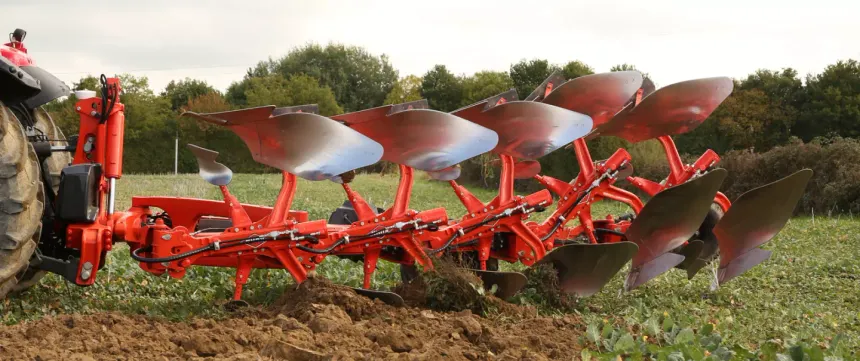
Variable depth control technology enables ploughs to automatically adjust working depth based on pre-programmed parameters, GPS location data, and real-time soil conditions. Unlike traditional ploughing where operators manually set depth and maintain it across entire fields, modern systems make continuous micro-adjustments that optimise cultivation for specific zones.
Automatic depth regulation forms the foundation of smart plough systems. Sensors monitor actual working depth multiple times per second, comparing it against target parameters and making hydraulic adjustments to maintain precision. This eliminates the depth variations that occur with manual control when ground conditions change, tractors encounter slopes, or operator attention wavers during long working days.
The technology delivers consistency that human operators cannot match over extended periods. Where traditional ploughing might show noticeable depth variation across a field due to operator fatigue and changing conditions, automated systems maintain much tighter depth accuracy. This precision matters enormously for seed bed preparation, weed control, and soil structure management.
GPS integration elevates variable depth control from automated consistency to intelligent adaptation. By linking depth control systems to GPS-based field mapping, ploughs can execute predetermined tillage prescriptions that account for soil type variations, compaction zones, drainage requirements, and historical yield data.
A field might receive deeper ploughing in heavy clay areas requiring substantial cultivation for drainage improvement, moderate depth in loam soils with good structure, and shallower tillage in areas prone to erosion or with shallow topsoil. The system executes these variations automatically as the plough traverses the field, with the operator monitoring rather than constantly adjusting.
Soil compaction monitoring represents the cutting edge of smart tillage technology. Advanced systems now incorporate sensors that detect soil resistance and compaction levels in real time, adjusting depth and aggression to address actual soil conditions rather than assumptions.
These sensors measure draft force, which indicates how hard the soil resists cultivation. High resistance suggests compaction requiring deeper work or multiple passes, while lower resistance indicates good soil structure where lighter cultivation preserves beneficial characteristics. The system logs this data, creating compaction maps that inform future tillage decisions and help identify traffic management issues.
Leading Manufacturer Innovations
Three European manufacturers have established themselves as technology leaders in the British smart plough market, each bringing distinctive approaches to variable depth control.
Kverneland has integrated its i-Plough technology across its reversible plough range, offering sophisticated automation accessible to medium and large-scale operations. The system combines automatic depth control with turnover sequencing optimisation and headland management features that reduce operator workload during long tillage days.
Kverneland’s approach emphasises user interface simplicity. Farmers can programme complex tillage prescriptions through tablet-based controls that visualise field operations and allow real-time adjustments. The system stores multiple field profiles, enabling contractors to manage different farms efficiently without reprogramming between jobs.
The Norwegian manufacturer’s focus on robust construction suits British conditions where ploughs encounter varied soils often containing stones. Their depth control systems maintain accuracy even in challenging ground, automatically compensating for obstacles that would defeat less sophisticated designs.
Lemken brings German precision engineering to variable depth ploughing through its VariTitan and Juwel systems. Lemken ploughs feature particularly advanced hydraulic control that enables not just depth variation but also working width adjustment and individual furrow pressure management.
The VariTitan mounted reversible ploughs include Lemken’s Opticut system, which optimises the cutting angle and share position for different soil conditions. When integrated with variable depth control, this creates a highly adaptable implement that can switch from aggressive cultivation in compacted ground to gentle tilth creation in well-structured soil without manual reconfiguration.
Lemken has invested heavily in ISOBUS compatibility, ensuring their implements communicate seamlessly with modern tractors. This integration allows tractor-based precision agriculture systems to control plough operations, creating unified data streams that inform whole-farm management decisions.
Kuhn approaches smart ploughing through its Master series, which emphasises practical automation for working farms rather than technology for its own sake. Kuhn systems focus on reliability and ease of use, recognising that tillage equipment must perform consistently during narrow working windows when weather permits field operations.
The Kuhn Pilot automatic adjustment system manages depth control alongside stone protection and transport positioning. The integration means operators spend less time on implement management and more on monitoring field conditions and planning subsequent passes. For contractors working multiple farms with varying conditions, this operational simplicity delivers real productivity gains.
Kuhn ploughs feature particularly effective auto-reset mechanisms that protect against underground obstacles while maintaining depth accuracy. The system distinguishes between normal soil resistance requiring depth adjustment and sudden impacts requiring protection response, preventing false triggering that disrupts tillage consistency.
Fuel Efficiency: Quantifying the Savings
Fuel consumption represents a significant proportion of tillage costs, making efficiency improvements economically compelling. Agricultural red diesel averaged around 80 pence per litre in 2024 according to AHDB data, making fuel savings a substantial financial consideration.
Optimised depth reduces draft force. Ploughing deeper than necessary for agronomic objectives wastes energy overcoming soil resistance that delivers no benefit. Smart systems ensure cultivation only reaches the depth required for the specific location and purpose, eliminating unnecessary work.
Industry experience and research trials suggest variable depth management can reduce fuel consumption compared to conventional uniform-depth ploughing, with the magnitude of savings depending on field variability, soil conditions, and the degree of depth optimisation achieved. Operations with highly variable fields typically achieve greater fuel reductions than those farming more uniform soil types.
Consistent engagement prevents waste. Manual depth control inevitably includes periods where ploughs run too shallow (requiring additional passes) or too deep (wasting fuel). The hunting behaviour as operators correct depth consumes additional fuel. Automated systems maintain optimal engagement continuously, eliminating this inefficiency.
Field trials comparing automated versus manual depth control on identical soil conditions demonstrate measurable fuel reduction attributable to consistent engagement, separate from depth optimisation benefits. The savings compound over entire seasons across substantial hectare programmes.
Reduced passes through precision. Variable depth control’s ability to achieve specific cultivation objectives in single passes reduces the multiple operations sometimes required with less precise equipment. Getting depth correct initially for each field zone eliminates remedial work.
Operations might historically shallow-plough an entire field then return to rework compacted areas identified during the initial pass. Variable depth systems address these variations in the primary operation, saving the fuel, time, and soil structure disruption of additional passes.
Integration with Precision Agriculture Platforms
Smart plough technology delivers maximum value when integrated into comprehensive precision agriculture systems rather than operating as isolated implements.
Data flow and decision support: Modern ploughs generate substantial data about soil conditions, resistance patterns, and cultivation performance. When this information flows into farm management systems alongside yield data, soil sampling results, and satellite imagery, it creates powerful decision support capabilities.
Farmers can correlate tillage approaches with subsequent crop performance, identifying which cultivation strategies deliver optimal results in specific field zones. This evidence-based refinement continuously improves agronomic outcomes whilst documenting practices for assurance schemes and environmental regulations.
ISOBUS standardisation: The agricultural industry’s adoption of ISOBUS communication standards enables implements from different manufacturers to communicate with tractors and precision agriculture systems using common protocols. Smart ploughs equipped with ISOBUS connectivity can receive tillage prescriptions from any compatible farm management system and return performance data in standardised formats.
This interoperability prevents technology lock-in and enables farmers to select best-in-class components across different equipment categories rather than accepting entire ecosystems from single manufacturers. A farm might combine a Lemken plough with John Deere precision agriculture systems and Case IH tractors, with all components communicating effectively.
Prescription generation and execution: Advanced precision agriculture platforms now generate tillage prescriptions automatically based on multi-year data analysis. These systems consider soil type mapping, historical yield performance, compaction indicators from previous seasons, and planned crop rotations to determine optimal cultivation approaches for each field zone.
The prescriptions transfer wirelessly to smart ploughs, which execute them with minimal operator intervention. After completion, actual tillage data returns to the management system for verification and analysis. This closed-loop approach continuously refines cultivation strategies based on measured outcomes.
Controlled Traffic Farming Benefits
Variable depth control technology synergises particularly effectively with controlled traffic farming (CTF) systems that confine machinery movement to permanent traffic lanes, minimising soil compaction across the majority of field areas.
Targeted compaction remediation: In CTF systems, traffic lanes experience repeated compaction requiring periodic deep cultivation, while cropping zones maintain good structure needing only minimal disturbance. Variable depth ploughing enables this differentiated approach efficiently.
Smart ploughs can automatically increase depth substantially when traversing traffic lanes to break compaction layers, then reduce to shallow depths in cropping zones to preserve soil structure. This optimisation is impractical with manual control but straightforward with GPS-integrated automation.
Reduced overall cultivation intensity: Farms implementing both CTF and variable depth control report substantial reduction in overall cultivation intensity (measured as average depth across entire field area) while maintaining or improving crop establishment. The combination addresses compaction where it occurs without unnecessary disturbance of well-structured soil.
This lighter overall cultivation delivers multiple benefits including reduced fuel consumption, improved soil biology preservation, better moisture retention, and decreased erosion risk. The approach aligns with sustainable intensification objectives, maintaining productivity while reducing environmental impact.
Documentation for environmental schemes: Many environmental stewardship schemes now recognise reduced tillage intensity as beneficial practice worth incentive payments. The data logging capabilities of smart plough systems provide robust documentation of cultivation approaches, supporting claims and demonstrating compliance with scheme requirements.
Farmers can generate reports showing cultivation depth maps, average tillage intensity by field, and year-on-year trends toward reduced soil disturbance. This evidence base supports not just current scheme participation but also positions farms favourably for emerging carbon sequestration and soil health programmes.
Comparison with Traditional Implements
The performance gap between smart variable depth ploughs and conventional implements extends beyond simple automation to fundamental capability differences.
Consistency and precision: Traditional ploughs rely entirely on operator skill and attention to maintain appropriate depth. Even experienced operators cannot match the continuous micro-adjustments of automated systems, particularly during long working days when fatigue degrades performance. The precision difference translates directly to crop establishment quality and yield outcomes.
Adaptability to field variation: Conventional ploughs treat fields as uniform entities, applying single cultivation approaches regardless of soil variation. Smart systems recognise and respond to within-field differences, optimising treatment for each zone. This adaptability is increasingly important as precision agriculture reveals the extent of field variability affecting crop performance.
Operational efficiency: Automated depth control reduces operator workload substantially, allowing focus on field conditions, traffic management, and strategic decision-making rather than constant implement adjustment. Contractors and farms with limited skilled labour find this particularly valuable, enabling less experienced operators to achieve results previously requiring expertise.
Data and improvement: Traditional implements provide no performance data beyond what operators observe and remember. Smart ploughs generate detailed records enabling systematic improvement. Farms can analyse which cultivation approaches delivered best results and refine strategies accordingly, creating continuous improvement cycles impossible with conventional equipment.
Investment considerations: Smart ploughs command premium prices compared to equivalent conventional implements. However, the fuel savings, improved consistency, labour efficiency, and yield benefits can justify the investment for farms with substantial tillage programmes over several seasons. Contractors with high annual usage often achieve faster payback through improved operational efficiency and enhanced service quality.
The Future of Smart Tillage
Variable depth control represents current technology, but development continues toward even more sophisticated tillage automation.
Emerging systems incorporate real-time soil moisture sensing to adjust cultivation aggression based on workability, preventing structure damage from working wet ground. Artificial intelligence algorithms are beginning to optimise depth and speed combinations for specific soil conditions, learning from accumulated data to improve performance continuously.
Integration with drone and satellite imagery will enable predictive tillage prescription generation that anticipates field needs before ground operations begin. Biomass maps, thermal imaging, and crop health indicators will inform cultivation strategies designed to address underlying agronomic issues revealed through remote sensing.
Fully autonomous tillage operations remain on the horizon, with smart ploughs providing the implement intelligence required for unmanned field work. Combined with autonomous tractors, this technology could enable cultivation operations during extended working windows and reduce pressure on limited labour resources.
Precision Cultivation as Standard Practice
Smart plough technology has evolved from experimental innovation to practical tool that delivers measurable benefits for British arable operations. Variable depth control, GPS integration, and soil compaction monitoring transform tillage from crude soil inversion to precise agronomic intervention that optimises conditions for crop establishment while protecting soil resources.
The fuel efficiency improvements alone justify investment for many operations with significant tillage programmes, particularly given current agricultural diesel costs. When combined with improved cultivation consistency, reduced operator fatigue, enhanced precision agriculture integration, and documented environmental benefits, the technology represents compelling value for progressive farming businesses.
As manufacturers continue refining systems and prices gradually decrease through market maturity, smart ploughs are transitioning from premium equipment for early adopters to standard implements for competitive farming. The farms that master variable depth control and integrate it effectively with broader precision agriculture strategies position themselves to navigate increasingly challenging agricultural economics through superior operational efficiency and agronomic performance.