British agriculture is undergoing a profound digital transformation, moving beyond traditional methods to embrace data-driven decision-making. Recent industry analyses suggest that a majority of UK farming operations have now integrated some form of precision farming technology, marking a crucial tipping point for the sector. This rapid integration signifies a structural shift from manual, field-level decisions to sophisticated, system-wide management protocols. This article explores the current adoption landscape, breaks down the technologies driving this change, identifies the stubborn barriers that remain, and offers practical takeaways for farms navigating this increasingly competitive environment.
The New Baseline: Technologies Driving Efficiency and Intervention
The integration of precision agriculture (PA) is not limited to a single tool; it encompasses a stack of technologies ranging from basic operational aids to complex analytical systems. Adoption rates tend to correlate with the immediate, quantifiable benefits each category provides, but the true value emerges when these systems are integrated for active management intervention.
Operational Efficiency: Guidance Systems
High-accuracy positioning systems, such as GPS guidance and auto-steer, are now widely considered a commodity and are frequently the first precision technology adopted. These systems deliver immediate, tangible benefits by minimizing implement overlap, optimizing passes in the field, and allowing for extended working hours. Industry data consistently shows that minimizing overlap alone can lead to notable savings in input and fuel consumption.
Data Collection and Interpretation: Yield Mapping and Sensing
Yield mapping moves the focus from steering to observation. By gathering geo-referenced performance data during harvest, farmers gain a precise understanding of within-field variability. This technology is highly concentrated in combinable crop enterprises where the data is readily collected and holds clear economic value. However, extracting actionable intelligence from this data—and verifying management decisions over multiple seasons—requires greater technical and agronomic expertise than simple guidance systems.
Management Intervention: Variable Rate Applications
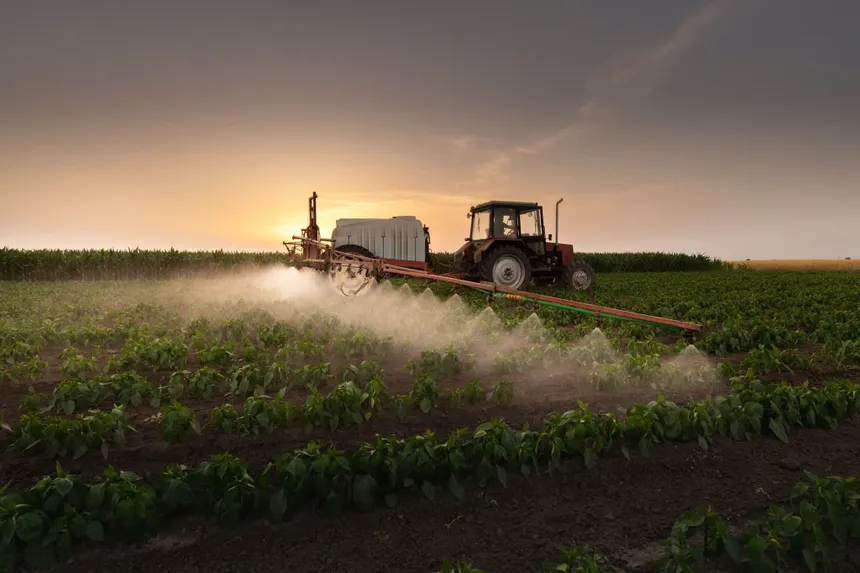
Variable Rate Application (VRA) technology represents the shift from passive data collection to active, automated intervention. VRA allows inputs like fertiliser, seed, and chemicals to be applied precisely where they are needed, based on prescription maps derived from yield, soil, and biomass data. This process requires not only the data platform but also compatible machinery capable of real-time application adjustments. The required capital investment for both the software and hardware retrofits often makes this a selective, later-stage adoption for many farms.
Remote Sensing and Contracted Services
The use of remote sensing, including aerial imagery from satellites and drones, has become a core component of modern farm monitoring. While the cost of professional-grade drone systems for tasks like targeted spot spraying or heavy-duty seeding represents a significant capital outlay, many smaller or mid-sized farms successfully leverage these capabilities through contracted third-party services. This service-based model allows access to high-value data insights without requiring direct capital investment or specialized in-house operational knowledge.
Adoption Patterns: The Influence of Scale and Geography
Adoption is not uniform across the UK; it is profoundly influenced by the economics of scale, regional agronomic suitability, and local infrastructure.
Scale Economics and Justification
For large-scale operations, especially those exceeding 500 hectares, the economic justification for integrated PA systems is compelling. Even marginal improvements in efficiency, when applied across thousands of acres, generate substantial absolute returns. These farms tend to implement multi-layered technology suites, often integrating multiple systems simultaneously.
In contrast, smaller farms often focus adoption on entry-level technology, primarily due to financial constraints and uncertainty regarding the absolute return on investment. Here, the focus is typically on technologies that offer immediate, operational benefits, with access to advanced systems often gained via hired or contracted precision services. Mid-sized farms fall in between, strategically adopting key technologies, frequently timing these purchases with existing machinery replacement cycles.
Regional Variations and Enterprise Mix
Geographically, high-intensity arable regions, such such as East Anglia, typically exhibit the highest penetration rates. This is driven by the established presence of large-scale cropping, supportive agronomist networks, and topography that maximises technology returns.
In regions dominated by livestock enterprises, like certain areas of Scotland and upland Northern England, adoption patterns are naturally different. Here, the focus shifts to applications like grassland management, remote livestock monitoring, and integrated feed systems, though overall PA penetration may be lower than in prime arable areas. The speed of growth in adoption, particularly in areas receiving grant support, indicates that the technology is rapidly adapting to non-arable applications.
Persistent Hurdles: Barriers to Universal Adoption
Despite the proven benefits and increasing adoption rates, several significant hurdles prevent precision technology from becoming universal across all farm sizes and sectors.
Initial Capital Expenditure and Financial Uncertainty
The most frequently cited barrier remains the substantial initial capital investment required, especially for farms operating under 200 hectares. This cost is compounded if precision equipment cannot be retrofitted to existing machinery, forcing a potentially premature and expensive replacement cycle. Furthermore, quantifying the return-on-investment (ROI) remains challenging, as the benefits are often realized gradually and are heavily dependent on management skill and variable environmental conditions. Farmers require robust calculation frameworks to estimate their unique payback period before committing to a purchase.
Knowledge Gaps and Technical Expertise
The value of sophisticated precision systems is directly proportional to the farmer’s ability to interpret the data they produce. Technical knowledge gaps exist on two levels: operational proficiency (running the equipment) and agronomic expertise (using data to create effective management responses). The transition to VRA and advanced analytics is heavily reliant on informed decision-making, necessitating ongoing training, peer learning, and strong support from agronomists who are fluent in precision data.
Connectivity and Integration Challenges
Reliable rural connectivity, both cellular and satellite, remains a significant limitation in remote and upland areas. Cloud-based farm management systems and RTK correction signals rely on consistent data access. This infrastructure deficit creates an accessibility divide. Additionally, integrating systems from different manufacturers can be challenging, leading to concerns about data compatibility, technology lock-in, and complex data transfer protocols.
Actionable Takeaways for the Future
The current trajectory suggests that precision agriculture is transitioning from an optional optimization strategy to a fundamental competitive requirement. Industry projections anticipate continued growth, driven by:
- Declining Technology Costs: The commoditisation of core hardware components, making basic guidance systems more accessible to entry-level users.
- Service-Led Adoption: The growth of managed service models where specialized providers handle the data collection, mapping, and analysis, making the benefits of PA accessible without the capital outlay.
- Regulatory Drivers: Increasing integration with regulatory compliance, particularly around nutrient and pesticide management, which will make precise application essential for meeting environmental stewardship goals.
For farm businesses, the path forward requires strategic, staged implementation. Start with the technology that offers the most immediate, quantifiable benefit (like guidance systems), invest in training to overcome knowledge barriers, and explore contracted services to test advanced technologies before making large capital commitments. The goal is to move from simply measuring yield to actively managing variability, transforming raw data into reliable, profitable farm decisions.