The voluntary carbon market for UK agricultural soil carbon has matured significantly, with Woodland Carbon Code credits averaging £26.85 per tonne in 2024 according to official market data. This represents more than a doubling from £11.02 per tonne in 2020, reflecting growing corporate confidence in verified nature-based carbon removals as part of credible net-zero strategies.
For regenerative farmers considering carbon credit generation, this pricing trend—combined with emerging verification pathways specifically designed for agricultural soil carbon sequestration—creates the clearest opportunity yet to monetize climate-positive farming practices through voluntary carbon markets.
Two Distinct Carbon Credit Categories for UK Agriculture
UK farmers have access to two fundamentally different types of carbon markets, each with different pricing structures, verification requirements, and buyer motivations.
Government-Backed Woodland and Peatland Codes
The Woodland Carbon Code and Peatland Code represent the most established UK carbon standards for land managers. Launched in 2011, the Woodland Carbon Code provides independently verified carbon units backed by the UK government, Forest Industry, and carbon market experts. Credits from these schemes command premium prices—averaging £26.85 per tonne for woodland credits in 2024, up from £23.30 in 2023.
The Peatland Code follows similar principles for emissions reductions from peatland restoration projects. Both schemes maintain transparent project registries through the UK Land Carbon Registry, providing buyers with confidence in credit permanence and additionality. Over 99 percent of transactions involve Pending Issuance Units—promises to deliver verified Woodland Carbon Units as trees mature and sequester carbon over time.
Agricultural Soil Carbon Programs
Agricultural soil carbon represents a newer and more complex market segment. Unlike woodland carbon where tree growth provides relatively straightforward measurement, quantifying soil organic carbon changes requires sophisticated monitoring protocols and biogeochemical modeling.
Several UK programs now enable arable and grassland farmers to generate soil carbon credits, though approaches vary significantly in verification standards and resulting credit prices. Programs following internationally recognized methodologies like Verra’s VM0042 Improved Agricultural Land Management typically achieve higher prices than self-assessed, unverified schemes.
The key distinction lies in whether credits undergo independent third-party verification through established standards bodies. Verified agricultural soil carbon credits can command similar or higher prices than woodland credits when backed by robust monitoring, reporting, and verification protocols.
Verification Standards Drive Agricultural Carbon Credit Pricing
For farmers evaluating carbon credit opportunities, understanding verification standards proves essential to realistic revenue projections and buyer credibility.
Verra VM0042 Methodology
The Verified Carbon Standard’s VM0042 methodology for Improved Agricultural Land Management has emerged as the leading international framework for agricultural soil carbon projects. Released in updated form (v2.1) in September 2024, VM0042 quantifies greenhouse gas emission reductions and soil organic carbon removals from improved agricultural practices including reduced tillage, optimized fertilizer application, cover cropping, and enhanced grazing management.
Projects following VM0042 undergo independent validation and verification by accredited third-party bodies. The methodology allows for either biogeochemical modeling approaches or direct soil measurement using control sites, with specific requirements for baseline establishment, additionality demonstration, and uncertainty assessment.
In September 2025, Agreena’s AgreenaCarbon Project became the first large-scale arable agriculture initiative to achieve Verra verification under VM0042 v2.0, issuing 2.3 million verified carbon units across operations spanning multiple European countries. This milestone demonstrates that agricultural soil carbon projects can achieve the same verification standards as established forestry and peatland restoration schemes.
UK-Specific Verification Developments
The British Standards Institution is developing assurance standards for international verification methodologies operating in the UK market, aiming to increase buyer confidence in agricultural carbon credits. While the UK briefly explored developing a dedicated Farm Soil Carbon Code similar to the Woodland and Peatland Codes, this initiative has been discontinued, with the market relying instead on international standards like VM0042.
This creates a two-tier pricing structure in UK agricultural carbon markets. Self-assessed soil carbon programs operating without independent verification typically trade credits at lower prices, while projects achieving Verra or equivalent third-party verification command premium pricing comparable to government-backed woodland and peatland credits.
Regenerative Practice Categories Eligible for Carbon Credit Generation
Carbon credit methodologies like VM0042 encompass a wide range of agricultural improvements, providing multiple pathways for farmers to generate verified carbon units.
Soil Management Practices
Reduced and no-till cultivation systems represent the most widely adopted carbon-generating practice. Minimizing soil disturbance preserves soil structure, reduces decomposition of existing soil organic matter, and lowers fuel consumption from field operations. The carbon benefit comes both from increased soil organic carbon stocks and reduced CO2 emissions from diesel combustion.
Cover cropping during fallow periods builds soil organic matter while providing additional ecosystem benefits including erosion control, weed suppression, and nitrogen fixation with leguminous species. Carbon credit methodologies typically require documentation of cover crop species, planting dates, and biomass management to quantify carbon sequestration and emissions reductions.
Crop residue management—leaving harvest residues in fields rather than removing or burning them—returns organic carbon to soils while reducing methane and nitrous oxide emissions from burning. Integrated crop rotations incorporating diverse species improve soil health and carbon accumulation compared to continuous monoculture systems.
Nutrient Management Optimization
Precision fertilizer application represents a significant emissions reduction opportunity. Agricultural soils account for approximately 70 percent of UK nitrous oxide emissions, primarily from nitrogen fertilizer use. Variable rate application based on soil testing and crop requirements reduces excess nitrogen input, cutting nitrous oxide emissions while maintaining yields.
Switching from synthetic to organic fertilizers, optimizing application timing to match crop demand, and using enhanced efficiency fertilizers with nitrification inhibitors all generate measurable emissions reductions. Carbon credit protocols require detailed records of fertilizer types, quantities, application methods, and timing to calculate baseline emissions and project reductions.
Grazing and Livestock Integration
Adaptive multi-paddock grazing systems that rotate livestock through multiple paddocks with appropriate rest periods can increase soil carbon sequestration compared to continuous grazing or zero grazing systems. The carbon benefit comes from improved pasture productivity, enhanced root growth, and reduced soil compaction.
Integration of livestock into arable rotations through cover crop grazing or temporary pasture phases can build soil organic matter while providing additional farm revenue streams. Carbon credit methodologies require documentation of stocking rates, paddock sizes, rotation schedules, and pasture management to quantify soil carbon changes.
Practical Requirements for Farmers Entering Carbon Markets
Generating credible carbon credits requires substantial administrative capacity and willingness to undergo external verification processes that many farm businesses may find challenging.
Baseline Establishment and Additionality Demonstration
All carbon credit methodologies require demonstrating that practices go beyond common baseline activity. Projects must prove that carbon sequestration or emissions reductions would not have occurred without carbon credit revenue. This typically involves documenting historical management practices, comparing project activities to common practice in the region, and demonstrating financial additionality—that carbon revenue makes the practice adoption economically viable.
Baseline establishment requires detailed records of pre-project soil management, fertilizer use, tillage practices, and cropping history. Many verification standards require at least three years of baseline data before project registration. This retrospective documentation requirement can prove challenging for farmers who have not maintained detailed records.
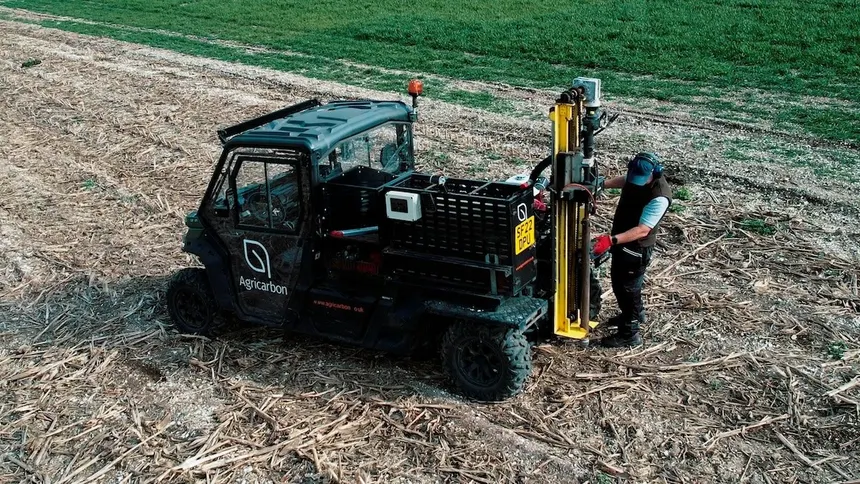
For soil carbon projects, establishing baseline soil organic carbon stocks requires either extensive soil sampling across the project area or calibration of biogeochemical models using regional soil data. Verification standards specify minimum sampling densities, sampling depths, and laboratory analysis methods to ensure measurement accuracy.
Ongoing Monitoring and Reporting
Carbon credit projects require continuous monitoring and periodic reporting throughout the crediting period, which typically spans 10-25 years for agricultural projects. Farmers must document all management changes, maintain field-level records of inputs and practices, and undergo periodic soil resampling or model recalibration.
Most verification standards require monitoring reports every 1-3 years, with independent third-party verification at specified intervals. This creates ongoing administrative burden and verification costs that must be factored into net revenue calculations. Aggregation programs that combine multiple smaller farms into a single project can spread verification costs across more hectares, improving economics for individual participants.
Permanence requirements present particular challenges for agricultural soil carbon. Unlike afforestation projects where trees sequester carbon over decades, soil carbon stocks can reverse quickly if practices change. Most methodologies include buffer pools—withholding a portion of credits to cover potential reversals—and require monitoring for several years after practice change to ensure carbon permanence.
Economic Considerations and Revenue Potential
Understanding the true economics of carbon credit generation requires accounting for establishment costs, verification expenses, buffer requirements, and realistic carbon accrual rates.
Project Development and Verification Costs
Initial project development costs for verified agricultural carbon credits typically range from £5,000 to £25,000 depending on project size and complexity. This includes baseline assessment, project design documentation, initial verification fees, and legal agreements. Annual monitoring and periodic re-verification add ongoing costs of £2,000 to £10,000 per year for individual farm projects.
These upfront costs make carbon credit generation economically challenging for smaller farms operating independently. Aggregation programs that pool multiple farms reduce per-hectare costs by spreading verification expenses across larger project areas. However, aggregators typically retain 20-40 percent of carbon credit revenue as compensation for providing project development, monitoring, and marketing services.
Verification costs under rigorous standards like VM0042 can exceed credit revenue in early project years when carbon sequestration rates are building. Projects typically require 5-10 years before cumulative credit revenue exceeds cumulative development and verification costs, making carbon credit generation a long-term investment rather than immediate income.
Realistic Carbon Sequestration Rates and Revenue
Agricultural soil carbon sequestration rates vary considerably based on baseline soil organic carbon levels, climate, soil type, and specific practices adopted. UK arable soils implementing comprehensive regenerative practice suites might achieve 0.3 to 0.8 tonnes of CO2 equivalent sequestration per hectare per year. Permanent grassland conversion to improved management might achieve higher rates initially, while soils already under good management may see minimal additional sequestration.
At current market prices averaging approximately £27 per tonne, a farm achieving 0.5 tonnes CO2e sequestration per hectare annually would generate £13.50 per hectare per year in gross carbon credit revenue. After accounting for verification costs, buffer withholdings (typically 10-20 percent of credits), and aggregator fees if applicable, net revenue to farmers often falls to £5-10 per hectare annually in steady state.
This revenue level makes carbon credits supplementary rather than transformational income for most farming systems. The economic case strengthens when carbon credit revenue enables regenerative practice adoption that also delivers on-farm benefits—reduced input costs, improved soil health, enhanced resilience—that generate value beyond carbon revenue alone.
Buyer Market Dynamics and Price Drivers
Carbon credit pricing reflects supply-demand dynamics in voluntary offset markets where corporate buyers purchase credits to compensate for residual emissions after reduction efforts. UK credits command premiums over global averages due to several factors: government backing for woodland and peatland codes, transparent registry systems, and geographic proximity for corporate buyers seeking to support domestic climate solutions.
Woodland Carbon Code credits averaging £26.85 per tonne in 2024 significantly exceed global voluntary carbon market averages of approximately $6-7 per tonne. This price premium reflects buyer confidence in credit quality, permanence, and additionality verification. Agricultural soil carbon credits achieving similar verification standards can command comparable pricing when marketed effectively to buyers seeking removal credits rather than avoidance credits.
Corporate demand for nature-based removal credits continues growing as more companies establish science-based targets requiring compensation for residual emissions. The UK government’s 2025 roadmap for voluntary carbon markets aims to channel £10 billion annually in private climate finance by 2035, creating sustained demand that should support stable or growing prices for high-integrity credits.
However, voluntary market pricing remains more variable than compliance market pricing, lacking the floor prices established by regulatory frameworks. Farmers entering carbon markets should plan for potential price volatility and avoid relying on carbon revenue for essential business operations.
Integration with Government Environmental Schemes
Farmers must navigate potential interactions between carbon credit programs and government agri-environment schemes to avoid double-payment issues and maximize total environmental income.
Sustainable Farming Incentive Compatibility
The Sustainable Farming Incentive in England pays for specific actions that deliver environmental outcomes including soil health improvement. Some SFI standards—such as those rewarding reduced inorganic fertilizer use or herbal leys—overlap with practices that also generate carbon credits through reduced emissions or increased sequestration.
Current SFI terms do not explicitly prohibit carbon credit generation from the same land receiving SFI payments, but they do require that farmers are not being paid twice for the same environmental outcome. This creates a gray area where activities might legitimately generate both SFI payments and carbon credits if they deliver distinct outcomes—for example, SFI payments for biodiversity benefits from herbal leys while carbon credits reward the sequestration component.
Farmers should carefully review additionality requirements in carbon credit protocols and eligibility criteria in SFI standards before committing to both schemes on the same land. Where overlap exists, conservative approaches involve segregating land—dedicating some hectares to SFI and others to carbon credit generation—or choosing the scheme offering higher net revenue for specific parcels.
Woodland Creation Grant Interaction
Farmers planting new woodlands face explicit choices between government grant support and carbon credit generation. Woodland creation grants through the England Woodland Creation Offer can fund 60-80 percent of establishment costs, but accepting these grants typically precludes selling carbon credits from those same woodlands through the Woodland Carbon Code.
The economic choice depends on comparing the net present value of upfront grants versus the expected revenue stream from carbon credit sales over decades. For farmers prioritizing immediate cash flow and certainty, grants may prove more attractive. Those with longer time horizons, higher risk tolerance, and confidence in carbon market development may prefer the carbon credit pathway offering potentially higher total revenue but no upfront payment.
Some farmers use hybrid approaches, accepting grants for some woodland creation while reserving other plantings for carbon credit generation. This diversifies both revenue timing and risk exposure across different funding mechanisms.
Strategic Considerations for Farm Business Planning
Carbon credit generation represents a long-term strategic decision that should align with broader farm business objectives rather than serving as an isolated income stream.
Practice Adoption Timelines and Flexibility
Most carbon credit methodologies require maintaining adopted practices throughout crediting periods spanning 10-25 years. This long-term commitment limits management flexibility and requires confidence that regenerative practices will continue delivering agronomic and economic benefits alongside carbon sequestration.
Farmers should thoroughly evaluate practice impacts on yields, input costs, labor requirements, and equipment needs before committing to long crediting periods. Starting with pilot areas to test regenerative practices before enrolling whole farms in carbon credit programs reduces risk of adopting unsuitable approaches.
Some carbon credit programs offer phased enrollment allowing farmers to add additional fields to existing projects as they gain experience. This staged approach enables learning while limiting initial commitment. Farmers should review contract terms carefully to understand obligations if circumstances change or practices prove unviable.
Risk Management and Revenue Volatility
Carbon credit revenue carries several risk factors that prudent farm businesses should consider. Price risk stems from voluntary market dynamics where credit prices can fluctuate based on corporate demand, regulatory developments, and competition from alternative offset types. While UK nature-based credits have shown steady price appreciation over five years, past performance does not guarantee future returns.
Performance risk exists if adopted practices fail to deliver expected carbon sequestration rates due to weather variability, soil characteristics, or management challenges. Most verification standards include uncertainty deductions that reduce issued credits below modeled expectations, creating a buffer for under-performance. Farms with higher baseline uncertainty or challenging monitoring conditions may see larger deductions.
Buyer risk emerges if carbon credit purchasers face financial difficulties or market conditions reduce demand for voluntary offsets. While carbon credits are typically pre-sold through purchase agreements, farmers should evaluate buyer creditworthiness and contract terms including payment schedules and conditions.
Broader Market Context and Future Outlook
Understanding UK agricultural carbon credit opportunities requires context about voluntary carbon market evolution and regulatory landscape changes affecting both supply and demand.
Integrity Standards and Market Credibility
Voluntary carbon markets have faced criticism regarding offset quality, additionality verification, and permanence assurance. High-profile concerns about low-quality credits—particularly avoidance credits from REDD+ forestry projects—have increased corporate buyer scrutiny and demand for removal credits with robust verification.
The establishment of the Integrity Council for the Voluntary Carbon Market and its Core Carbon Principles represents industry efforts to define quality benchmarks. Agricultural soil carbon methodologies like VM0042 are designed to meet these emerging standards through rigorous monitoring requirements, conservative uncertainty assessments, and buffer pools to address reversibility risks.
For UK farmers, this quality-focused market evolution creates advantages for verified agricultural carbon credits over lower-integrity global alternatives. Corporate buyers increasingly prioritize removal credits from transparent, science-based programs over cheaper avoidance credits with questionable additionality. This quality premium should sustain UK agricultural carbon credit pricing despite potentially growing global supply.
Regulatory Development and Compliance Market Potential
The UK currently operates a compliance carbon market—the UK Emissions Trading Scheme—that does not include agriculture due to the difficulty of monitoring and reporting requirements for diffuse agricultural emissions. Agriculture generates carbon credits only through voluntary markets where corporate buyers choose to offset emissions rather than being legally required to do so.
Future regulatory changes could potentially create compliance obligations for agricultural emissions or enable agricultural carbon credits to satisfy compliance requirements. The UK government’s 2025 roadmap for voluntary carbon and nature markets signals policy support for market development while maintaining quality standards.
Any transition toward compliance market integration for agriculture would likely increase both credit demand and verification requirements. Farms already participating in verified voluntary schemes would be well-positioned to transition into compliance frameworks, while those in unverified programs might face challenges meeting enhanced standards.
Technology and Measurement Innovation
Advances in soil carbon measurement technology promise to reduce verification costs while improving accuracy. Remote sensing approaches, proximal soil sensors, and machine learning models can supplement traditional laboratory analysis, potentially lowering per-hectare monitoring expenses.
In November 2025, ChrysaLabs became the first direct-contact proximal sensing soil technology validated by Bureau Veritas for use under VM0042 v2.1, demonstrating that innovative measurement approaches can meet rigorous verification standards. As such technologies mature and costs decline, economic barriers to verified carbon credit generation should diminish.
Biogeochemical modeling approaches in VM0042 allow projects to quantify carbon impacts without exhaustive soil sampling, using regional data to calibrate models. Continued model improvement and validation should enhance accuracy while maintaining cost-effectiveness for agricultural carbon project development.
Practical Steps for Farmers Considering Carbon Credit Generation
Farmers interested in carbon credit opportunities should approach market entry systematically, carefully evaluating fit with existing operations and long-term business strategies.
Assessment and Baseline Documentation
Begin by documenting current management practices in detail. Comprehensive baseline records prove essential for demonstrating additionality and quantifying carbon impact. Key documentation includes fertilizer application records by field and rate, tillage practices and equipment used, crop rotation history, and any existing conservation practices.
Soil testing provides baseline soil organic carbon levels if pursuing direct measurement approaches. While verification standards will require specific sampling protocols, initial testing helps farmers understand baseline conditions and potential for carbon sequestration given soil type and current management.
Evaluate which regenerative practices align with farm operational constraints and market opportunities. Practices generating carbon credits should ideally deliver multiple benefits—reduced input costs, improved soil health, enhanced yields—rather than requiring adoption solely for carbon revenue. Calculate expected costs of practice change including equipment, labor, and potential yield impacts during transition periods.
Program Selection and Commercial Terms
Research available carbon credit programs carefully, comparing verification standards, revenue sharing arrangements, contract terms, and buyer reputation. Key questions include whether the program uses recognized verification standards, what percentage of credit revenue farmers retain after verification costs and intermediary fees, how long contractual commitments extend, and whether flexibility exists to modify practices if needed.
Understand payment terms including timing of payments, whether credits are pre-purchased or sold on spot markets, and whether minimum acreage requirements exist. Some programs pay upfront based on modeled projections while others pay only after verification, creating very different cash flow profiles.
Review additionality requirements and ensure practices you intend to adopt meet program criteria. Practices that are already common in your region or that you would have adopted regardless of carbon revenue may not qualify for credit generation under additionality tests.
Pilot Programs and Staged Enrollment
Consider starting with pilot enrollment of a portion of farm acreage rather than committing entire holdings immediately. This allows testing of program administrative requirements, practice adoption on your specific soils and climate, and credit verification processes before scaling up.
Track the full cost and revenue cycle through at least one verification period to understand true net economics. Initial years typically show lower net revenue due to upfront costs and building carbon stocks. Understanding the multi-year revenue profile helps set realistic expectations.
Network with other farmers participating in carbon credit programs to learn from their experiences. Producer organizations and agricultural consultancies increasingly offer guidance on carbon market participation, helping farmers navigate program selection and enrollment processes.
Conclusion
UK agricultural carbon markets have matured to the point where verified credit generation represents a viable supplementary income stream for farmers adopting comprehensive regenerative practice suites. Current pricing averaging approximately £27 per tonne for high-quality woodland credits, with agricultural soil carbon credits from verified programs achieving similar levels, reflects growing corporate demand for credible nature-based carbon removal.
However, realistic revenue expectations—typically £5-10 per hectare annually after costs—position carbon credits as one component of a diversified environmental income strategy rather than a transformational revenue source. The strongest economic case exists for farms where carbon credit revenue enables practice changes that also deliver on-farm benefits through reduced inputs, improved soil health, and enhanced resilience.
Success requires careful program selection, rigorous documentation, long-term commitment to practice maintenance, and realistic expectations about net revenue after verification costs and buffer withholdings. Farmers should view carbon credit generation as a long-term investment in soil health that generates supplementary income while building natural capital, rather than as an immediate profit center.
As voluntary carbon markets continue evolving toward higher integrity standards and increased demand for removal credits, UK farmers implementing verified regenerative practices are well-positioned to benefit from sustained demand for domestic nature-based carbon solutions. Those entering markets now gain experience with verification processes and establish baseline documentation that will prove valuable as markets mature and potentially transition toward regulatory frameworks.
The decision to pursue carbon credit generation ultimately depends on alignment with farm business objectives, risk tolerance, administrative capacity, and confidence in long-term carbon market development. For farms already committed to regenerative agriculture for agronomic and environmental reasons, carbon credits can provide valuable additional revenue recognition for climate benefits they are already delivering.