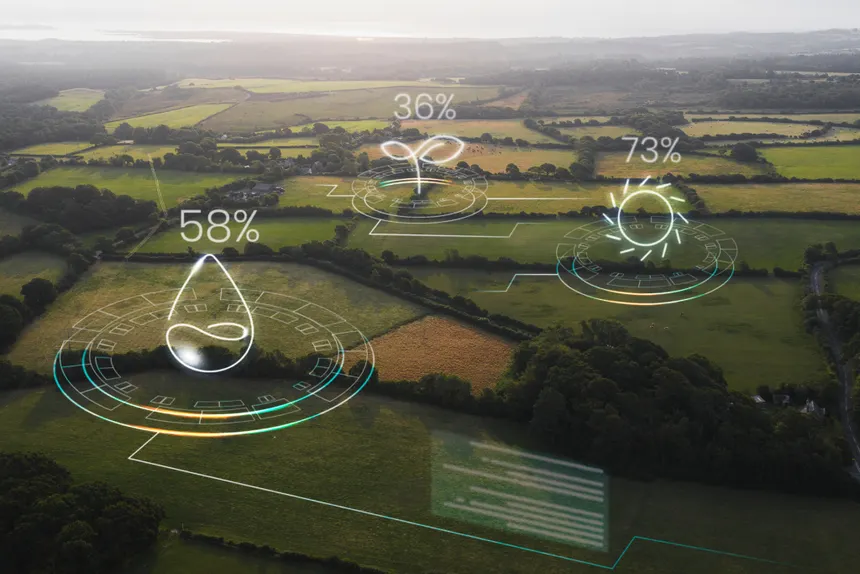
British agriculture generates enormous data volumes across increasingly diverse sources, from combine yield monitors and precision application records through soil sensor networks and satellite imagery to weather stations and financial management systems. This information accumulation creates both opportunity and challenge: properly managed and analysed, farm data drives measurable improvements in operational efficiency, input optimisation, and decision quality, yet without appropriate systems, valuable information remains fragmented across incompatible formats, isolated in proprietary equipment, or simply lost when hardware fails or personnel change.
Cloud-based agricultural data platforms address these challenges through centralised storage, standardised formats, analytical tools, and cross-device accessibility that transform raw measurements into actionable intelligence. The technology has matured substantially since early implementations, with current platforms offering sophisticated integration capabilities, mobile-first interfaces, and analytical algorithms that extract insights previously requiring specialist agronomic expertise or statistical software.
Platform selection involves balancing functionality against complexity, evaluating integration capabilities with existing equipment and systems, assessing data security and ownership terms, and understanding total cost structures that extend beyond headline subscription fees. The following analysis examines leading agricultural data platforms serving UK operations, comparing their capabilities, integration approaches, pricing models, and strategic positioning.
Major Platform Providers and Market Positioning
John Deere Operations Center dominates amongst operations invested in Deere equipment ecosystems, offering seamless integration with company machinery alongside broader agricultural data management capabilities. The platform emphasises operational efficiency and precision agriculture applications, with particular strength in machinery data integration, guidance systems, and field documentation that satisfy farm assurance requirements whilst informing agronomic decisions.
Core functionality includes field boundary management, planting and application records, yield data visualisation, fleet monitoring, and task assignment capabilities suitable for coordinating multiple operators across large holdings. The system automatically captures data from connected John Deere equipment, eliminating manual entry whilst ensuring comprehensive documentation of all machine operations performed.
Advanced features encompass prescription mapping tools for variable rate applications, field health monitoring using satellite imagery, soil sampling integration, and performance analytics comparing actual outcomes against plans and historical benchmarks. The platform increasingly incorporates artificial intelligence elements including yield prediction models, optimisation algorithms for operational logistics, and anomaly detection systems that flag unusual patterns warranting investigation.
Integration extends beyond Deere equipment through partnerships and open APIs, though functionality depth generally favours users operating primarily within the Deere technology ecosystem. Pricing follows a freemium model where basic features remain available at no charge whilst advanced capabilities including prescription generation, enhanced analytics, and increased data storage require paid subscriptions typically ranging £800-£2,400 annually depending on farm size and feature selection.
Climate FieldView, developed by Bayer Digital Farming, positions itself as equipment-agnostic whilst emphasising agronomic decision support and yield optimisation. The platform particularly appeals to operations running mixed machinery fleets where manufacturer-specific systems prove impractical, with robust data import capabilities supporting equipment from major manufacturers alongside manual data entry options for legacy or unsupported systems.
Satellite imagery integration forms a core component, with regular NDVI monitoring, vegetative growth tracking, and within-season crop health assessment accessible through intuitive mobile and desktop interfaces. The platform connects this remote sensing capability with ground-based data including soil sampling results, tissue analysis, weather measurements, and applied inputs to provide contextual interpretation rather than standalone imagery.
Analytical tools emphasise agronomic insights over operational logistics, with yield analysis, hybrid or variety performance comparison, planting date optimisation, and nitrogen response modelling amongst standard capabilities. The system generates agronomic recommendations based on accumulated data patterns, though these suggestions require evaluation against local knowledge and specific farm circumstances rather than automatic implementation.
Climate FieldView operates on subscription tiers ranging from free basic functionality through mid-level packages (approximately £1,200-£2,000 annually) to premium offerings (£2,800-£4,500 annually for large operations) with pricing scaled by area managed and feature access. The company pursues revenue through both software subscriptions and integration with Bayer’s input products, creating potential conflicts of interest that warrant consideration during platform evaluation.
Trimble Ag Software encompasses multiple agricultural technology platforms following the company’s acquisitions of Farm Works, Connected Farm, and other agricultural software providers. The resulting portfolio addresses diverse operational scales and management approaches, from basic field record keeping suitable for smaller operations through enterprise-level systems supporting large integrated farming businesses and agricultural management companies.
Trimble positions strongly in precision agriculture applications, leveraging the company’s survey and positioning technology heritage to deliver sophisticated guidance systems, field mapping capabilities, and integration with Trimble hardware including GPS receivers, flow controllers, and steering systems. This equipment integration proves particularly valuable for operations heavily invested in Trimble precision agriculture hardware seeking unified software environments.
The platform emphasises compatibility, supporting data exchange with major machinery manufacturers, agronomic software packages, and financial management systems through standardised formats and extensive integration partnerships. This interoperability focus suits operations prioritising flexibility over single-vendor simplification, accepting additional configuration complexity in exchange for avoiding technology lock-in.
Pricing varies substantially across the Trimble agricultural software portfolio, with basic packages starting around £400-£600 annually whilst comprehensive enterprise solutions reach £3,000-£6,000 annually depending on operational scale and selected modules. The company offers customised pricing for large operations and agricultural service providers managing multiple client farms.
Agrivi targets diversified farming operations and specialty crop producers with functionality extending beyond traditional arable agriculture into horticulture, livestock management, and permanent crops. The platform’s broader agricultural scope suits mixed farming enterprises where livestock and crop components require integrated management, though this breadth comes at the expense of depth in specific categories relative to focused competitors.
Core capabilities span production planning, inventory management, labour tracking, compliance documentation, and financial analysis alongside conventional precision agriculture functions. The system particularly emphasises traceability and quality assurance, supporting farm certification requirements, buyer quality demands, and regulatory compliance documentation that prove increasingly important in UK agricultural markets.
Agrivi operates on per-farm pricing models ranging £800-£2,400 annually based on farm complexity and feature requirements, with additional charges for advanced modules including financial management, supply chain integration, and multi-site consolidated reporting. The platform suits operations where comprehensive farm management functionality justifies accepting less sophisticated precision agriculture capabilities compared to specialist alternatives.
FarmLogs positions as an accessible entry point for operations beginning digital farm management adoption, emphasising intuitive interfaces and streamlined functionality over comprehensive feature sets. The platform addresses basic requirements including field mapping, activity records, inventory tracking, and simple financial reporting without the complexity characterising more sophisticated alternatives.
Satellite imagery integration provides crop monitoring capabilities whilst weather tracking, rainfall recording, and growing degree day calculations support agronomic decision-making without requiring extensive technical expertise. Mobile-first design ensures functionality remains accessible during field operations via smartphone applications, with desktop interfaces available for detailed planning and analysis activities.
Pricing remains competitive at £300-£800 annually for most UK farm operations, with this lower cost reflecting both the simplified feature set and the company’s strategy of maximising user base over premium pricing. The platform suits operations seeking digital record keeping and basic precision agriculture capabilities without commitment to comprehensive technology ecosystems or willingness to navigate complex software environments.
Data Types Managed Across Agricultural Platforms
Yield mapping data forms the foundation of most agricultural data platforms, with combine, forage harvester, and potato harvester outputs captured through ISOBUS connections, proprietary machine interfaces, or manual imports from equipment-specific software. Quality platforms provide visualisation tools, statistical analysis, multi-year trend identification, and correlation analysis linking yield patterns to management practices, soil properties, and weather conditions.
Effective yield data management requires addressing common quality issues including header transitions, point rows, overlap areas, and calibration errors that corrupt raw machine data. Leading platforms incorporate filtering algorithms, manual editing tools, and quality assessment functions that clean datasets before analysis, though this processing remains imperfect and benefits from operator oversight during data import and validation stages.
Soil sampling results including nutrient levels, pH measurements, organic matter content, and texture analysis integrate through laboratory data imports or manual entry, with platforms providing spatial visualisation, temporal trend tracking, and links to subsequent fertiliser applications that close the loop between analysis and management response. Some systems incorporate soil sampling planning tools that optimise sample locations based on management zones, historical variation, or time elapsed since previous testing.
Weather data arrives from on-farm weather stations, regional networks, or satellite-derived datasets, with platforms utilising measurements for growing degree day calculations, disease risk modelling, irrigation scheduling, and spray window identification. Integration quality varies substantially, with some systems offering sophisticated agronomic applications of weather data whilst others provide simple recording and display functionality requiring manual interpretation.
Input application records document fertiliser, pesticide, and seed placements, supporting regulatory compliance, traceability requirements, and agronomic analysis of input-yield relationships. Platforms capture application data from precision agriculture equipment through automatic wireless transfer, manual entry following applications, or imports from application rate controllers and machine terminals.
Satellite and aerial imagery increasingly forms standard platform content, with systems either incorporating imagery directly through partnerships with providers or accepting uploads from external services. Integration depth varies from simple image display through NDVI calculation and field health monitoring to sophisticated algorithms detecting specific stress types, generating variable rate prescriptions, or predicting yield outcomes from vegetative indices.
IoT sensor measurements including soil moisture, temperature, and nutrient concentrations flow into platforms supporting precision irrigation and fertility management, with data visualised spatially and temporally whilst feeding algorithms that generate irrigation schedules, alert conditions, or variable rate fertility prescriptions. This integration remains evolving, with standardisation challenges limiting seamless data flow between sensor networks and farm management platforms.
Financial information spanning input costs, crop sales, machinery expenses, and labour allocations integrates agricultural and business management, enabling enterprise analysis, cost-of-production calculations, and profitability assessments at whole-farm and individual field scales. Comprehensive platforms link physical production data with financial transactions, revealing relationships between agronomic decisions and economic outcomes that inform future management strategies.
Integration Capabilities and Interoperability Standards
ISOBUS compatibility provides standardised communication between implements and tractors from different manufacturers, with platforms supporting this protocol capable of capturing detailed application data including product, rate, location, and timing without proprietary interfaces. However, ISOBUS adoption remains incomplete across UK agriculture, with many older machines lacking compatibility and some manufacturers implementing the standard inconsistently.
Proprietary machine integration delivers equipment-specific functionality exceeding ISOBUS capabilities, particularly for combine yield monitoring, planter performance, and advanced precision agriculture features. John Deere Operations Center exemplifies this approach, offering seamless integration with company equipment whilst accepting reduced functionality for competitor machines. Operations must evaluate whether single-brand optimisation justifies accepting compromised integration with other manufacturers’ equipment.
API-based connections enable custom integrations between agricultural data platforms and specialist software including accounting systems, agronomic modelling tools, crop marketing platforms, and supply chain management systems. Open API availability proves essential for operations seeking tailored technology ecosystems, though actual integration requires technical expertise or engagement with system integrators charging additional fees.
File-based data exchange remains common despite technical limitations, with platforms supporting imports and exports in standardised formats including ISOXML, Shapefile, GeoTIFF, and CSV. This approach enables interoperability without direct system integration though requires manual data transfer steps that introduce delays, create error opportunities, and limit real-time functionality. Most operations utilise file-based exchange for occasional data movements whilst pursuing direct integration for frequently accessed information.
Data Security and Ownership Considerations
Cloud storage introduces data security considerations distinct from traditional on-premises systems, with information residing on provider-controlled servers rather than farm-owned infrastructure. Quality platforms implement encryption for data transmission and storage, multi-factor authentication, role-based access controls, and regular security audits, with major providers generally delivering security exceeding what individual farms achieve through local IT infrastructure.
However, cloud dependence creates operational vulnerability to internet outages, service disruptions, and potential provider business failures that could compromise data accessibility. Mitigation strategies include selecting established providers with demonstrated stability, maintaining local backups of critical information, and ensuring data export capabilities enable migration to alternative platforms if necessary.
Data ownership terms vary significantly between platforms, with some agreements granting providers rights to aggregate, analyse, and commercialise farm data whilst others explicitly maintain farmer ownership with providers acting solely as data processors. UK operations must scrutinise terms of service carefully, with particular attention to clauses addressing anonymised data usage, third-party data sharing, and rights following subscription termination.
GDPR compliance proves mandatory for platforms serving UK agriculture, with requirements encompassing data subject rights, processing transparency, consent management, and breach notification obligations. Reputable providers demonstrate compliance through privacy policies, data processing agreements, and certifications, though ultimate legal responsibility often remains with farmers as data controllers regardless of platform provider practices.
Cyber security threats targeting agricultural operations have increased substantially, with ransomware attacks, credential theft, and unauthorised access attempts becoming routine concerns. Platform providers implement protective measures, though farm-level security practices including strong password management, access restriction, and staff training prove equally critical in preventing breaches.
Analytical Tools and Decision Support Capabilities
Yield analysis functions compare performance across fields, varieties, years, and management practices, with statistical algorithms identifying significant factors influencing productivity whilst controlling for environmental variation. Quality platforms present findings through intuitive visualisations rather than statistical tables, making insights accessible to operators without data science expertise whilst providing detailed analysis options for technically sophisticated users.
Prescription map generation converts agronomic intent into machine-readable files controlling variable rate applications, with platforms offering varying sophistication from simple zone-based prescriptions through algorithmic rate calculations incorporating multiple data layers to artificial intelligence approaches learning from historical outcomes. Generated prescriptions require agronomic validation before implementation, as automated systems may suggest inappropriate rates when input data contains errors or unusual field conditions fall outside algorithm training parameters.
Profitability analysis links physical production data with financial information, calculating returns at field and crop levels whilst identifying cost drivers and highlighting improvement opportunities. These capabilities prove particularly valuable on diversified operations where enterprise comparisons inform strategic decisions regarding crop selection, land allocation, and investment priorities.
Benchmarking tools compare farm performance against regional averages, similar operations, or historical trends, providing context for evaluating outcomes and identifying areas of competitive advantage or disadvantage. However, meaningful benchmarking requires quality reference datasets, with platform providers varying substantially in the comparison data they compile and make available to subscribers.
Mobile Access and Field Functionality
Smartphone applications enable field-based data access, activity recording, and immediate decision support without returning to office computers, with quality mobile interfaces supporting the full operational workflow from planning through execution to verification. Effective mobile functionality accounts for field conditions including bright sunlight, gloved operation, and marginal connectivity, with interface designs prioritising large buttons, high contrast displays, and offline capability that caches essential information locally.
Real-time data synchronisation ensures field observations and measurements immediately become available to other team members, agronomic advisors, and office staff, supporting coordinated operations across dispersed personnel. However, synchronisation depends on cellular connectivity that remains unreliable across rural UK areas, necessitating offline operation modes that queue data for later upload when connectivity restores.
Mobile limitations including smaller screens, reduced processing power, and interface constraints compared to desktop computers mean comprehensive analysis and detailed planning activities generally remain desktop tasks despite growing mobile capabilities. Operations benefit from recognising these distinctions, utilising mobile applications for field activities whilst reserving analytical work for office-based sessions with full-featured interfaces.
Pricing Models and Total Cost Considerations
Subscription pricing dominates current agricultural platform markets, with annual fees scaled by farm area, feature access, or operational complexity. This recurring cost structure proves sustainable for most UK farms, though accumulated subscriptions across multiple agricultural technology services create financial burdens, with total annual software costs reaching £3,000-£8,000 on operations utilising comprehensive technology suites.
Freemium approaches offer basic functionality without charge whilst reserving advanced features for paid tiers, enabling risk-free platform evaluation whilst creating upgrade pathways as operations expand technology utilisation. However, free tiers typically prove insufficient for serious operational use, serving primarily as marketing mechanisms rather than viable long-term solutions.
Per-hectare pricing scales costs with farm size, preventing small operations from facing disproportionate technology expenses whilst ensuring providers capture value from large operations. Typical rates range £1.50-£6.00 per hectare annually depending on platform sophistication and included features, with volume discounts often available for operations exceeding 500-1,000 hectares.
Hidden costs warrant consideration during platform evaluation, including data integration fees, training expenses, consultant charges for custom configuration, and productivity losses during implementation periods. Realistic total cost assessments often exceed headline subscription prices by 30-60% during initial years, declining to 15-25% premiums once implementation stabilises.
Agricultural data platforms have transitioned from optional technology experiments into operational infrastructure for progressive UK farming businesses. The transformation from fragmented data sources into unified analytical environments delivers tangible benefits through improved decision quality, enhanced operational efficiency, and comprehensive documentation that satisfies increasingly demanding regulatory and market requirements.