The SMAM scheme, the Sub-Mission on Agricultural Mechanisation, is a central government programme that puts public money into tractors, implements, harvesters and drones. It pays part of the price of approved machines for farmers, custom hiring centres and farm machinery banks, and it sets the testing, pricing and tracking rules that manufacturers must meet to sell into that demand.
This explainer sets out where the SMAM scheme sits, the subsidy rates in the operational guidelines revised in August 2026, the testing and empanelment rules, the crop residue management programme and what it all means for tractor and implement makers and their dealers. Figures are dated, and the position is as of 31 October 2026. It is general information, not legal or financial advice.
What the SMAM scheme is and where it sits
The SMAM operational guidelines, revised in August 2026, say the sub-mission is implemented as a component of the Rashtriya Krishi Vikas Yojana (RKVY), the umbrella scheme through which the Centre funds state agriculture plans. Its stated objectives are to extend farm mechanisation to small and marginal farmers and to regions with low farm power, to promote custom hiring, to build awareness, and to ensure performance testing and certification of machines.
Costs are shared between the Centre and the states in the ratio 60:40 for most states, 90:10 for north-eastern and Himalayan states, and 100:0 for union territories. States submit one consolidated annual action plan for all agriculture schemes by 15 February, and a state-level committee chaired by the chief secretary gives final approval by 31 March.
Money for the SMAM scheme comes through the RKVY budget line. The Notes on Demands for Grants for 2026-27 show net RKVY provision of INR 8,550 crore in 2026-27, against a revised estimate of INR 7,000 crore for 2025-26 and actual spending of INR 7,386.14 crore in 2024-25. The budget papers do not show a separate figure for the mechanisation component, which PRS Legislative Research lists among RKVY’s five focus areas alongside soil health, crop diversification, rainfed areas and irrigation.
The Economic Survey 2025-26 says 25,689 custom hiring centres were set up under the SMAM scheme between 2014-15 and 2025-26, including 558 in 2025-26 as of 30 October 2025. It adds that fragmented landholdings and rising labour shortages continue to hinder farm mechanisation, and calls for collective ownership through FPOs, primary agricultural credit societies and self-help groups.
SMAM scheme subsidy rates for individual farmers
For machines bought by individual farmers, the SMAM scheme sets two rates. Small and marginal farmers, Scheduled Caste and Scheduled Tribe farmers, women farmers, and farmers in north-eastern states and Himalayan regions receive 50% of the cost of the machine. All other farmers receive 40%. Holders of land titles under the Forest Rights Act receive 90%, with beneficiaries listed by the Ministry of Tribal Affairs.
Each machine also has a cash ceiling, listed in Annexure-I of the guidelines. Some examples for the 50% and 40% categories:
- Tractor, 2WD, up to 20 PTO HP: INR 2.00 lakh and INR 1.60 lakh.
- Tractor, 4WD, above 20 and up to 40 PTO HP: INR 3.60 lakh and INR 2.88 lakh.
- Tractor, 2WD, above 50 PTO HP: INR 6.00 lakh and INR 4.80 lakh.
- Power tiller, 8 to 11 BHP: INR 1.00 lakh and INR 0.80 lakh.
- Self-propelled combine harvester: INR 9.60 lakh and INR 7.68 lakh.
- Kisan drone: INR 5.00 lakh and INR 4.00 lakh.
The guidelines steer expensive machines away from individual ownership. Tractors above 40 HP, combine harvesters, sugarcane harvesters and other machines marked in Annexure-I should be promoted only through custom hiring centres and farm machinery banks, with individual ownership discouraged; if necessary, spending on such machines for individuals should be capped at 25% of the budget for individual ownership. Self-propelled sugarcane harvesters are to be bought by custom hiring centres only.
Where applications exceed targets, states should select beneficiaries by online lottery rather than first come, first served. Advanced small machines costing up to INR 10,000 may be sold to small and marginal farmers at fairs and exhibitions, with application, approval, purchase, verification and subsidy all completed on site.
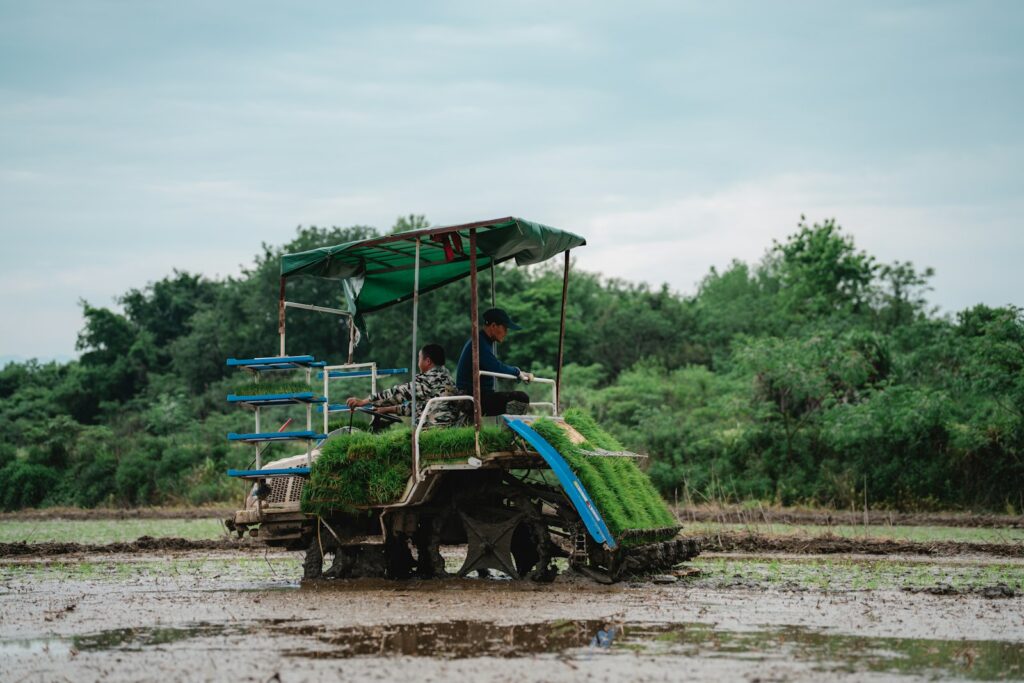
Custom hiring centres and farm machinery banks under the SMAM scheme
Custom hiring centres (CHCs) are the scheme’s main route to small farmers. Rural entrepreneurs, self-help groups, FPOs, panchayats and cooperatives can receive 40% of the project cost for projects of up to INR 250 lakh. Agriculture graduates setting up Kisan drone CHCs receive 50% of the basic cost of the drone and attachments, up to INR 5 lakh, and need a trained drone pilot. Our agriculture drone explainer covers drone rules.
CHC subsidy is credit linked and back ended. Half of the eligible subsidy is released in advance to the lending bank and held in a subsidy reserve account, and the rest after physical verification of the machines; the subsidy is adjusted against the loan only after the bank loan is repaid. Repayment may generally run up to five years with a year’s grace, according to Annexure-II. States may exempt projects of up to INR 10 lakh, provided payments go through banks.
Projects above INR 50 lakh need a detailed project report, CHC beneficiaries must be trained, and 10% of state funds for CHCs and hi-tech hubs is earmarked for self-help groups under the rural livelihoods mission. CHCs may carry precision farming technologies including Kisan drones; our precision agriculture explainer sets out how those tools reach small farms.
Farm machinery banks, the North East and drone hiring
Village-level farm machinery banks (FMBs), aimed at villages with low mechanisation, receive 80% of project costs of up to INR 30 lakh, with assistance capped at INR 24 lakh on larger projects and no more than one tractor per project. In north-eastern states, individual farmers receive 100% of the cost of machines costing up to INR 1.25 lakh, and FMBs 95% of project costs of up to INR 30 lakh, with assistance capped at INR 28.50 lakh on larger projects.
Another component pays small and marginal farmers in low-mechanisation regions INR 2,000 a hectare to hire drones from CHCs or women’s self-help groups, for up to 2 hectares a year, through direct benefit transfer. States may also set up model villages where state-owned machines are rented to small farmers at low rates or free, using up to 25% of their flexi funds.
Testing and empanelment: the rules for manufacturers
Only tested machines qualify. The guidelines say only manufacturers whose products have been tested by a Farm Machinery Training and Testing Institute (FMTTI) or another institute identified by the agriculture department are eligible to supply under the SMAM scheme. Annexure-IV lists 40 institutions approved for testing and certifying machines, and the scheme strategy refers to four FMTTIs.
There is a carve-out for cheap tools. A test report may not be needed for implements costing less than INR 50,000, such as hand tools and conventional tractor-drawn ploughs, harrows and seed drills, where self-certification can be accepted. But a test report may be made mandatory for first-time manufacturers of such implements, and states must run random checks before or after dispatch, with retesting where needed.
States empanel manufacturers on the basis of standard specifications, a valid test report, warranty and after-sales service. Manufacturers must display maximum selling prices on their websites and at dealers. To avoid shutting out small firms, the guidelines say states should not impose large earnest money deposits, and any performance security should be 3% to 5% of contract value.
Tracking every machine
Every machine costing INR 1 lakh or more supplied under the SMAM scheme must be geo-referenced. Self-propelled machines costing INR 1 lakh or more, such as tractors, reapers and paddy transplanters, must carry an app-based, AI-powered telematics kit that records location and daily work, fitted as standard on machines made after 1 June 2023. Each machine must also carry a unique code, laser cut or engraved, in a national format generated on the central portal.
Manufacturers must register on the central portal, list products with their MRP and upload state-wise inventory, and states verify the code on each machine against that inventory. Tractors and combine harvesters are exempt from the laser-cut code. The guidelines also say a soil health card may be needed to claim the subsidy.
How the money flows: the central portal and state portals
The Digital Platform for Farm Mechanisation and Technology at agrimachinery.nic.in, run by the Department of Agriculture and Farmers Welfare, handles direct benefit transfer of farm mechanisation subsidies. States with their own portals must integrate them with it, and states without one must use it. The portal publishes state lotteries: for example, Kerala’s second SMAM lottery for 2026-27 took applications from 22 September to 15 October 2026. Waitlists from 2025-26 do not carry over.
The portal’s FAQ for the DBT system, dated 28 November 2019, shows how the trade side works. Manufacturers register once, add products with a mandatory testing report and set state-wise MRPs. Once a state nodal officer approves an MRP, it can be reduced but not raised. Dealers are registered and mapped to products and territories by the manufacturer, and the subsidy can be paid to the farmer or the dealer, as chosen when the dealer uploads the bill.
Purchased machines are physically verified by a government officer, with joint photographs and a verification report, according to the DBT page. The portal’s home page also links a centralised testing portal for FMTTIs and the FARMS mobile app, on which, under the guidelines, CHCs must be geo-referenced and uploaded.
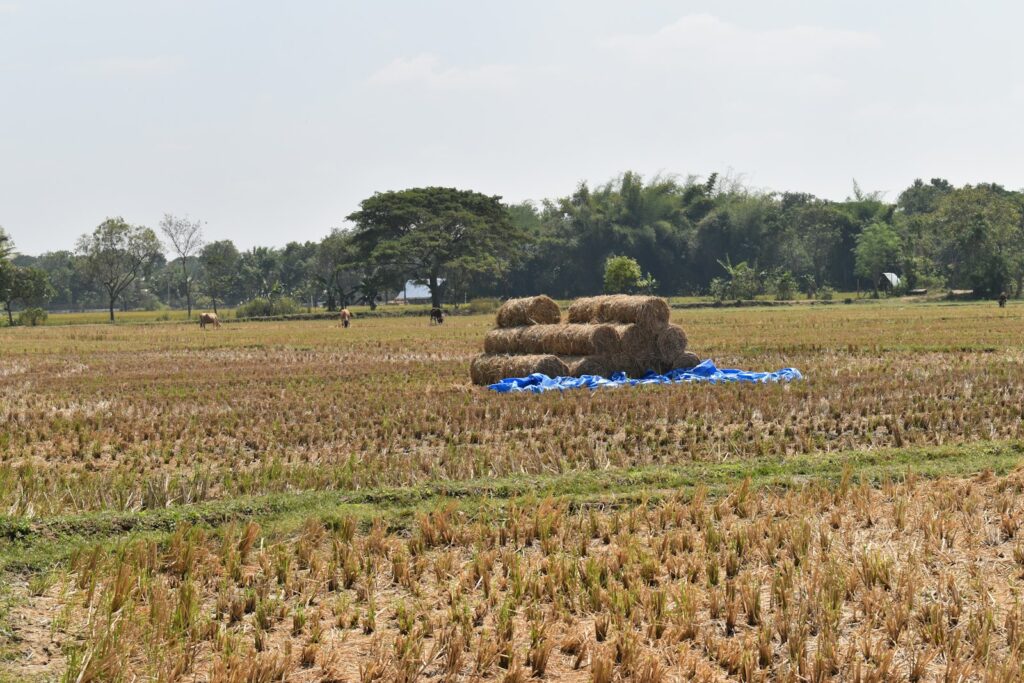
Crop residue management alongside the SMAM scheme
Paddy straw management is a second source of machinery demand. Crop residue management (CRM), for machines that handle straw in the field or remove it for use elsewhere, has its own operational guidelines of 2024, which say it is implemented as a component of RKVY in Punjab, Haryana, Uttar Pradesh, Madhya Pradesh and Delhi. A Lok Sabha reply of 30 July 2024 said the earlier central sector scheme had been merged with the SMAM scheme from 2023-24.
According to a PTI report in Business Standard on a ministerial review meeting held on 13 October 2026, the Centre has supplied over 3.54 lakh CRM machines to states, including 26,109 in 2026-27. It released INR 4,266.47 crore under the CRM scheme between 2018-19 and 2025-26, including INR 2,056.50 crore to Punjab, INR 1,171.71 crore to Haryana, INR 868.67 crore to Uttar Pradesh and INR 59 crore to Madhya Pradesh. For 2026-27, INR 592.57 crore was allocated and INR 430.87 crore released, the report said.
Utilisation is the weak point. PTI reported that a central survey found about 40% of older machines in Punjab and 48% in Haryana idle or not working, and that Agriculture Minister Shivraj Singh Chouhan directed that they be repaired alongside new supplies and that custom hiring centres be activated. In Amritsar and Tarn Taran, the air quality commission reported on 10 October 2026 that balers were collecting paddy straw, and that Amritsar had a supply chain to industries with boilers.
Residue machines also sit inside the SMAM scheme’s own price list. Annexure-I sets ceilings for super seeders from INR 1.30 lakh for a 6-foot model to INR 1.65 lakh for 10 feet at the 50% rate, and for happy seeders, balers and straw choppers. Our reports on CAQM’s flying squads and Mahindra’s zero-till seeder follow the season.
Demonstrations, training and testing grants
Some SMAM scheme spending goes to institutions, funded 100% by the Centre. FMTTIs, ICAR institutes, state agricultural universities, Krishi Vigyan Kendras and public sector units receive 100% grants to buy machines, including Kisan drones and crop residue machines, for demonstrations on farmers’ fields, while FPOs receive 75%. Agencies that hire machines instead receive INR 6,000 a hectare for contingent costs, or INR 3,000 a hectare if they bought their own.
Demonstrations must be geo-referenced and uploaded to the Krishi MApper platform, with Krishi Sakhis paid INR 100 a hectare for the data work. Testing institutes can receive a one-time grant of INR 1.5 crore each to upgrade facilities, plus up to INR 1 crore more for new test facilities. Grassroots innovators can receive up to 90% of project costs, in two phases up to INR 5 lakh and from INR 5 lakh to INR 35 lakh.
What the SMAM scheme means for tractor and implement makers and dealers
The following is The Agrotech Daily’s analysis of the farm mechanisation guidelines and data above.
Tractor makers
Scheme demand sits alongside a large retail market. FADA data show 76,906 tractors registered at retail in September 2026 and 5,56,862 in April to September 2026, up 19.81%. The guidelines discourage individual ownership of tractors above 40 HP and push them towards CHCs, so sales of larger tractors under the SMAM scheme depend on entrepreneurs, FPOs and the banks that finance them. See our FADA report and the Mahindra and Escorts Kubota profiles.
Implement makers
For implement makers, the test report is the entry ticket, so testing capacity and turnaround at the FMTTIs and the 40 listed institutions matter commercially. The INR 50,000 self-certification threshold helps makers of hand tools and conventional tractor-drawn implements, and the fairs route suits machines costing up to INR 10,000. Small powered machines, such as those made by Balwaan Krishi, fall outside the self-certification list. Testing providers are listed in our testing and certification category.
Compliance with the SMAM scheme has a cost. Telematics kits on self-propelled machines, laser-cut codes, state-wise inventory uploads and price lists add engineering and administrative work, and the rule that an approved MRP can only fall limits pricing flexibility within a year. Makers that sell across several states also have to manage separate state empanelment and approval processes.
Dealers and financiers
Dealers are registered by manufacturers, upload bills and may receive the subsidy directly, so their cash flow depends on state verification and release times. Banks financing CHCs hold back-ended subsidy in reserve accounts until loans are repaid. Machinery suppliers are listed in our machinery and implements category and news is on the Machinery desk.
What is still unsettled
Five questions about the SMAM scheme remain open as of 31 October 2026, and each matters to companies selling farm mechanisation equipment.
- Spending data: the 2026-27 budget papers show RKVY as a whole, not the farm mechanisation component, so national spending on farm mechanisation is not visible in them.
- State delivery: subsidy depends on each state’s action plan, portal and lottery timing, which vary.
- Idle machines: a central survey reported by PTI found large shares of older CRM machines idle or not working in Punjab and Haryana.
- Telematics enforcement: the guidelines require kits on self-propelled machines costing INR 1 lakh or more, fitted as standard on those made after 1 June 2023, and The Agrotech Daily found no published data on compliance.
- Machine counts: The Agrotech Daily found no published national total of machines subsidised under SMAM for 2025-26 or 2026-27.
These points decide how much of the scheme’s demand reaches manufacturers in a given season, and when.
SMAM scheme: frequently asked questions
What is the SMAM scheme?
The Sub-Mission on Agricultural Mechanisation is a centrally sponsored programme, implemented as a component of the Rashtriya Krishi Vikas Yojana, that subsidises farm machinery for farmers, custom hiring centres and farm machinery banks, and funds demonstrations, training and testing. Costs are shared 60:40 between the Centre and most states, 90:10 for north-eastern and Himalayan states and 100:0 for union territories.
How much subsidy does the SMAM scheme give on a tractor?
Small and marginal, SC and ST, women and north-eastern farmers receive 50% of the cost and others 40%, up to machine-wise ceilings. For a 2WD tractor up to 20 PTO HP the ceilings are INR 2.00 lakh and INR 1.60 lakh; above 50 PTO HP they are INR 6.00 lakh and INR 4.80 lakh. Tractors above 40 HP are to be promoted mainly through custom hiring centres.
What subsidy is available for a custom hiring centre?
Under the August 2026 guidelines, eligible groups and entrepreneurs receive 40% of the project cost for projects up to INR 250 lakh, paid as a credit-linked, back-ended subsidy through a bank. Agriculture graduates setting up Kisan drone centres receive 50%, up to INR 5 lakh. The Economic Survey counts 25,689 centres set up between 2014-15 and October 2025.
Does a machine need to be tested to qualify for subsidy?
Yes, in most cases. Only manufacturers whose products have been tested by an FMTTI or an institute identified by the agriculture department can supply under the SMAM scheme, and the DBT portal treats a testing report as mandatory for each product. Implements costing under INR 50,000 may be self-certified, though a test report may be required of first-time manufacturers, and states run random checks.
How does the crop residue management scheme relate to SMAM?
Crop residue management has its own 2024 operational guidelines and is implemented as a component of RKVY; a Lok Sabha reply of July 2024 said the earlier central scheme was merged with the SMAM scheme from 2023-24. According to PTI, the Centre released INR 4,266.47 crore under it between 2018-19 and 2025-26, mainly to Punjab, Haryana and Uttar Pradesh, and has supplied over 3.54 lakh machines. SMAM’s own price list also sets ceilings for residue machines such as super seeders, happy seeders and balers.
Where do farmers and manufacturers apply under the SMAM scheme?
On the central DBT portal, agrimachinery.nic.in, or on state portals that must be integrated with it. Farmers apply for machines and are selected by lottery where demand exceeds targets. Manufacturers register once, list tested products and MRPs, map dealers and upload state-wise inventory, and machines are physically verified before subsidy is paid.