e-NAM, the National Agriculture Market, is India’s online trading platform for regulated wholesale mandis. Launched on 14 April 2016, it links 1,656 mandis in 23 states and four union territories, and had recorded cumulative trade worth INR 4.84 lakh crore by March 2026, according to the Ministry of Agriculture and Farmers Welfare.
The national market it promised has been slower to arrive. Trade between states remains small, and independent studies disagree on what e-NAM has done for farm prices. This guide sets out how e-NAM works, the latest official numbers, the evidence and what it means for traders, FPOs and agritech marketplaces.
What e-NAM is and how it works
The ministry describes e-NAM as a pan-India electronic trading platform that integrates physical wholesale mandis to allow transparent and competitive online trading of agricultural commodities. The official e-NAM FAQs stress that it is not a parallel marketing structure: it is a way of networking existing physical mandis so that buyers outside a mandi, or outside the state, can bid on local produce.
The Small Farmers’ Agribusiness Consortium (SFAC) is the lead implementing agency. It runs the platform with a strategic partner, named on the portal as NFCL. The platform was built with central government investment, and its software is available free of cost to any mandi that joins, customised to each state’s mandi law.
The process follows a lot from gate to payment. A PIB explainer published on 13 April 2026 lists digital gate entry, lot creation with a unique identifier, quality assaying, online bidding, real-time bid tracking and electronic payment into the farmer’s bank account. Payments can be made by NEFT, RTGS, internet banking and UPI, and the portal runs in 12 languages.
A mobile app followed in October 2016. As of December 2025 it offered free price information for 247 notified commodities. Separately, 238 commodities were notified for online auction as of July 2025, with the Directorate of Marketing and Inspection examining state requests to add more.
Key dates
- 14 April 2016: the Prime Minister launches the pilot, with 21 mandis in eight states linked on the first day and a target of 585 mandis by March 2018, according to the PIB release of that day.
- October 2016: the mobile app follows.
- January 2019: the first inter-state trade, between mandis in Uttar Pradesh and Uttarakhand; 585 regulated markets in 16 states and two union territories are on the portal, with 415 more planned by March 2020.
- 14 July 2022: the Platform of Platforms is introduced.
- 2024: 1,389 mandis are connected.
- 30 June 2025: 1,522 mandis are integrated.
- January to June 2026: 134 mandis in five states and union territories are integrated; the total stands at 1,656 in 23 states and four union territories on 30 June 2026.
- June 2026: 1.89 crore farmers and 2.78 lakh traders are registered.
The rules for joining the national agriculture market
Agricultural marketing is a state subject in India, so the platform depends on state law. To integrate their mandis, states must make three changes to their APMC Acts, the e-NAM FAQs say: a single unified trading licence valid across the state, a single point levy of market fee across the state, and provision for e-auction or e-trading as a mode of price discovery.
Integration is done on proposals from states and union territories. The Centre gives grant assistance of up to INR 75 lakh per mandi for the marketing and allied infrastructure needed to join, including quality assaying laboratories, electronic weighing, computers, cleaning, grading and packaging facilities and compost units, according to a Lok Sabha reply published on 17 March 2026. Total fund release to the 27 states and union territories was INR 68,970.48 lakh.
Whether a trader in one state can bid in another state’s mandi is also a state decision. A reply in July 2025 said liberalising trading licences and enabling inter-state trade is done by state governments, and that some states allow all registered buyers on the platform to bid across mandis.
e-NAM by the numbers: mandis, farmers, traders and trade
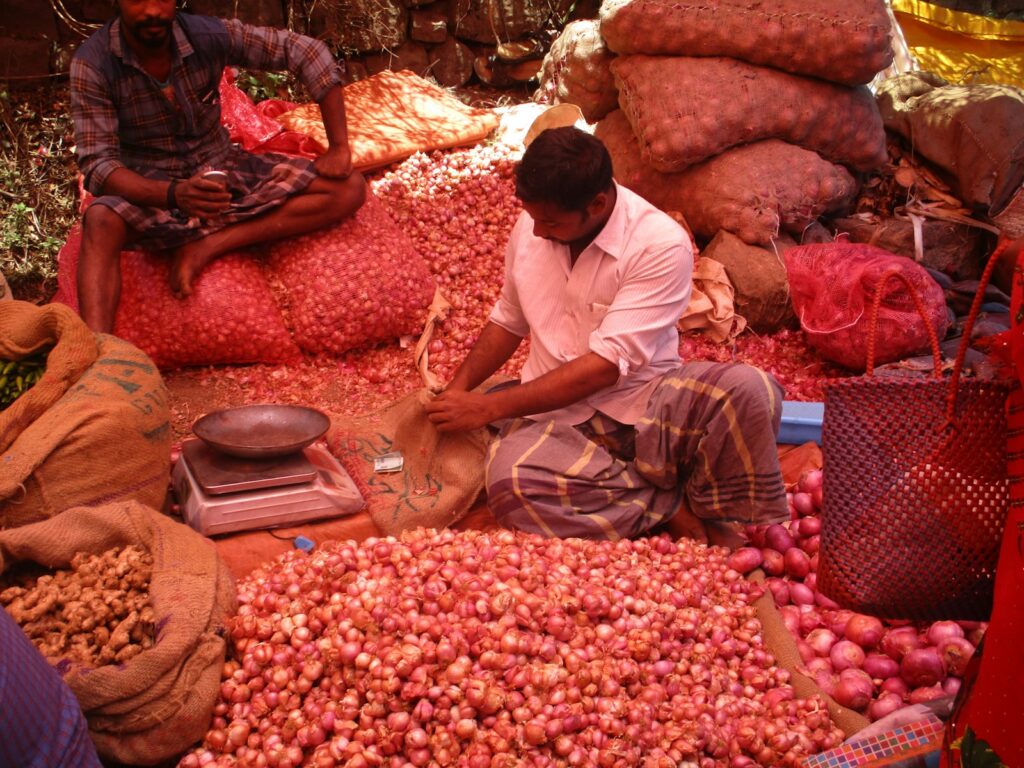
The March 2026 reply said 1,656 mandis from 23 states and four union territories had been onboarded since inception. As of 28 February 2026, 1.80 crore farmers and 2.72 lakh traders were registered, and 4,724 farmer producer organisations had been onboarded. Trade since inception to February 2026 totalled 13.22 crore tonnes worth INR 4,82,350 crore.
The April 2026 explainer gave figures up to March 2026: 2.73 lakh traders and cumulative trade of 13.25 crore tonnes worth INR 4.84 lakh crore between 2016 and March 2026. It said cumulative trade value had risen from INR 3.19 lakh crore in 2024, and the number of connected mandis from 1,389 in 2024.
The latest official counts come from a PIB backgrounder of 12 August 2026: as of June 2026, 1,656 mandis were integrated and 1.89 crore farmers and 2.78 lakh traders were registered. A Lok Sabha answer of 21 July 2026 confirmed 1,656 mandis from 23 states and four union territories as on 30 June 2026. The same answer said 134 mandis in five states and union territories had been integrated between January and June 2026.
A year earlier the platform was smaller. On 30 June 2025, 1,522 mandis were integrated and cumulative trade stood at 12.03 crore tonnes plus 49.15 crore units of countable produce such as coconut, betel leaf, sweet corn, lemon and bamboo, worth INR 4,39,941 crore, according to the reply of 29 July 2025. At the date of that reply, more than 1.79 crore farmers and 4,518 FPOs were registered.
Where e-NAM trade is concentrated
The state table in the March 2026 reply shows how uneven the platform is. Rajasthan, with 173 mandis, had recorded trade worth INR 1,30,772.69 crore since inception, and Haryana, with 114 mandis, INR 1,23,474.09 crore. By our calculation from that table, the two states account for just over half of all trade on the platform by value.
Andhra Pradesh followed with INR 63,416.08 crore from 33 mandis, then Madhya Pradesh with INR 37,160.21 crore from 139 mandis, Telangana with INR 30,164.31 crore and Maharashtra with INR 23,067.37 crore. Tamil Nadu has the most mandis on the platform, 213, but cumulative trade of INR 9,837.03 crore.
At the other end, Bihar’s 20 mandis had recorded INR 15.43 crore and Kerala’s six mandis INR 2.68 crore, while Karnataka has only five mandis on the platform, with INR 2,020.28 crore. Punjab, with 156 mandis listed, had INR 15,042.69 crore. These are cumulative totals since 2016, so they also reflect when each state joined and which commodities it moved online.
Inter-mandi and inter-state trade on e-NAM
Trade across state lines was the main promise of a national market, and it started late. The first inter-state transaction, in tomatoes between a Bareilly trader in Uttar Pradesh and a Haldwani farmer in Uttarakhand, was announced in a PIB release of 10 January 2019. At that point 585 regulated markets in 16 states and two union territories were on e-NAM.
The volume has stayed small. The Lok Sabha answer of 21 July 2026 said that till June 2026, inter-state trade of 28,566 metric tonnes, valued at approximately INR 83.95 crore, had been recorded on the platform. Set against cumulative trade of INR 4.84 lakh crore by March 2026, that is a very small share of the total.
The constraint is regulatory. Licences that let traders buy in other states depend on each state, and the 2019 release described a series of coordination meetings before Uttar Pradesh and Uttarakhand agreed to issue licences to each other’s traders. The PIB explainer describes an inter-state trade facility on the portal that works through the unified licence.
A July 2025 reply also gave an inter-state trade figure for the previous three years that appears to contain a units error, so TAD has not used it. For businesses, the practical point is that most trade on the platform is still trade within a state.
Platform of Platforms, e-NWR and other additions
The Platform of Platforms (PoP), introduced on 14 July 2022, brings outside services into the e-NAM mobile app. Through it, users can reach logistics, warehousing, quality assurance, grading and packaging, agri-inputs, financial and insurance services, and advisory services such as weather and crop forecasts. The PIB explainer says PoP also allows integration with e-commerce platforms and private agri-market players.
e-NAM is also linked to the Electronic Negotiable Warehouse Receipt (e-NWR) system under the Warehousing (Development and Regulation) Act, 2007. Farmers, traders and FPOs can store produce in warehouses accredited by the Warehousing Development and Regulatory Authority, obtain an e-NWR and sell it online without moving the goods to a mandi. The e-NWR can also be used as collateral for institutional credit.
Technology at the mandi gate is changing too. According to the March 2026 reply, 134 integrated mandis in Rajasthan use AI-based and machine learning machines for quality assaying, which cut testing time, with central assistance under the scheme. The PIB explainer also lists a secondary sale module that lets buyers resell lots already bought on the platform.
What the evaluations say about e-NAM
Independent evidence is mixed. A peer-reviewed study in the Indian Journal of Agricultural Sciences (Vol. 92 No. 12, published 16 December 2022) by Prasanta Kumar Swain of TERI School of Advanced Studies and three co-authors examined e-trading in Rajasthan’s regulated APMC markets. Its difference-in-difference estimates indicated increases in farmers’ prices or quantities, and its surveys, run in March to May 2021 and 2022, pointed to areas for further efficiency gains. The abstract does not state funding.
A 2022 working paper from IIM Kozhikode by Reddy Sai Shiva Jayanth, Sthanu R Nair and Thasni Thajudeen reached the opposite view. Using qualitative and quantitative analysis, it concluded that market digitalisation had created several troubles for farmers and had failed to provide remunerative prices. It is a working paper, not a peer-reviewed article.
Researchers Shoumitro Chatterjee and Mekhala Krishnamurthy, writing in Seminar in 2020, described a plug and play rollout with little buy-in. Their fieldwork found computer terminals left in their boxes, offline or procurement data entered on the portal after the event, testing equipment idle, and cash and credit-advance practices that made electronic payment hard to enforce. They argued that inter-mandi and inter-state trade had yet to materialise.
Official data show participation gaps too. The July 2025 reply said that of 28,197 farmers registered in three APMCs in Maharashtra’s Hingoli district, 10,437 had traded online. Registration, in other words, is not the same as use, and the headline count of 1.89 crore farmers should be read that way.
What e-NAM means for traders, FPOs and agritech marketplaces
For traders and commission agents, the main changes are a unified licence that lets a trader bid across a state’s e-NAM mandis and electronic payment in place of cash settlement. Our reading is that buying across state lines still depends on reciprocal licensing between specific states, so traders should check state rules before planning inter-state sourcing on the platform.
For farmer producer organisations, the platform offers a buyer pool beyond the local mandi, an FPO trading route and the e-NWR link to warehouse finance. 4,724 FPOs had been onboarded by March 2026, but the official releases do not report how FPO prices on the platform compare with other channels. Our view is that FPO managers should test e-NAM against direct sales to processors and retailers, commodity by commodity.
For agritech marketplaces and logistics firms, the Platform of Platforms is the opening. PoP lets private agri-market players and service providers plug into the e-NAM app, and the 2019 release said the portal also gave traders from outside a state information on logistics providers. The practical effect is access to mandi-registered sellers and buyers without building a parallel network, but on the government’s platform and terms.
For processors, exporters and commodity analysts, the public dashboards are a free data source. The PIB explainer says the portal’s live dashboard shows commodity-wise trade volumes, mandi-level price trends, stakeholder registrations and inter-state flows. Our caution is that the data cover only trade routed through integrated mandis; Chatterjee and Krishnamurthy noted that for many small farmers, sale to a village trader remains the main channel.
For warehouse operators, collateral managers and lenders, the e-NWR link means stored produce can be sold and financed without moving it. For assaying and weighing equipment makers, the grant of up to INR 75 lakh per mandi and the AI assaying machines in 134 Rajasthan mandis point, in our view, to a public procurement market. Our testing and certification suppliers and post-harvest and storage suppliers pages list firms in these categories.
How e-NAM fits with MSP, credit and AgriStack
Procurement at minimum support prices is a separate government system, covered in our MSP explainer and support price board. The two can overlap in the same yards: Chatterjee and Krishnamurthy found procurement data being entered on the portal after the event in some mandis.
Credit is a newer link. The PIB explainer says electronic payment records generate verifiable financial histories that can help farmers access institutional credit, and e-NWRs can be pledged. Lenders using Kisan Credit Card data, covered in our Kisan Credit Card guide, may find online mandi sale records a useful second signal, though TAD found no published framework for sharing them in the releases reviewed.
The government’s farmer registry, AgriStack, is a separate system. Our AgriStack explainer sets out how Farmer IDs are being linked to PM-KISAN, crop loans and procurement. The releases TAD reviewed up to 31 October 2026 did not describe a formal link between Farmer IDs and mandi platform registration.
What to watch on the national agriculture market
Three things will decide whether the platform becomes a national market rather than a set of digitised state markets. The first is state licensing: inter-state trade of INR 83.95 crore recorded till June 2026 shows how little cross-border buying has happened so far.
The second is assaying. Quality testing underpins remote bidding, because a distant buyer needs to trust the grade. In our view, the 134 Rajasthan mandis using AI-based assaying are the clearest test of whether faster testing brings more outside buyers. The third is the add-on services, where PoP, e-NWR trading and the secondary sale module could matter more to businesses than the core auction.
More market coverage sits on our Markets desk, and readers can sign up for The Seed Drill, TAD’s newsletter.
e-NAM: frequently asked questions
What is e-NAM?
e-NAM, the National Agriculture Market, is a pan-India electronic trading platform launched on 14 April 2016 that links existing regulated wholesale mandis. It is not a separate market: farmers bring produce to a physical mandi, the lot is assayed and listed online, registered traders bid, and the sale proceeds are paid electronically into the farmer’s bank account. SFAC is the lead implementing agency.
How many mandis are on e-NAM?
As on 30 June 2026, 1,656 mandis from 23 states and four union territories were integrated with e-NAM, according to a Lok Sabha answer of 21 July 2026. As of June 2026, 1.89 crore farmers and 2.78 lakh traders were registered, and 4,724 FPOs had been onboarded by March 2026, according to official releases.
How much trade has e-NAM handled?
Cumulative trade from 2016 to March 2026 was 13.25 crore tonnes worth INR 4.84 lakh crore, according to a PIB explainer of 13 April 2026. Rajasthan and Haryana together account for just over half of the value recorded to February 2026, based on the state table in the March 2026 parliamentary reply.
Does e-NAM allow inter-state trade?
Yes, where states issue licences to each other’s traders. The first inter-state trade was announced in January 2019, between Uttar Pradesh and Uttarakhand. The ministry said that till June 2026, inter-state trade of 28,566 metric tonnes, valued at approximately INR 83.95 crore, had been recorded on e-NAM, a small share of total trade.
What must a state do to join e-NAM?
According to the official e-NAM FAQs, states must amend their APMC Acts to provide a single unified trading licence valid across the state, a single point levy of market fee, and e-auction or e-trading as a mode of price discovery. The Centre gives grants of up to INR 75 lakh per mandi for the infrastructure needed to join.
What is the e-NAM Platform of Platforms?
The Platform of Platforms, introduced on 14 July 2022, lets outside service providers offer logistics, warehousing, quality assurance, grading, inputs, finance, insurance and advisory services through the mobile app. The PIB explainer of April 2026 says it also allows integration with e-commerce platforms and private agri-market players.