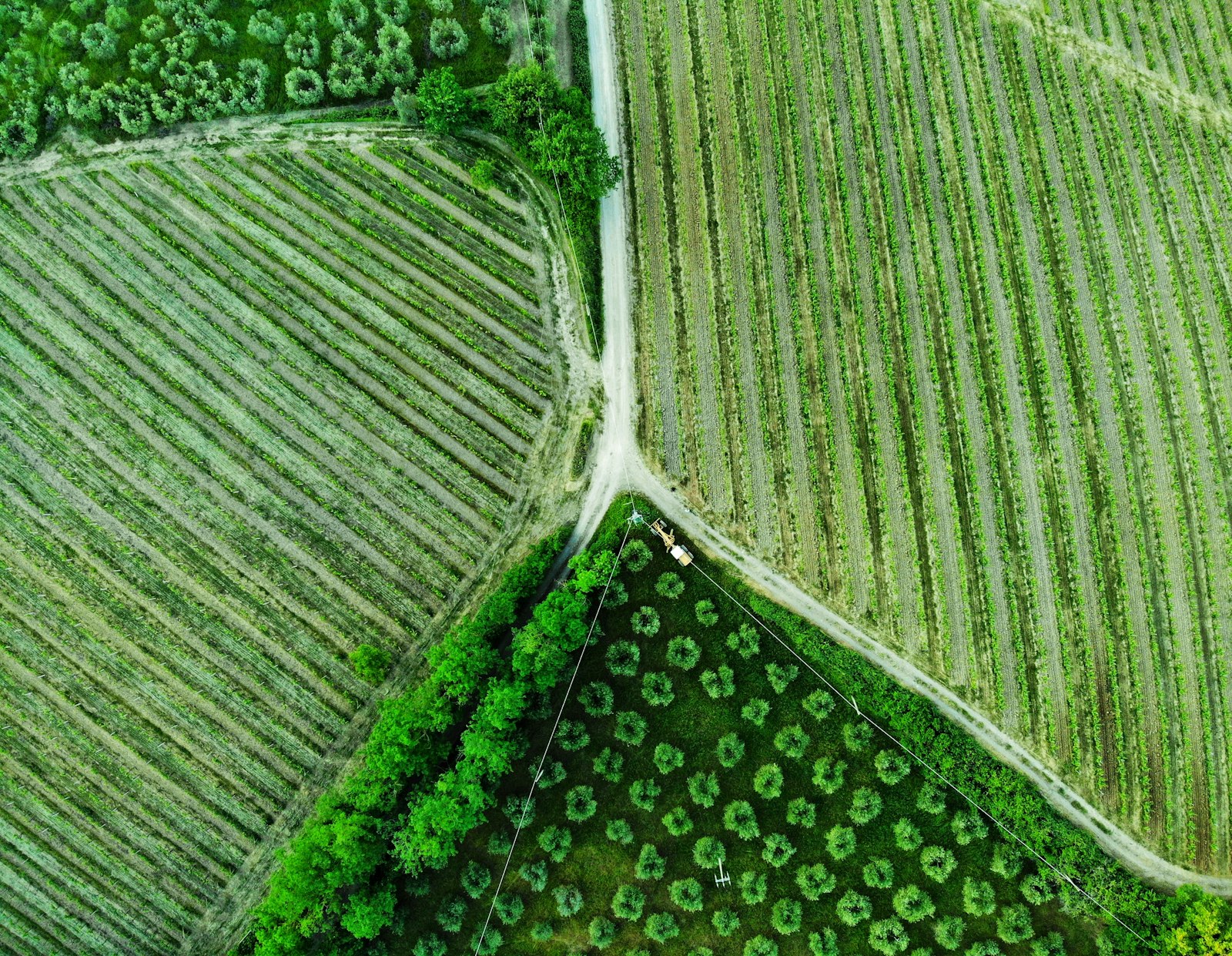
Carbon farming means changing how land is farmed so that it stores more carbon in soils and vegetation, or releases less methane and nitrous oxide, and then turning the measured result into a unit someone will pay for. The European Commission’s examples range from cover crops and agroforestry to peatland rewetting and better fertiliser efficiency.
Between 2024 and 2026 the rules firmed up. The EU’s certification law came into force, the first EU methodologies were adopted, Verra’s cropland soil carbon methodology gained an integrity label and India published offset methodologies that include just one for agriculture. This explainer sets out who issues carbon credits from farms, on what terms, and where the evidence is weak.
What counts as carbon farming
The Commission’s certification methodologies page gives these examples of carbon farming:
- rewetting and restoring peatlands and wetlands to reduce carbon oxidation
- agroforestry that integrates trees, shrubs or hedgerows within crop or grazing systems
- soil protection such as catch crops, cover crops and conservation tillage
- afforestation and improved forest management
- improving fertiliser use efficiency to cut nitrous oxide emissions
Two other activity types sit at the edge of the term. Biochar carbon removal is treated in the EU as a permanent removal, not carbon farming. Methane from rice paddies and livestock is cut rather than removed: the IPCC says enteric fermentation in ruminant animals is the main source of methane from agriculture, forestry and other land use.
The IPCC’s Sixth Assessment Report, chapter 7, put the mitigation potential of agricultural options, including cropland and grassland soil carbon management, agroforestry, biochar, improved rice cultivation and livestock and nutrient management, at 4.1 (1.7 to 6.7) GtCO2-eq a year at costs up to USD 100 per tonne. It also said that the feasibility of land-based mitigation is hampered by uncertain permanence effects and by uncertainty over long-term additionality and trade-offs, among other barriers.
The categories matter commercially because they are credited differently. Carbon stored in soils and trees can be lost again, so most systems treat it as temporary or hold back a buffer. Methane and nitrous oxide cuts are emission reductions, not removals. Biochar sits in the permanent category.
How carbon credits from farms are issued
Whatever the system, the steps are similar. A project follows an approved methodology, sets a baseline, applies the new practice, measures or models the change, and has it checked by an independent verifier. A registry then issues units, usually one per tonne of CO2-equivalent. In the voluntary market the standards are private bodies; in the EU’s new framework they are certification schemes recognised by the Commission.
Soil carbon: Verra’s VM0042
For cropland soil carbon in the voluntary market, the methodology with an integrity label is Verra’s VM0042 Improved Agricultural Land Management. Version 2.2 has been active since 21 October 2025 and covers practices that include reduced tillage, changes in fertiliser application, residue and water management, cash and cover crops, and grazing. Version 2.1 also remains active.
Verra says version 2.2 has been approved by the Integrity Council for the Voluntary Carbon Market (ICVCM) as meeting its Core Carbon Principles (CCP). To receive CCP-labelled units, projects must also meet extra criteria, including approved soil carbon measurement techniques such as dry combustion and certain infrared spectroscopy methods. Verra issued corrections to version 2.2 on 11 June 2026 and lists a major revision as under development.
Biochar, trees and manure
The ICVCM assessment page lists several farm-relevant methodologies as CCP-approved: Verra’s VM0044 version 1.2, Isometric’s biochar production and storage 1.0 and the Climate Action Reserve’s US and Canada biochar protocol; Verra’s VM0047 versions 1.0 and 1.1 and Isometric’s agroforestry 1.0, listed under afforestation, reforestation and agroforestry; and Gold Standard’s animal manure management and biogas methodology, versions 1.0 to 1.1.
Puro.earth’s 2025 biochar methodology and version 2.0 of the Gold Standard manure methodology were under internal assessment. Gold Standard’s methodology for cutting rice methane through adjusted water management, version 1.0, is listed as CCP-approved, while enteric methane methodologies from Gold Standard and Verra showed no outcome. For developers, the CCP list effectively decides which methodology to build a project on; for buyers, it is a first screen, not a guarantee.

India’s Carbon Credit Trading Scheme and the offset route
India’s Carbon Credit Trading Scheme (CCTS) was notified on 28 June 2023 under the Energy Conservation (Amendment) Act, 2022, the Ministry of Power told the Lok Sabha on 6 February 2025. Its compliance mechanism sets greenhouse gas emission intensity targets for industry. Targets for aluminium, cement, chlor-alkali and pulp and paper, covering 282 obligated entities, were notified in October 2025. A notification of 13 January 2026 added petroleum refineries, petrochemicals, textiles and secondary aluminium, taking the total to 490 entities, the environment ministry said.
The Bureau of Energy Efficiency (BEE) is the administrator, Grid Controller of India Limited runs the registry and the Central Electricity Regulatory Commission regulates trading, according to a Ministry of Power reply of 5 February 2026. The scheme was amended in December 2023 to add an offset mechanism for non-obligated entities, and in March 2025 the government approved a detailed offset procedure and eight methodologies. The International Carbon Action Partnership (ICAP) says offsets cannot be used for compliance.
What BEE’s offset list covers
Farms are not obligated entities, so their route in is the offset mechanism. Agriculture is one of ten sectors the government has approved for it, according to the Economic Survey 2025-26. The BEE page of methodologies and tools under the offset mechanism, as checked on 1 November 2026, lists nine methodologies. Three touch land use:
- BM AG04.001: methane recovery from livestock and manure management at households and small farms
- BM FR05.001: afforestation and reforestation of degraded mangrove habitats
- BM FR05.002: afforestation and reforestation of lands except wetlands
The other six cover renewable power, hydrogen, industrial efficiency and landfill gas. The list includes a tool for soil organic carbon change in afforestation projects, but no methodology for agricultural soil carbon, rice cultivation or biochar. In TAD’s reading, most Indian farm carbon projects will keep selling carbon credits in the voluntary market until BEE adds methodologies.
Soil data alone do not make a credit. In ICAR natural farming trials in the Himalayan regions, soil organic carbon rose from about 0.90% to 1.15%, the agriculture ministry told the Lok Sabha in August 2026, as our natural farming explainer sets out, but a change in concentration is not a verified tonne of CO2-equivalent.
The EU carbon farming rules: the CRCF
Regulation (EU) 2024/3012 of 27 November 2024 set up a voluntary Union certification framework for permanent carbon removals, carbon farming and carbon storage in products. EUR-Lex records 26 December 2024 as its date of entry into force.
Article 2 defines carbon farming as a practice or process carried out over an activity period of at least five years, related to the management of a terrestrial or coastal environment, that captures and temporarily stores carbon in biogenic pools, or that reduces soil emissions. The regulation creates four units, each worth one tonne of CO2-equivalent: permanent carbon removal units, carbon farming sequestration units, soil emission reduction units and carbon storage in product units.
The four tests
- Quantification: the net benefit is the baseline minus the project result, minus associated emissions, and must be above zero.
- Additionality: the activity must go beyond Union and national statutory requirements at the level of the individual operator; using a standardised baseline counts as meeting this test.
- Storage, monitoring and liability: carbon is treated as released at the end of the monitoring period unless that period is extended, and liability mechanisms may include collective buffers or up-front insurance.
- Sustainability: no significant harm, and carbon farming must generate co-benefits for biodiversity and ecosystems.
Methodologies and timetable
On 3 February 2026 the Commission adopted its first methodologies, for direct air capture, biogenic emissions capture and biochar carbon removal; they were published as Delegated Regulation (EU) 2026/285. On 9 July 2026 it adopted the carbon farming methodologies for three activities: agriculture and agroforestry on mineral soils, rewetting and restoration of peatlands and other organic soils, and afforestation.
That delegated act enters into force 20 days after publication in the Official Journal, which TAD could not find as of 1 November 2026. Once it is in force, certification schemes can apply for recognition under Implementing Regulation (EU) 2025/2358 of 20 November 2025. The Commission held a workshop on livestock emissions on 4 February 2026 but has no methodology for them. The regulation requires a Union registry by 27 December 2028 and a Commission report on its application by 27 December 2027.
Two other pieces complete the picture. Carbon storage in products, such as bio-based building materials, must last at least 35 years, and the Commission plans a methodology for buildings by the end of 2026. It has also set up an EU CRCF Buyers Club that brings together buyers and suppliers of certified carbon removal and carbon farming units.
The UK: woodland and peatland codes
The UK’s two established land carbon standards cover woodland and peatland. The Woodland Carbon Code describes itself as the UK’s government-backed standard for new woodlands that generate carbon credits, and is delivered by Scottish Forestry on behalf of the governments of the UK, Scotland, Wales and Northern Ireland.
The Peatland Code was launched in 2015 and is managed by the IUCN UK Peatland Programme, hosted by The Wildlife Trusts. Version 2.1 was published in November 2024, and in 2022 the UK Accreditation Service confirmed that version 1.2 met ISO 14065. The UK Land Carbon Registry, launched in 2020, records projects under both codes.
Defra’s nature markets framework of 30 March 2023 called the two codes the most mature nature markets in the UK, with units for 1 million tCO2e validated by the woodland code and 500,000 tCO2e by the peatland code in the most recent annual period then available. It listed carbon from peat and mineral soils, hedgerows and biochar among emerging markets, and set up a standards programme with the British Standards Institution. TAD could not confirm from an official source the status of a farm soil carbon code.
The framework also set out how grants and credits interact. Both codes allowed projects to receive grant funding as long as they passed a financial additionality test, while the first-phase rules for biodiversity net gain and nutrient markets generally barred units from projects paid for by grants. For landowners weighing a woodland or peatland project, the mix of grant and carbon income therefore depends on the additionality rules of the code concerned.

Measurement and permanence: the hard part of carbon farming
Soil carbon is patchy, changes slowly and is expensive to measure. A study led by M.A. Bradford, published in Geoderma (volume 440, December 2023), used 1,593 sampling points to 30 cm across 45 cropland fields in Kansas, Iowa and Nebraska to test how well sampling can detect change.
It found that estimates of change for single fields were often badly wrong, even at one sample per 1.2 hectares. Project-level designs did much better: with 30 fields at that density, estimates fell within 1 tonne of carbon per hectare of an imposed 3-tonne change in 96 of 100 simulations. The study was funded by the Ecosystem Services Market Consortium, with an award from General Mills, the Environmental Defense Fund and Yale.
The authors questioned calculating credits from soil survey maps or initial inventories alone, and said protocols should define the unit of measurement more clearly. They also asked project developers, governments and companies to share data such as sampling density, field numbers and core-level stocks, so that buyers can judge how reliable a claimed tonne is.
Saturation is the second problem. A paper by G.Y. Moinet, R. Hijbeek, Detlef P. van Vuuren and K.E. Giller, published in Global Change Biology (volume 29, 2023), found that allowing for soil carbon saturation cuts the potential contribution of soil carbon sequestration to climate mitigation by 53 to 81% towards 2100. Across the more than 21 meta-analyses it reviewed, yield effects of higher soil carbon ranged from negative to positive.
Permanence is the third. Carbon stored in soils and trees can be released again if practices are reversed or land is disturbed. The CRCF answers with temporary units and liability rules; voluntary standards use buffer pools. For buyers, the practical effect is that a farm soil credit is a claim with conditions attached, not a permanent removal.
What carbon farming means for agribusiness and project developers
In TAD’s view, the money in carbon farming flows to whoever can organise many farms, measure them credibly and hold the liability. The effects differ by type of business, and this section is general information, not investment advice.
Input and machinery companies
Methodologies such as VM0042 credit practice change: reduced tillage, fertiliser changes, cover crops and residue management. That gives makers of zero-till drills, such as the seeder covered in our report on Mahindra’s MaxSeeder, and of efficiency-focused fertilisers a reason to pair products with carbon programmes. Additionality is the catch: under the CRCF, practices already required by law do not count.
FPOs, aggregators and project developers
Bradford’s results favour projects that pool many fields, which suits aggregators in India’s smallholder system: farmer producer organisations, input dealers with large farmer bases and specialist developers. The EU’s five-year minimum activity period and monitoring rules point to long contracts, so developers carry farmer retention risk as well as price risk.
MRV, software and soil testing firms
Measurement, reporting and verification is where much of the cost sits. The Commission says it will assess whether models and proxy-based frameworks meet the carbon farming methodology, and Verra’s CCP requirements name specific laboratory techniques. Firms in our farm software and data category and the tools described in our precision agriculture explainer are the ones bidding for that work.
Biochar producers
Biochar already has an EU permanent removal methodology and several CCP-approved voluntary ones. In north India, paddy straw is the residue that the Commission for Air Quality Management is trying to keep out of fires, as our report on CAQM flying squads describes; in TAD’s view, residue supply contracts will decide which biochar projects are bankable.
Carbon farming: what is still unsettled
Several questions remain open as of 1 November 2026, and each affects the business case:
- India’s offset mechanism. Agriculture is an approved offset sector, but BEE’s list has no agricultural soil carbon, rice or biochar methodology.
- India’s trading start. ICAP’s factsheet said the first trading of carbon credit certificates was expected by mid-2026; TAD has not confirmed whether trading has begun.
- EU start dates. The carbon farming delegated act was adopted on 9 July 2026; TAD found no Official Journal publication as of 1 November 2026, and schemes can apply for recognition only once it is in force.
- Livestock. The EU has no methodology for livestock emissions, and ICVCM shows no outcome for enteric methane methodologies.
- Verra’s revision. A major revision of VM0042 is under development, which could change project economics.
- The science. Measurement cost, saturation and reversal risk remain the main objections to soil carbon credits.
Our Soil, water & climate desk will report the EU publication dates, any new BEE methodologies and ICVCM decisions as they appear.
Carbon farming: frequently asked questions
What is carbon farming?
Carbon farming is land management that stores more carbon in soils and vegetation or cuts greenhouse gas emissions from farmland, with the result measured and certified. The European Commission’s examples include peatland rewetting, agroforestry, cover crops, conservation tillage, afforestation and better fertiliser efficiency. Under EU law, a carbon farming activity must run for at least five years.
How are carbon credits from farms issued?
A project follows an approved methodology, such as Verra’s VM0042 for cropland soil carbon, sets a baseline, applies new practices and measures or models the change. An independent verifier checks the claim, and a registry issues units, usually one per tonne of CO2-equivalent. Some methodologies carry the ICVCM’s Core Carbon Principles label, which VM0042 version 2.2 has.
Can Indian farmers earn credits under the CCTS?
Farms are not obligated entities under India’s Carbon Credit Trading Scheme. Their route is the offset mechanism, added in December 2023, and agriculture is one of its ten approved sectors. As of 1 November 2026, BEE’s offset list had nine methodologies, including one for methane recovery from livestock and manure at households and small farms and two for afforestation, but none for agricultural soil carbon, rice or biochar.
What is the EU CRCF?
The CRCF is Regulation (EU) 2024/3012, a voluntary EU certification framework for permanent carbon removals, carbon farming and carbon storage in products, in force since 26 December 2024. Methodologies for biochar and other permanent removals were adopted on 3 February 2026, and carbon farming methodologies for mineral soils and agroforestry, peatlands and afforestation on 9 July 2026.
Why are soil carbon credits controversial?
Soil carbon is hard to measure, can saturate and can be lost again. A 2023 Geoderma study of 45 US fields found single-field estimates of change often inaccurate, while multi-field project designs did better. A 2023 Global Change Biology review found saturation cuts the mitigation potential of soil carbon by 53 to 81% towards 2100. The IPCC flags uncertain permanence.
What carbon standards exist in the UK?
The Woodland Carbon Code covers new woodland and is delivered by Scottish Forestry for the four UK governments. The Peatland Code, managed by the IUCN UK Peatland Programme, covers peatland restoration and reached version 2.1 in November 2024. Defra’s 2023 nature markets framework listed soil carbon and hedgerows as emerging markets.