The Agriculture Infrastructure Fund is India’s main subsidised loan window for farm-gate storage, processing and logistics. It is an INR 1 lakh crore financing facility under which the central government pays lenders a 3% interest subvention and covers credit guarantee fees, so that warehouses, cold stores, sorting units and custom hiring centres get built closer to where crops are grown.
This explainer sets out how AIF loans work, who can borrow, the latest official numbers as of 31 October 2026, the changes made since launch and the open question over how long the financing window stays open. It is general information, not financial advice.
What the Agriculture Infrastructure Fund is
The AIF is a Central Sector Scheme run by the Department of Agriculture and Farmers Welfare (DA&FW), so the centre pays its full cost. The Finance Minister announced the INR 1 lakh crore fund on 15 May 2020, according to the scheme’s revised guidelines of January 2023, and the agriculture ministry dates the scheme’s start to July 2020. Its stated purpose is to mobilise medium and long-term debt for viable projects in post-harvest management infrastructure and community farming assets.
The INR 1 lakh crore is not government money. Banks and other lenders provide it as loans, and the budget pays only for the interest subvention, the guarantee fees and the project management units that run the scheme at central and state level. The guidelines split the facility among states in proportion to the value of their output of agriculture and allied sectors. Uttar Pradesh has the largest tentative share at INR 12,831 crore, followed by Rajasthan at INR 9,015 crore and Maharashtra at INR 8,460 crore.
The scheme is operational from 2020-21 to 2032-33. The guidelines say loan disbursement was to be completed within six years, by the end of 2025-26, and that repayment can run for up to seven years including a moratorium of up to two years. By our reading, the later end date gives room for subvention to keep flowing on loans already made inside the window.
Applications go through the National Agriculture Infra Financing Facility portal, which the guidelines say lets eligible borrowers apply for loans and compare the interest rates offered by different banks. Participating lenders sign a memorandum of understanding with NABARD or DA&FW: scheduled commercial banks, scheduled cooperative banks, regional rural banks, small finance banks, NBFCs and the National Cooperative Development Corporation. NABARD offers refinance to lenders that need it. National, state and district monitoring committees oversee the scheme, and every asset financed must be geo-tagged.
How AIF loans work: subvention, guarantee and a rate cap
Interest subvention and the 9% cap
Every AIF loan carries an interest subvention of 3% a year on amounts up to INR 2 crore, for a maximum of seven years. On a larger loan the subvention still applies only to the first INR 2 crore. A PIB explainer of 9 August 2025 says loans under the scheme carry a capped interest rate of 9%. On a loan priced at that cap, the borrower’s cost on the first INR 2 crore falls to 6%, by our arithmetic.
The same explainer cites a primary cashew processing unit in Gajapati district, Odisha, set up in 2022 at a project cost of INR 57 lakh, which borrowed INR 42.75 lakh from UCO Bank at 5.5% a year under the AIF. That is the government’s own example; it is not evidence of the rates lenders charge across the scheme.
Credit guarantee
Loans up to INR 2 crore can be covered by the Credit Guarantee Fund Trust for Micro and Small Enterprises (CGTMSE), with the government paying the fee. On 28 August 2024 the Union Cabinet extended guarantee cover for farmer producer organisations through NABSanrakshan Trustee Company in addition to CGTMSE. A PIB release of 3 February 2026 lists both guarantee routes.
Promoter contribution, convergence and project limits
An AIF borrower must put in at least 10% of the project cost. Grants from other central or state schemes can be stacked on an AIF loan, and a capital subsidy counts towards the promoter’s contribution. The guidelines name MIDH, PMFME, SMAM, Gobar-Dhan, PMKSY, Agricultural Marketing Infrastructure, RKVY, PM-KUSUM and PMEGP as examples.
AIF subvention is available on loans up to INR 2 crore in one location, defined as a village or town with its own Local Government Directory code. An entity can claim for projects in several locations, but a private borrower such as a farmer, agri-entrepreneur or start-up is limited to 25 projects. That cap does not apply to state agencies, cooperatives, their federations, FPOs or self-help groups. APMCs can claim up to INR 2 crore for each different type of infrastructure inside their market area.
Who can borrow and which projects qualify
Eligible borrowers include farmers, FPOs, primary agricultural credit societies (PACS), marketing and multipurpose cooperatives, self-help groups and joint liability groups, agri-entrepreneurs, start-ups, state agencies, APMCs, national and state federations of cooperatives, federations of FPOs and SHGs, and public-private partnership projects sponsored by central, state or local bodies. The guidelines say PACS that have digitised their operations get preference.
The AIF’s list of eligible projects has two parts. Post-harvest management projects open to all borrowers include:
- supply chain services, including e-marketing platforms
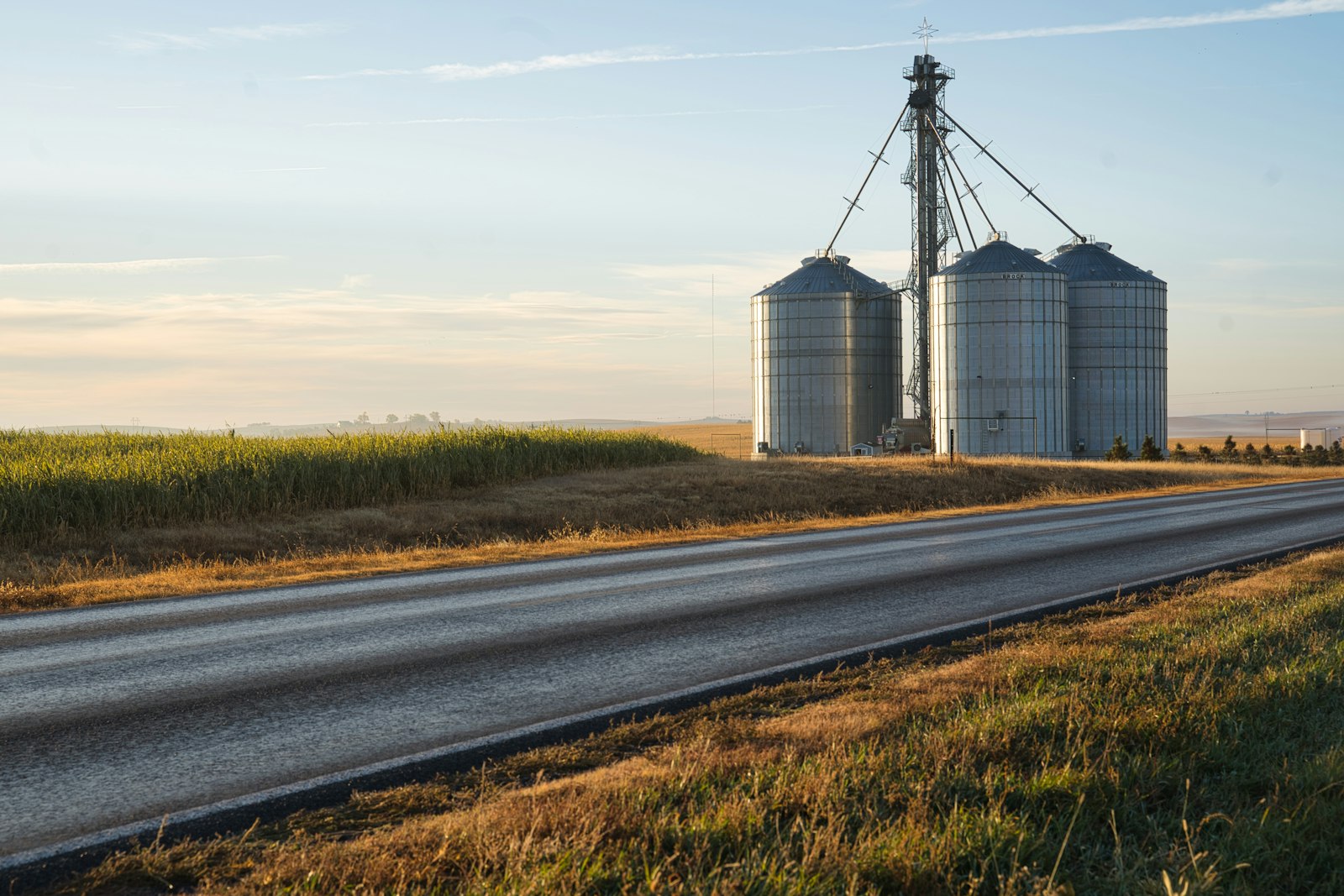
- warehouses and silos
- cold stores and cold chain
- packaging, assaying, sorting and grading units
- reefer vans and insulated vehicles
- ripening chambers and farm waste management
- primary processing, as defined crop by crop
Community farming assets open to all borrowers include organic input and biostimulant production units, compressed biogas plants, nurseries, tissue culture and seed processing, custom hiring centres with at least four machines, harvest automation, drones, field sensors and other precision farming kit, and PM-KUSUM solar pumps under components B and C. The 2023 guidelines reserved hydroponic, vertical and greenhouse farming, tractors and non-refrigerated vehicles for groups such as FPOs, PACS, cooperatives and SHGs; the August 2024 Cabinet decision widened access (see below), and TAD has not seen revised guidelines saying what stays restricted.
The line between primary and secondary processing matters for processors seeking AIF loans. The crop-wise table in the guidelines treats oil extraction and solvent extraction as primary for oilseeds but refining as ineligible; for cereals, milling and parboiling qualify while baking, puffing and extrusion do not. Since the August 2024 Cabinet decision, an integrated unit combining primary and secondary processing qualifies, but standalone secondary processing is left to the food processing ministry’s schemes.

Agriculture Infrastructure Fund numbers: sanctions, disbursement and assets
The most recent official totals TAD found are in written Lok Sabha replies of 28 July 2026 by Ramnath Thakur, Minister of State for Agriculture and Farmers Welfare. As on 15 July 2026, 2,08,828 projects had been sanctioned, 71,208 of them to agri-entrepreneurs. A state-wise table in another reply that day, with the same project count, puts loans sanctioned at INR 93,374.36 crore and project cost at INR 1,61,537.22 crore.
Earlier official totals show the pace of sanctions:
- 31 December 2022: INR 14,118 crore sanctioned, of which INR 9,117 crore disbursed (scheme guidelines)
- 28 August 2024: INR 47,575 crore sanctioned for 74,508 projects, mobilising INR 78,596 crore, of which INR 78,433 crore came from private entities (PIB backgrounder)
- 30 June 2025: INR 66,310 crore sanctioned for 1,13,419 projects, mobilising INR 1,07,502 crore (PIB explainer)
- 26 January 2026: INR 80,224.15 crore for 1,50,431 projects, mobilising INR 1,27,508 crore (PIB release)
An AIF sanction is not a disbursement. In a written Lok Sabha reply of 24 March 2026, the minister said INR 62,219.10 crore of the INR 84,502.78 crore sanctioned for 1,70,241 projects by 11 March 2026 had been disbursed, about 62% of the INR 1 lakh crore facility by our calculation. TAD found no later official disbursement total.
By asset type, the Economic Survey 2025-26 says that as of 27 November 2025 the AIF had mobilised INR 1,23,002 crore and supported over 39,000 custom hiring centres, over 25,000 processing units, over 17,000 warehouses, over 4,000 sorting and grading units and over 2,700 cold storage projects. Cold storage alone accounted for 2,454 projects and INR 8,258 crore of sanctions as of 30 June 2025, according to the PIB explainer.
On 13 February 2026 Agriculture Minister Shivraj Singh Chouhan told the Rajya Sabha that the fund had supported 44,243 custom hiring centres, 25,854 primary processing centres, more than 17,000 warehouses and around 3,000 cold storage units, All India Radio reported. He also said post-harvest losses of fruit and vegetables had fallen by 5 to 15% because of these initiatives. The report cites no study; later written replies attribute a 5 to 15% average cut in post-harvest losses to an IIM Ahmedabad assessment (see below).
Official figures on solar pump convergence do not match. Components B and C of PM-KUSUM have been eligible since September 2020, and the February 2026 release says INR 29.20 crore had been sanctioned for 921 such projects by 26 January 2026. A project-type table in the 24 March 2026 reply lists 10,733 PM-KUSUM component B and C projects by 11 March 2026, and neither document explains the gap. TAD’s explainer on PM-KUSUM covers that scheme in detail.
How the scheme has changed since 2020
The AIF has been widened several times. The main changes, in order:
- September 2020: PM-KUSUM components B and C added as eligible assets in convergent mode.
- 8 July 2021: the Cabinet extended eligibility to APMCs, state agencies, national and state cooperative federations and federations of FPOs and SHGs, allowed projects in multiple locations with the 25-project limit for private entities, stretched the financing period from four to six years (to 2025-26) and the scheme period from 10 to 13 years (to 2032-33), and let the agriculture minister add or remove beneficiaries, The Tribune reported.
- 28 August 2024: the Cabinet opened viable community farming assets to all eligible beneficiaries (a 28 July 2026 reply names poly houses, mushroom cultivation and hydroponics), admitted integrated primary and secondary processing, allowed convergence with PM-KUSUM component A for farmers, FPOs, cooperatives and panchayats, and added NABSanrakshan guarantees for FPOs.
Separate changes were made for the cooperative sector’s grain storage plan, under which PACS build godowns by combining several schemes. In a written Lok Sabha answer of 28 July 2026, Cooperation Minister Amit Shah listed AIF modifications for the plan: credit guarantee cover extended from 2+5 years to 2+8 years, margin money cut from 20% to 10%, and the construction cost norm raised from INR 3,000 to INR 3,500 per tonne to INR 7,000 per tonne in plain areas, and from INR 4,000 to INR 8,000 per tonne in the north-east.
The same answer says 1,015 PACS had been identified for godowns under the plan, with construction complete at 313 PACS creating 1.80 lakh tonnes of capacity. Rajasthan (121) and Andhra Pradesh (117) account for most of the completed godowns, and the Food Corporation of India has offered nine-year hiring assurance for warehouses of 2,500 tonnes or more.
The budget and the deadline: what is settled and what is not
The AIF’s budget line pays for subvention and guarantee fees, not the loans themselves. According to PRS Legislative Research, actual spending was INR 725 crore in 2024-25, the revised estimate for 2025-26 is INR 900 crore and the budget estimate for 2026-27 is INR 910 crore, about 0.6% of the agriculture ministry’s budget.
The financing window is the open question. The 2023 guidelines and the August 2025 PIB explainer both say loan disbursement would be completed by the end of 2025-26. NewsBytes reported on 25 October 2026 that the government had extended the scheme until March 2027, and gave unofficial totals of 2,28,428 projects supported and more than INR 1.75 lakh crore mobilised since launch. TAD could not find a PIB release, gazette notice or DA&FW circular confirming the extension, its exact terms or those totals as of 31 October 2026.
A larger expansion has also been reported but not confirmed. Angel One reported on 27 December 2025, citing Mint, that the centre was considering an additional INR 1 trillion for the AIF over five years. The PRS analysis of the 2026-27 demand for grants does not mention a second tranche, and TAD has found no Cabinet decision on one as of 31 October 2026.
For borrowers and lenders, the practical point is that the dates in the guidelines and the reported extension differ. Anyone relying on subvention for a project sanctioned late in 2026 should confirm the cut-off with the lender and the state project management unit.
What the Agriculture Infrastructure Fund means for warehousing, cold chain and processing firms and lenders
Warehouse and cold chain operators
For storage developers, the AIF lowers the cost of the first INR 2 crore of debt at each location and can be stacked with capital subsidies such as MIDH or Agricultural Marketing Infrastructure. The location rule shapes site strategy: a private operator can claim subvention at up to 25 locations, each in a different village or town code, which favours a network of small farm-gate sites over one large hub. Suppliers in TAD’s post-harvest and storage directory sell into exactly this demand.
Equipment makers and processors
Makers of cold rooms, silos, sorting and grading lines, ripening chambers and reefer bodies sell into projects whose financing depends on AIF sanction. Custom hiring centres are the largest category by count, which matters to tractor and implement makers covered in TAD’s SMAM explainer and to drone makers covered in our agriculture drone guide. Oil mills, dal mills and rice mills qualify for their primary activities, and since August 2024 an integrated plant can include secondary lines.
Banks, NBFCs and guarantors
For lenders, the AIF offers priority-sector lending with a 3% subvention paid by the government, guarantee cover on loans up to INR 2 crore and NABARD refinance where needed, against a 9% rate cap. Our analysis is that the economics favour tickets of INR 2 crore or less; on bigger projects the subsidy shrinks as a share of the loan. Firms offering credit and cover to this market are listed in TAD’s agri-finance and insurance category.
FPOs and cooperatives
In our reading, groups gain most from the AIF rules. They are exempt from the 25-project limit, and FPOs have a second guarantee route through NABSanrakshan. PACS building godowns under the cooperative storage plan get the longer guarantee period and lower margin money set out above. TAD covers deals in this space on the Deals and capital desk.
What evaluations and critics have said
Early take-up was slow. Down To Earth reported on 3 August 2023, citing the then agriculture minister’s reply in Parliament, that only INR 15,448 crore had been disbursed in the first three years, about 15% of the facility, with several states lagging. The ministry said it would hold more state conclaves and bank campaigns and had asked every bank to name an AIF nodal officer. The report also noted that the farmers’ body Samyukt Kisan Morcha had questioned the fund’s effectiveness when the 2020 farm laws were brought in.
A mid-term evaluation was carried out in December 2023 by the Agro Economic Research Centre in Pune, Ramnath Thakur said in a written Lok Sabha reply of 19 August 2025. For around 85% of units, it found, the AIF loan was the main reason for starting; the loans covered about 40% of project costs on average; and sampled warehouses, cold stores and silos created around 879 thousand tonnes of capacity. The reply does not give the sample size, and TAD has not seen the evaluation itself.
The government then undertook a third-party impact assessment by IIM Ahmedabad, carried out in November 2025 according to a written reply of 4 August 2026. That reply says the study found an average 5 to 15% reduction in post-harvest losses, income gains of 11 to 15% reported by surveyed beneficiaries and at least 12 to 13 direct jobs per unit in peak season. TAD has not seen the study itself.
The guidelines also provide for the Department of Expenditure to revisit the scheme after INR 20,000 crore had been disbursed, and for third-party evaluation as required. In our reading, the open issues for business are the end date of the financing window, how much of the sanctioned pipeline is still to be disbursed, and whether any successor facility keeps the INR 2 crore subvention ceiling, which is the same in every version of the rules TAD has seen.
Agriculture Infrastructure Fund: frequently asked questions
What is the Agriculture Infrastructure Fund?
The Agriculture Infrastructure Fund is a central sector scheme of India’s agriculture ministry, started in July 2020. Banks and other lenders provide an INR 1 lakh crore financing facility for post-harvest infrastructure and community farming assets, and the government pays a 3% interest subvention and the credit guarantee fee on eligible loans. The scheme runs from 2020-21 to 2032-33.
How much interest subvention does AIF give?
AIF loans carry an interest subvention of 3% a year on amounts up to INR 2 crore, for a maximum of seven years. On larger loans the subvention is limited to the first INR 2 crore. The PIB says loans carry a capped interest rate of 9%, so a loan at the cap costs the borrower 6% on the first INR 2 crore, by our arithmetic.
Who can apply for an AIF loan?
Farmers, FPOs, PACS and other cooperatives, self-help and joint liability groups, agri-entrepreneurs, start-ups, state agencies, APMCs, federations of cooperatives, FPOs and SHGs, and public-private partnership projects can apply. Private borrowers can claim subvention at up to 25 locations, while cooperatives, FPOs, SHGs and state agencies have no such limit. Applications are made through the scheme’s national portal.
How much has been sanctioned under the Agriculture Infrastructure Fund?
Written Lok Sabha replies of 28 July 2026 say 2,08,828 projects had been sanctioned by 15 July 2026, with loans of INR 93,374.36 crore and a project cost of INR 1,61,537.22 crore. The latest official disbursement figure TAD found is INR 62,219.10 crore, as of 11 March 2026. Higher totals published by NewsBytes in October 2026 were not confirmed in an official release by 31 October 2026.
Is the AIF financing window still open?
The scheme guidelines and a PIB explainer of August 2025 say loan disbursement would be completed by the end of 2025-26. NewsBytes reported on 25 October 2026 that the government had extended the scheme to March 2027, but TAD found no official notification of the extension or its terms as of 31 October 2026. Borrowers should confirm the cut-off with their lender.
Can AIF loans be combined with other subsidies?
Yes. The guidelines allow any grant or subsidy under a central or state scheme to be combined with an AIF loan, naming MIDH, PMFME, SMAM, Gobar-Dhan, PMKSY, Agricultural Marketing Infrastructure, RKVY, PM-KUSUM and PMEGP. A capital subsidy counts towards the promoter’s contribution, but the promoter must still put in at least 10% of the project cost.