GM mustard, in the form of the hybrid DMH-11, is a genetically modified food crop whose environmental release India’s central government approved in October 2022. A challenge in the Supreme Court has kept it out of farmers’ fields, and a split verdict in July 2024 sent the question to a larger bench.
This explainer sets out who developed DMH-11, what the regulator decided and when, what each judge held, what has happened since up to 31 October 2026, why Bt cotton is still the only commercial GM crop, and what the case means for seed companies and edible oil businesses. It reports court proceedings from the judgment and from published reports, attributed.
What GM mustard is and who developed it
DMH-11 stands for Dhara Mustard Hybrid-11. It was developed by the Centre for Genetic Manipulation of Crop Plants (CGMCP) at the University of Delhi South Campus, according to the Supreme Court’s judgment of 23 July 2024. It is a hybrid of two genetically engineered parental lines, Varuna bn 3.6 and EH-2 modbs 2.99, which carry three genes: barnase, barstar and bar.
The genes form a hybrid seed system, as the judgment describes it. Varuna mustard is self-pollinating, so barnase is used to make it male sterile and able to be crossed; barstar in the other parent restores male fertility in the hybrid; and bar confers tolerance to the herbicide glufosinate ammonium, which is used at the seed production stage to weed out fertile plants. The judgment records that a note submitted for the Union of India by the Attorney General described the bar gene as essential for hybrid seed production.
CGMCP applied for environmental release of DMH-11 and the two parental lines on 15 September 2015, with a biosafety dossier of 3,285 pages, according to the judgment. Confined field trials had been approved by the regulator from 2010, at sites including Navgaon, Sriganganagar, Bharatpur, Ludhiana, Delhi, Kanpur and Morena. Deepak Pental, a former vice-chancellor of the University of Delhi, represented CGMCP in its 2022 approach to the environment minister.
How GM crops are regulated in India
Genetically engineered organisms are regulated under the Rules of 1989 made under the Environment (Protection) Act, 1986. Three bodies matter for a crop such as DMH-11:
- RCGM, the Review Committee on Genetic Manipulation, set up under the Department of Biotechnology (DBT), which oversees the safety of research and is the authority for first-stage confined trials;
- GEAC, the Genetic Engineering Appraisal Committee in the Ministry of Environment, Forest and Climate Change (MoEF&CC), without whose approval, the judgment notes, no use or sale of a GE product may take place;
- ICAR, the Indian Council of Agricultural Research, whose variety testing and release guidelines apply before any seed is sold to farmers.
Herbicide use is regulated separately. The conditions attached to the DMH-11 approval, as set out in the judgment, say no herbicide formulation may be used on the crop in farmers’ fields without permission from the Central Insecticides Board and Registration Committee (CIB&RC), and that unauthorised use would attract action under the Insecticides Act, 1968, and the Environment (Protection) Act.
Food safety and labelling sit with a fourth regulator. In its July 2024 order, the Supreme Court directed the Union, for imports of GM food and particularly GM edible oil, to comply with Section 23 of the Food Safety and Standards Act, 2006, which covers packaging and labelling. Oils from six GM soybean events and one GM canola event are approved for import, according to the USDA Foreign Agricultural Service’s India biotechnology report of 15 December 2025 (report IN2025-0063).
The GEAC decisions on DMH-11, from 2017 to October 2022
The judgment sets out the regulatory history in detail. After reviewing the dossier through a sub-committee from 2016, GEAC recommended environmental release in its 133rd meeting on 11 May 2017. That recommendation was referred back to GEAC after representations both for and against it, and in its 134th meeting on 21 March 2018 GEAC asked the applicant for field demonstrations on honeybees, other pollinators and soil microbial diversity.
Those demonstrations, approved in 2018 for Punjab Agricultural University in Ludhiana and the Indian Agricultural Research Institute in New Delhi, were deferred through the 2018-19, 2019-20 and 2020-21 seasons. In 2022 ICAR (30 July) and DBT (1 August) wrote to the environment ministry asking that GEAC consider the recommendation it had made in 2017, and an expert committee concluded it was unlikely that the bar, barnase and barstar system would harm honeybees and other pollinators.
GEAC then recommended environmental release in its 147th meeting on 18 October 2022, and the central government accepted the recommendation on 25 October 2022, by approval letter F.No.C-12013/35/2010-CSIII. The judgment records the purpose as release of the parental lines for developing new hybrids under ICAR supervision, and release of DMH-11 for seed production and testing under ICAR guidelines before any commercial release.
The conditions attached
- The approval is for four years from the date of the approval letter and is renewable for two years at a time on a compliance report.
- A post-release monitoring committee was to visit growing sites each season and report to GEAC.
- Field demonstrations on honeybees and other pollinators were to be carried out within two years, under ICAR supervision.
- Seed production and testing were expected to take three crop seasons before seed could reach farmers, unless ICAR decided otherwise.
- No herbicide could be used in farmers’ fields without CIB&RC approval.
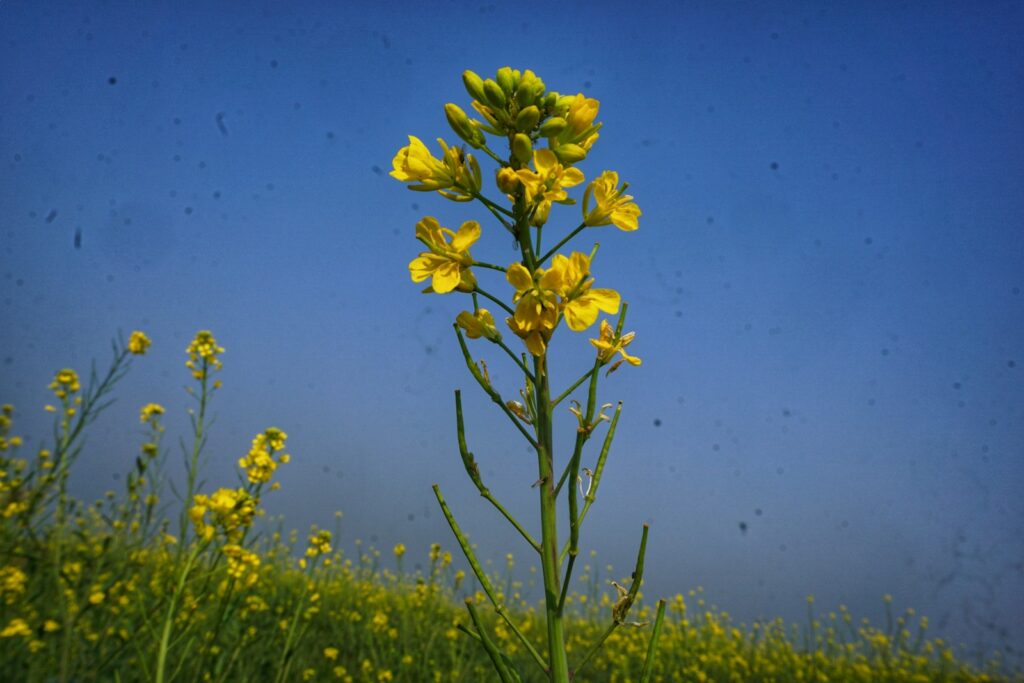
GM mustard in the Supreme Court: the July 2024 split verdict
The challenge came in long-running petitions: Gene Campaign v Union of India (filed in 2004) and petitions led by the activist Aruna Rodrigues. On 3 November 2022 the court was told that the release had been approved on 25 October 2022, the judgment records, and the matter was then argued with the court maintaining the status quo on the release, as Business Standard has reported.
On 23 July 2024 a two-judge bench split. Justice B.V. Nagarathna held the GEAC decision of 18 October 2022 and the approval of 25 October 2022 invalid. According to LiveLaw’s report of the judgment, she found that the biosafety dossier had not been available for public inspection, that states had not been consulted and health experts not involved, and that the approval breached the precautionary principle and the right to a safe and healthy environment. She directed GEAC to decide first whether DMH-11 is a herbicide-tolerant crop, before any fresh decision on its release.
Justice Sanjay Karol upheld the approval and directed that field trials of DMH-11 continue under the conditions imposed. He held that the GEAC decision was not vitiated by non-application of mind, that GEAC’s composition was in accordance with the 1989 Rules, and that a ban on herbicide-tolerant crops was not warranted and was a decision within the domain of policy. LiveLaw reported that he declined to rule on whether DMH-11 is a herbicide-tolerant crop, citing the court’s lack of expertise.
What both judges agreed
Justices Nagarathna and Karol agreed that judicial review of GMO decisions is permissible and issued four joint directions. The first reads: “The respondent-Union of India is directed to evolve a National Policy with regard to GM crops in the realm of research, cultivation, trade and commerce in the country.” The policy was to be formed with experts, state governments and farmers’ representatives, through a national consultation by MoEF&CC preferably within four months.
The other directions require the credentials of experts in GM decisions to be verified and conflicts of interest declared and mitigated, with rules that may have statutory force, and require compliance with food labelling law for GM food imports. Because the judges differed on DMH-11 itself, the court’s registry was told to place the matter before the Chief Justice of India to constitute an appropriate bench.
What has happened to GM mustard since the split verdict
TAD found no final ruling on the October 2022 approval as of 31 October 2026. A three-judge bench of Justices Abhay S. Oka, Sudhanshu Dhulia and Ujjal Bhuyan said on 6 March 2025 that it would hear the challenge on 15 and 16 April 2025, after Attorney General R. Venkataramani asked for more time, Business Standard reported. LawChakra reported that the Attorney General told the court that discussions were under way at the highest level of government. TAD found no report of the April hearings or of any later order.
Other developments, in order:
- 31 December 2024: the Centre notified proposed amendments to the 1989 Rules requiring GEAC members to declare conflicts of interest and recuse themselves where they have a link to a matter, with 60 days for comments, Business Standard reported. TAD has not seen a final notification.
- 18 September 2025: scientists including R.S. Paroda, a former ICAR director general, wrote to Prime Minister Narendra Modi asking for coordinated action to lift the stay on GM mustard before the 2025 sowing season and for a clear GM crop policy, Business Standard reported. The letter said India had lost two years since the 2022 release.
- 23 October 2025: an opinion article in Business Standard by Bhagirath Choudhary and C.D. Mayee of the South Asia Biotechnology Centre, Jodhpur, said the status quo order on GM mustard cultivation was still in force, three years after the October 2022 approval.
- 15 December 2025: the US Department of Agriculture’s India biotechnology report said planting of GM mustard remained suspended pending the final court ruling, and that the government had yet to act on the order for a national policy on GM crops.
- 2 March 2026: UkrAgroConsult, citing The Economic Times, reported that a group of union ministers was examining the government’s position on field trials and commercial release of GM mustard, with no final decision. TAD found no official statement on the panel’s work or any decision as of 31 October 2026.
TAD could not find a published national policy on GM crops, a public report on the national consultation ordered in July 2024, or a final ruling by the larger bench as of 31 October 2026. One more date matters: the four-year term of the October 2022 approval, by our arithmetic, ran to October 2026. TAD found no public decision on its renewal, and how the court proceedings affect that clock has not been stated by the government or the court.
What to watch
- a hearing and ruling by the larger bench on the October 2022 approval;
- publication of the national policy on GM crops and the record of the national consultation;
- a final notification of the conflict-of-interest amendments to the 1989 Rules proposed on 31 December 2024;
- any GEAC decision on renewing or extending the 2022 approval, and on the pollinator studies it required.
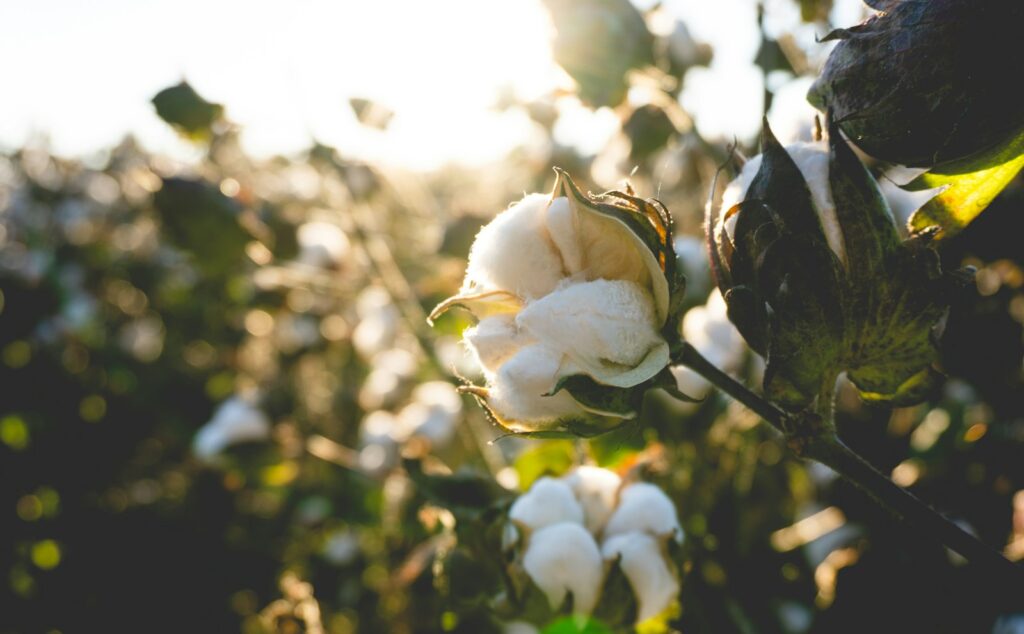
Bt cotton: still India’s only commercial GM crop
Bt cotton, approved in 2002, remains the only genetically engineered crop approved for commercial cultivation in India, according to the USDA report of 15 December 2025, which lists five approved events, all Bt cotton. Environmental release clearances exist for GM mustard and for Bt brinjal, the report says, but the approvals remain stuck under judicial review. ICAR’s director general Himanshu Pathak said in December 2022 that Indian institutions were developing GM seed for 13 crops, including rice, wheat and sugarcane, Business Standard reported.
Bt cotton is also the reference point for both sides of the mustard case. The petitioners argued, as recorded in the judgment, that cotton yields had been stagnant for five years and that GEAC had failed to deal with illegal planting of herbicide-tolerant Bt cotton. The government side pointed to rapeseed carrying the same bar, barnase and barstar genes, which the judgment records was released in Canada in 1996, the United States in 2002 and Australia in 2003.
Genome-edited crops follow a separate regulatory route from transgenic crops such as DMH-11 and Bt cotton. TAD’s explainer on gene editing, due later in this series, covers that route and the varieties released under it.
The edible oil argument: what each side says
The government’s case rests partly on edible oil. The Attorney General told the court, the judgment records, that 55 to 60% of India’s edible oil demand is met through imports and that DMH-11 had shown a 25 to 30% yield gain per hectare over traditional varieties through hybrid vigour. He added that imported canola oil is made from GM canola and imported soybean oil is largely GM-derived. The Solicitor General put the import share at 55.76% of total demand.
ICAR has been more cautious. In a December 2022 statement reported by Business Standard, ICAR said commercial release of DMH-11 would depend on its testing and performance against varieties and hybrids in use, and that no one claimed DMH-11 would solve India’s edible oil import problem. The petitioners argued that DMH-11 offered no immediate advantage, and raised risks to honeybees and to India’s indigenous mustard diversity.
Our reading is that the yield claim has not been tested in the way ICAR’s guidelines require, because the seed production and testing that the October 2022 approval allowed has been on hold. For readers tracking supply, TAD’s explainer on India’s edible oil imports and our report on September 2026 vegetable oil imports set out the import picture.
What GM mustard means for seed companies and edible oil processors
Seed companies
For seed companies, the main effect is regulatory uncertainty. The October 2022 approval allowed the barnase-barstar parental lines to be used to develop new hybrids under ICAR supervision, which is the part of the decision with the widest commercial reach. With the approval under challenge, no company can plan a GM mustard hybrid pipeline in India with confidence, and DMH-11 itself was developed at a public university; TAD has not seen published licensing terms for it.
Multinational crop science groups with Indian operations, profiled in TAD’s directory, include Bayer, Syngenta Group and Corteva, which spun off its seed business as Vylor on 1 October 2026. Domestic breeders and suppliers are listed in our seeds and planting material category. The national GM policy the court ordered, once published, will set the terms for all of them.
Edible oil processors and traders
For crushers, refiners and packers, a commercial GM mustard crop is not a near-term supply factor; the earliest timeline in the approval needed three seasons of seed production and testing after release. What does apply is the court’s direction on labelling GM food and edible oil imports under Section 23 of the Food Safety and Standards Act, which importers of soybean and canola oil should track. TAD covers both stories on the Inputs and crop science desk.
Input companies
For herbicide suppliers, the conditions are explicit: no herbicide may be used on DMH-11 in farmers’ fields without CIB&RC permission. Whether DMH-11 is treated as a herbicide-tolerant crop is one of the questions Justice Nagarathna said must be settled first. Under the conditions, herbicide may be used on DMH-11 only for hybrid seed production, under controlled conditions and after CIB&RC approval.

GM mustard: frequently asked questions
What is GM mustard DMH-11?
DMH-11, or Dhara Mustard Hybrid-11, is a genetically engineered mustard hybrid developed by the Centre for Genetic Manipulation of Crop Plants at the University of Delhi South Campus. It is made from two parental lines carrying the barnase, barstar and bar genes, a system designed for hybrid seed production. The bar gene also confers tolerance to the herbicide glufosinate ammonium.
Is GM mustard approved in India?
GEAC recommended environmental release of DMH-11 on 18 October 2022 and the Centre accepted it on 25 October 2022, for seed production and testing before any commercial release. The approval was challenged in the Supreme Court, which maintained the status quo. After a split verdict on 23 July 2024, the case went to a larger bench; TAD found no ruling by it as of 31 October 2026.
What did the Supreme Court decide in July 2024?
Justice B.V. Nagarathna held the approval invalid and Justice Sanjay Karol upheld it, so the question went to the Chief Justice to form a larger bench. Both judges directed the Union to evolve a national policy on GM crops through a national consultation by MoEF&CC, preferably within four months, and to verify experts’ conflicts of interest.
Has India published a national policy on GM crops?
TAD could not find a published national policy on GM crops, or a public report of the national consultation the Supreme Court ordered in July 2024, as of 31 October 2026. The Centre did propose amendments to the 1989 Rules on 31 December 2024 requiring GEAC members to declare conflicts of interest, according to Business Standard.
Which GM crop is grown commercially in India?
Bt cotton, approved in 2002, is the only genetically engineered crop approved for commercial cultivation in India, according to the USDA’s India biotechnology report of December 2025. GM mustard and Bt brinjal have environmental release clearances, but the approvals remain stuck under judicial review, the report says. India does allow imports of oil from certain GM soybean and canola events.
What does the GM mustard case mean for edible oil businesses?
A commercial GM mustard crop is not a near-term supply factor, because the approval required three seasons of seed production and testing that have been on hold. The Attorney General told the court DMH-11 had shown 25 to 30% higher yields per hectare, while ICAR said no one claimed it would solve the import problem. The court’s labelling direction on GM edible oil imports has applied since July 2024.