Gene editing lets breeders make targeted changes to a crop’s own DNA, and three of the markets that matter most to TAD readers now regulate it more lightly than genetically modified crops. India has exempted the simplest edits from its GM rules and released two gene-edited rice varieties, England has a working Precision Breeding regime, and the European Union has adopted its new genomic techniques regulation.
This explainer sets out what each jurisdiction has decided and when, what is still unsettled as of 31 October 2026, and what it means for seed companies, food businesses and exporters.
What gene editing is and how it differs from GM
Conventional genetic modification usually inserts genes from other organisms, such as the barnase, barstar and bar genes in GM mustard. Genome editing works like molecular scissors, in ICAR’s description, letting scientists precisely alter a plant’s DNA without permanently introducing foreign genes. According to the Indian Council of Agricultural Research (ICAR), its edited rice was made with CRISPR-Cas technology that makes precise changes to the genetic material without adding foreign DNA.
Regulators sort edits by what they leave behind. In India the line is drawn by type of site-directed nuclease (SDN) edit: SDN-1 and SDN-2 edits that leave no foreign DNA in the plant are taken out of the rules for genetically engineered crops. England’s law asks whether every change could have arisen through traditional breeding. The EU sorts plants made by new genomic techniques into two categories, with the first treated much like conventional plants.
The distinction matters commercially. A GM crop in India must clear the Genetic Engineering Appraisal Committee (GEAC), and Bt cotton, approved in 2002, is still the only GM crop approved for commercial cultivation, according to the US Department of Agriculture’s India biotechnology report of 15 December 2025; TAD’s explainer on GM mustard sets out how long that process can take. Genome editing offers seed developers a route with fewer regulatory steps, though not none.
Gene editing rules in India: the SDN-1 and SDN-2 exemption
India decided in 2022 to take SDN-1 and SDN-2 gene-edited plants out of the biosafety regime that applies to genetically engineered crops. The Ministry of Environment, Forest and Climate Change (MoEF&CC) issued an office memorandum on 30 March 2022 exempting SDN-1 and SDN-2 genome edited plants that are free of exogenous introduced DNA from Rules 7 to 11 of the 1989 Rules under the Environment (Protection) Act, 1986, according to a Ministry of Science and Technology release of 27 October 2022.
The Department of Biotechnology (DBT) notified its Guidelines for the Safety Assessment of Genome Edited Plants, 2022 on 17 May 2022, after the Review Committee on Genetic Manipulation (RCGM) approved them on 28 April 2022, and standard operating procedures for regulatory review of SDN-1 and SDN-2 plants on 4 October 2022, the release says.
Once cleared, SDN-1 and SDN-2 edited crops follow the same laws and procedures as conventionally bred crops, including two years of multi-location trials before release, according to the USDA report, which says RCGM exempted the two edited rice varieties from the 1989 Rules in May 2023. By our reading, the main commercial effect is that ICAR’s edited rice could be released without the GEAC appraisal that DMH-11 needed; ICAR’s release does not mention GEAC.
The exemption is contested. On 5 May 2025 the Coalition for a GM-Free India said India’s deregulation of the two kinds of gene editing was illegal, argued that gene-editing tools are proprietary and affect seed sovereignty, and questioned the yield claims, Business Standard reported. Venugopal Badaravada, a farmers’ representative on ICAR’s governing body, called the rice claims premature and misleading and asked for transparent data and testing in farmers’ fields, the report said.
India’s genome-edited rice varieties
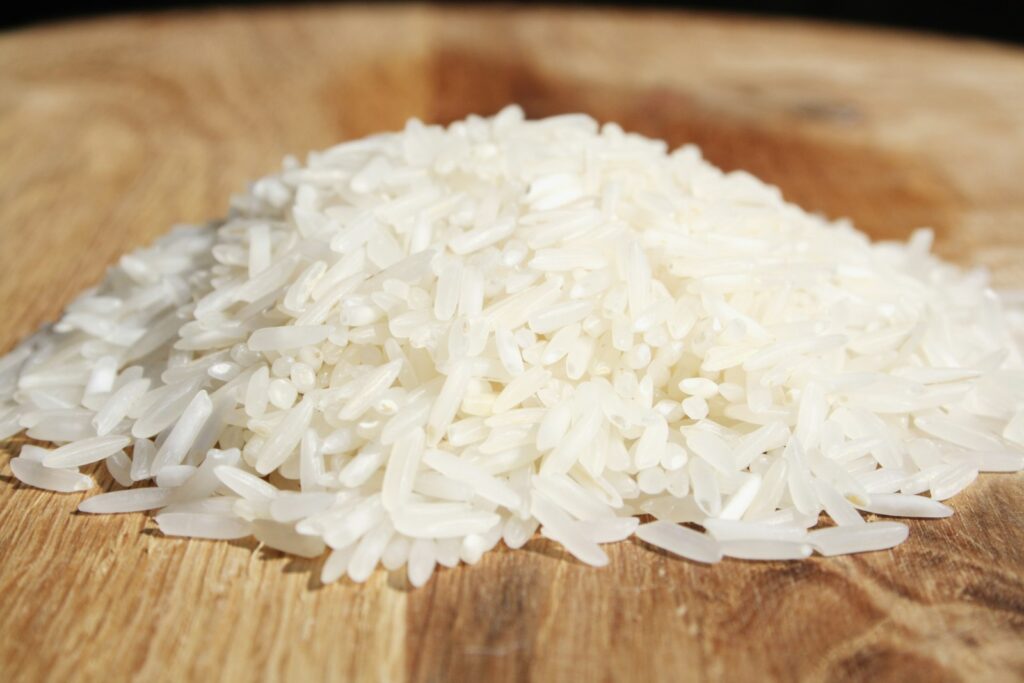
Agriculture Minister Shivraj Singh Chouhan announced two genome-edited rice varieties in New Delhi on 4 May 2025, as All India Radio reported that day and the USDA report records; ICAR’s own release on its website carries the date 4 April 2025, which TAD believes is an error. ICAR describes them as India’s first genome-edited rice varieties and says India is the first country to develop such rice varieties. Both come from genome editing research ICAR began in 2018 under its National Agricultural Science Fund.
- DRR Rice 100 (Kamala), developed by ICAR-Indian Institute of Rice Research, Hyderabad, from Samba Mahsuri (BPT 5204). ICAR says it was developed to carry more grains per panicle, matures about 20 days earlier at around 130 days, has a strong stem and keeps the grain quality of Samba Mahsuri.
- Pusa DST Rice 1, developed by ICAR-Indian Agricultural Research Institute, New Delhi, from MTU 1010. ICAR says it can raise yields by 9.66% to 30.4% in saline and alkaline soils, with potential for up to 20% higher production.
Across the two varieties, ICAR claims a 19% increase in yield, a 20% reduction in greenhouse gas emissions and a saving of 7,500 million cubic metres of irrigation water, along with better tolerance of drought, salinity and climate stress. These are ICAR’s figures. The release does not give the number of trial locations or seasons behind them, and TAD has not seen a peer-reviewed paper reporting the field results.
ICAR lists the target zones as Andhra Pradesh, Telangana, Karnataka, Tamil Nadu, Puducherry and Kerala (Zone VII); Chhattisgarh, Maharashtra and Madhya Pradesh (Zone V); and Odisha, Jharkhand, Bihar, Uttar Pradesh and West Bengal (Zone III). It also says the government allocated INR 500 crore for genome editing in agricultural crops in the 2023-24 budget, and that ICAR has started gene editing work on several crops including oilseeds and pulses.
TAD could not find official figures, as of 31 October 2026, on how much seed of the two varieties has been produced or how much area has been sown. The USDA report of December 2025 said the government was negotiating licensing rights with the owners of the CRISPR-Cas genome editing technologies used to develop the varieties before seed could be released to farmers, and that it could then take two to five years for the varieties to become widely available.
What has happened in India since the rice release
ICAR has continued to publish work on genome editing tools themselves. On its website, after the rice announcement, it reported that ICAR-Central Rice Research Institute in Cuttack had been granted a patent for a compact genome editing system based on TnpB, a nuclease of 408 amino acids, about a third the size of Cas9. In another item it reported that the same institute had developed AI-designed genome editing tools for plants based on the open-source OpenCRISPR-1 nuclease, in a study accepted by the journal New Phytologist.
Private seed companies are preparing to use gene editing in India. On 11 September 2026 Rob Kaan, Corteva’s head of Asia-Pacific and strategic initiatives, said the company planned to bring gene-edited products into India and might extend licensing to include gene editing, Business Standard reported. He said ICRISAT had licensed Corteva’s gene editing technology for climate-resilient rice in Asia and Africa, that pigeon pea work was under way, and described the direction of India’s Seeds Bill as positive.
Corteva’s seed and genetics business has since been spun off as Vylor, which began trading on the New York Stock Exchange on 1 October 2026; TAD reported the spin-off. Vylor’s launch release says it is developing what it calls the industry’s first gene-edited, multi-disease-resistant corn platform, subject to field testing and regulatory reviews.
England’s Precision Breeding Act and how gene editing is regulated there
The Genetic Technology (Precision Breeding) Act 2023 received Royal Assent on 23 March 2023. It defines a precision bred organism as one whose genome has features from modern biotechnology that are stable and could have resulted from traditional processes, such as sexual fertilisation, spontaneous or induced mutation, or cell fusion, and that contains no feature from any other artificial modification technique. Its release and marketing rules apply in England.
For plants, the Act sets out three steps:
- Release: a person must give a release notice to the Secretary of State before releasing a precision bred organism into the environment.
- Marketing: a developer applies for a precision bred confirmation by giving a marketing notice. An advisory committee reports within 90 days on whether the organism is precision bred, and the Secretary of State then issues or refuses the confirmation. The Act also provides for a precision breeding register.
- Food and feed: Part 3 allows regulations to require a marketing authorisation before food or feed from a precision bred organism is sold in England, and to give the Food Standards Agency (FSA) functions including risk assessment. The requirements may include no adverse effects on health or the environment, no misleading of consumers and no nutritional disadvantage.
These provisions came into force for plants on 13 November 2025, under commencement regulations made on 13 May 2025 by Daniel Zeichner, Minister of State at the Department for Environment, Food and Rural Affairs (Defra). The regulations bring the Act into force for precision bred plants only, not animals. The detailed rules are in the Genetic Technology (Precision Breeding) Regulations 2025 (S.I. 2025/581), made the same day, in force from 13 November 2025 and applying in England.
Under those Regulations, a release notice must reach the Secretary of State at least 20 days before a release. Food or feed from a precision bred plant may be placed on the market in England only with a food and feed marketing authorisation issued by the Secretary of State. Applications go to the FSA by one of two routes: Tier 1, for species with a history of safe food use whose edits are not expected to affect nutrition, toxicity or allergenicity, and Tier 2, in which the FSA carries out its own safety assessment.
The FSA’s application guidance, last updated on 4 September 2026, says an application is valid only with a precision bred confirmation, and that the FSA expects to make a recommendation to the Secretary of State around two months after receiving a Tier 1 application, around 12 months for a less complex Tier 2 application and up to 24 months for a complex one.
Defra’s precision breeding register on GOV.UK, last updated on 25 September 2026, lists ten release notices and six precision bred confirmations: barley and wheat from Rothamsted Research, a potato from BioPotatoes, a strawberry from the Simplot Company, a tomato from the John Innes Centre and a banana from Tropic Biosciences UK. The FSA’s register of food and feed authorisations for precision bred organisms had no entries when TAD checked it on 1 November 2026.

Gene editing in the EU: the new genomic techniques regulation
The European Parliament’s Legislative Observatory records that the Commission proposed the law on 5 July 2023, the Council’s position was published on 21 April 2026, Parliament approved it at second reading on 17 June 2026, and the final act was signed that day and published in the Official Journal on 26 June 2026 as Regulation (EU) 2026/1388 on plants obtained by certain new genomic techniques.
According to the text of the regulation, it creates two categories of NGT plant:
- Category 1 plants meet the criteria of equivalence to conventional plants in Annex I, which limits targeted mutagenesis to substitutions or insertions of up to 20 nucleotides and deletions of any length, with at most three per protein-coding sequence and 20 per monoploid genome. Plants with herbicide tolerance or production of a known insecticidal substance among their intended traits are excluded. Seed and other reproductive material of category 1 plants must be labelled NGT-1, followed by the identification numbers of the plants it derives from.
- Category 2 plants need consent for field release, and consent or authorisation before being placed on the market. Labels may mention the traits conveyed, and member states keep the possibility of restricting or prohibiting their cultivation, the recitals say.
Category 1 status is verified before field trials by the national competent authority of the member state concerned, which must prepare a report within 30 working days, with other member states and the Commission able to object within 20 days. Requests made before marketing go to the European Food Safety Authority. Article 5 applies the organic regulation’s ban on GMOs to category 1 plants, although their adventitious or technically unavoidable presence in organic production is not a breach.
Patents get a disclosure duty. Applicants must declare relevant patents or patent applications to the best of their knowledge, and patent holders may declare that they are willing to grant licences on fair and reasonable conditions, though this information has declaratory value only.
Under Article 38, the regulation entered into force on 16 July 2026, the twentieth day after publication, but applies from 17 July 2028; recital 70 says application is deferred so that implementing and delegated acts can be adopted. Articles 29 to 31, on guidance, a code of conduct on patents and a patent expert group, have applied since 16 July 2026, and the Commission must publish guidance on plant intellectual property by 17 July 2028.
How the three gene editing regimes compare
India
India exempts SDN-1 and SDN-2 edits from the GM rules; in our reading, edited crops then follow the normal variety release route through ICAR rather than GEAC appraisal. DBT’s 2022 procedures set the threshold an edited plant must meet for exemption, and RCGM exempted the two rice varieties in May 2023, the USDA report says. TAD has not seen a labelling rule in India for food produced by gene editing.
England
England requires notice before release, a precision bred confirmation before marketing, a public register and a separate FSA-linked authorisation for food and feed.
European Union
The EU requires category 1 status to be verified, labels category 1 seed as NGT-1, keeps category 2 under consent and authorisation, excludes herbicide tolerance from category 1, bars category 1 plants from organic production and adds a patent disclosure duty. Most of it applies from 17 July 2028.
What to watch
- India: official figures on seed production and area sown for the two genome editing rice varieties, and the first gene editing products from private seed firms;
- England: the first FSA food and feed authorisations for precision bred plants, and commencement of the Act for animals;
- EU: the delegated and implementing acts, and the Commission guidance due by 17 July 2028, that will make the gene editing categories work in practice.
What gene editing means for seed companies and food businesses
Seed companies and breeders
For seed companies, India’s exemption shortens the path from edit to variety, but the public sector moved first, and the commercial terms on which ICAR will grant licences for its edited lines have not been published, as far as TAD could find. Corteva’s stated plans and ICRISAT’s licence show that private firms see India as a market for edited traits. Seed suppliers are listed in TAD’s seeds and planting material directory, and our profiles of Bayer and Syngenta Group cover two other large breeders.
Breeding method now matters to investors and partners. When TAD covered OlsAro’s salt-tolerant wheat round, the company’s release did not say which method produced the trait, so its regulatory route in India, Bangladesh or the UK could not be assessed. Our reading is that developers will increasingly need to state the method, because it decides which regime applies. TAD follows these approvals on the Inputs and crop science desk.
Food businesses, processors and exporters
For food businesses in England, food or feed from a precision bred plant needs a food and feed marketing authorisation, applied for through the FSA. For exporters to the EU, the regulation, from 17 July 2028, requires category 1 seed to be labelled NGT-1 and excludes category 1 plants from organic production, which matters to organic rice, spice and tea exporters. India’s rice exporters, whose markets TAD tracks on the Markets desk, will need to know whether buyers accept edited varieties before they enter export supply chains.
For all three markets, the practical issue is traceability, because the regimes differ on what must be declared and labelled. Our analysis is that firms selling across India, England and the EU will need records of breeding methods for each variety they handle.
Gene editing: frequently asked questions
Is gene editing the same as genetic modification?
Not in law. Conventional genetic modification usually inserts foreign DNA, as in Bt cotton or GM mustard. Genome editing makes targeted changes to a plant’s own DNA, and ICAR says its edited rice contains no foreign DNA. India exempts SDN-1 and SDN-2 edits from its GM rules, England regulates precision bred organisms separately, and the EU created a new two-category regime in 2026.
Which gene-edited crops has India released?
ICAR has released two genome-edited rice varieties, DRR Rice 100 (Kamala), developed from Samba Mahsuri by ICAR-IIRR, Hyderabad, and Pusa DST Rice 1, developed from MTU 1010 by ICAR-IARI, New Delhi. Agriculture Minister Shivraj Singh Chouhan announced them on 4 May 2025, as All India Radio reported that day; ICAR’s web release is dated 4 April 2025. ICAR claims a 19% yield increase and lower water use and emissions.
How does India regulate genome editing?
An MoEF&CC office memorandum of 30 March 2022 exempts SDN-1 and SDN-2 genome edited plants free of exogenous DNA from Rules 7 to 11 of the 1989 Rules, and DBT notified safety assessment guidelines on 17 May 2022, according to a government release. By our reading, such crops do not go through GEAC appraisal. The Coalition for a GM-Free India has called the exemption illegal, according to Business Standard.
When did England’s Precision Breeding Act take effect?
The Genetic Technology (Precision Breeding) Act 2023 received Royal Assent on 23 March 2023. Its main provisions came into force for precision bred plants on 13 November 2025, under commencement regulations made on 13 May 2025. They do not yet apply to precision bred animals. The Precision Breeding Regulations 2025 took effect the same day, and Defra’s register listed six precision bred confirmations by 25 September 2026.
What is the EU’s new genomic techniques regulation?
Regulation (EU) 2026/1388, published on 26 June 2026, sorts plants from new genomic techniques into two categories. Category 1 plants are treated much like conventional plants, but their seed is labelled NGT-1, herbicide-tolerant traits are excluded and they are barred from organic production. Category 2 plants need consent or authorisation before release or marketing. It entered into force on 16 July 2026 and most of it applies from 17 July 2028.
What does gene editing mean for seed companies?
In India, genome editing offers a shorter route to market than GM crops, and Corteva said on 11 September 2026 that it plans to bring gene-edited products to India. In the EU, from 17 July 2028, applicants must declare relevant patents, and category 1 seed carries an NGT-1 label. Developers will need to record and disclose breeding methods, because the method decides which rules apply in each market.