PM-KUSUM is the Indian government’s main subsidy scheme for putting solar power into farm irrigation. Run by the Ministry of New and Renewable Energy (MNRE) and launched on 8 March 2019, it subsidises standalone solar pumps and the solarisation of grid-connected pumps, and pays power distribution companies an incentive to buy electricity from small solar plants on farmland, with central support of INR 34,422 crore for about 34,800 MW of capacity, according to the scheme’s comprehensive guidelines.
By 30 June 2026 the scheme had installed more than 11 lakh standalone pumps, but its farmland power plants were far behind target, the implementation deadline had moved to 31 March 2027 and a second phase was being prepared. This explainer sets out the rules, the money, the latest official numbers and what they mean for the businesses that build, finance and buy from PM-KUSUM.
What PM-KUSUM is and who runs it
The full name is Pradhan Mantri Kisan Urja Suraksha evam Utthaan Mahabhiyan. MNRE writes the guidelines, allocates capacity to states and releases central financial assistance (CFA). The states do the work through State Implementing Agencies: distribution companies (discoms), agriculture departments, minor irrigation departments or any other department a state government designates. The guidelines say agriculture departments may be preferred for the solar pump component because of their field network.
The ministry describes PM-KUSUM as demand driven. In a written Lok Sabha answer on 29 July 2026, Minister of State Shripad Yesso Naik said capacities are allocated on the basis of demand received from states and union territories and their performance. The stated aims, set out in the guidelines, are energy and water security for farmers, higher farm incomes, less diesel use on farms and lower pollution.
According to the guidelines, the scheme was scaled up from its pilot stage in 2020-21 and extended in August 2022 until March 2026. MNRE issued revised comprehensive guidelines on 17 January 2024, the ministry noted in a December 2025 parliamentary reply.
The three components of PM-KUSUM
PM-KUSUM has three parts with separate targets: 10,000 MW of small grid-connected plants on farmland (Component A), 14 lakh standalone solar agriculture pumps (Component B) and the solarisation of 35 lakh grid-connected agriculture pumps, including feeder-level solarisation (Component C). The guidelines allow states to move quantities between Components B and C.
Component A: small power plants on farmland
Component A covers solar or other renewable plants of 500 kW to 2 MW, set up by a farmer, a group of farmers, a cooperative, a panchayat, a farmer producer organisation or a water user association. They can also build through a developer, or a farmer can offer the land to the local discom, which then acts as the generator; where land is leased, the landowner earns a lease rent. Plants should preferably sit within five km of a sub-station to keep line costs down.
Discoms notify how much capacity each rural sub-station can take, then buy all the power at a pre-fixed levelised tariff under a 25-year power purchase agreement (PPA) backed by escrow. Bidders post a bank guarantee of INR 1 lakh per MW. The discom earns a performance-based incentive of INR 0.40 per unit purchased or INR 6.6 lakh per MW a year, whichever is less, for five years from commissioning.
Component B: standalone off-grid solar pumps
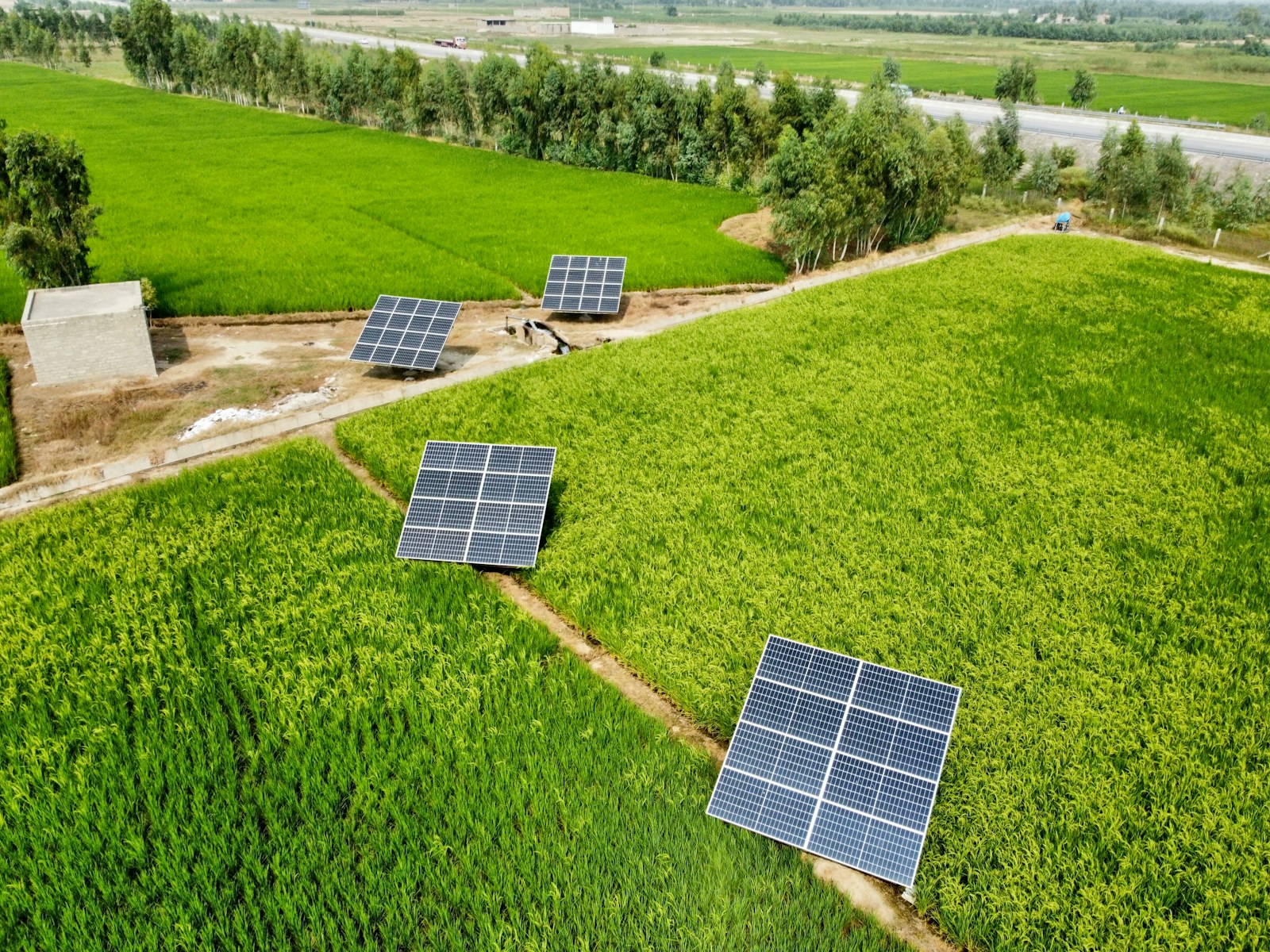
Component B supports individual farmers in areas without grid supply to install a standalone solar pump or replace a diesel pump. Central aid is calculated for pumps of up to 7.5 HP; larger pumps are allowed but the aid stays at the 7.5 HP level. In the north-eastern states, Jammu and Kashmir, Ladakh, Uttarakhand, Himachal Pradesh and the island territories, aid is available for pumps up to 15 HP, capped at 10% of installations.
The guidelines give priority to small and marginal farmers and to farmers who use micro irrigation. New solar pumps are not allowed in groundwater dark zones, although existing diesel pumps there can be converted if the farmer uses micro irrigation. Water user associations, farmer producer organisations and primary agricultural credit societies can install larger shared pumps, with aid counted at up to 7.5 HP per member.
Component C: solarising grid-connected pumps
Component C has two routes. Under individual pump solarisation, a farmer with a grid-connected pump adds solar panels of up to twice the pump’s capacity in kW and sells surplus power to the discom. Under feeder-level solarisation, a state solarises a whole agricultural feeder instead, through a plant built in CAPEX mode or by a renewable energy service company (RESCO) that supplies power for 25 years.
In the RESCO route, developers are chosen on the lowest tariff for 25 years of supply after the central subsidy, and the PPA must stop them selling to any buyer other than the discom. In the CAPEX route, the central government pays 30% (50% in the north-east, hill states and island territories) and the balance is met through loans from NABARD, PFC or REC.
Who pays: subsidy rates and the money behind PM-KUSUM
For a standalone solar pump, and for the solar part of an individually solarised pump, the centre pays 30% of the benchmark cost or the tender cost, whichever is lower, or 50% in the special category regions. The same rates were set out by the minister in the Rajya Sabha in August 2024. The guidelines say the state provides at least another 30% and the remaining share of up to 40% comes from the farmer or a bank loan.
Farmers can still go ahead if a state does not pay its share. The centre’s 30% (or 50%) stays the same and the farmer bears the remaining 70% in general category states, or 50% in the special category regions. For individual pump solarisation without state subsidy, the guidelines say banks may lend up to 70% of the cost, with income from surplus power sales used to repay the loan.
MNRE’s total central support for the phase is INR 34,422 crore. The ministry said INR 7,106 crore had been released by 30 November 2025. The Notes on Demands for Grants 2026-27 show actual spending of INR 2,560.14 crore in 2024-25, a 2025-26 budget of INR 2,600 crore raised to INR 5,000 crore at revised estimate, and a 2026-27 budget estimate of INR 5,000 crore.
PM-KUSUM progress: the latest official numbers
The most detailed recent data is the annexure to the Lok Sabha answer of 29 July 2026, which gives installations by year as reported by state agencies, up to 30 June 2026. Component A is reported in MW; Components B and C are reported as numbers of pumps.
- Component A (MW installed): 36 in 2021-22, 63.95 in 2022-23, 66.33 in 2023-24, 397.2 in 2024-25, 489.47 in 2025-26 and 673.97 from April to June 2026.
- Component B (pumps installed): 30,674 in 2020-21, 61,076 in 2021-22, 1,18,087 in 2022-23, 1,04,836 in 2023-24, 4,56,144 in 2024-25, 2,93,698 in 2025-26 and 85,473 from April to June 2026.
- Component C (pumps solarised): none in 2021-22 or 2022-23, 9,207 in 2023-24, 3,23,645 in 2024-25, 10,91,757 in 2025-26 and 1,92,449 from April to June 2026.
A PIB research note of 31 July 2026 gives the running totals: nearly 11.49 lakh off-grid solar pumps installed, more than 15.89 lakh agricultural pumps covered through feeder-level solarisation, around 1,726 MW of decentralised capacity commissioned on farmers’ land and over 21.77 lakh farmers benefited. It says PM-KUSUM added 7.6 GW of the 16.3 GW of distributed solar capacity installed in India in 2025-26.
Against the targets, our reading is that Component B is past 80% of its 14 lakh pumps, while Component A has reached less than a fifth of its 10,000 MW. Sanctions run far ahead of building: by 30 November 2025 MNRE had sanctioned 9,964 MW under Component A, 13,08,644 standalone pumps under Component B, and 55,828 individual pumps plus 35,27,492 pumps through feeder solarisation under Component C.
A few states account for most of the activity. Maharashtra installed 1,51,791 standalone pumps and solarised 6,07,403 pumps in 2025-26, according to the annexure. Rajasthan added 500.09 MW of Component A plants between April and June 2026, out of 673.97 MW nationally. The ministry also cited a third-party evaluation by PTC India which, it said, found that adoption of solar pumps had raised farmers’ incomes by around 40%; the answer did not give the sample or method.
Deadlines, extensions and PM-KUSUM 2.0
The first phase was due to end on 31 March 2026, the period that still appears in the 2024 guidelines. In his 29 July 2026 answer, the minister told the Lok Sabha that the implementation timeline had been extended until 31 March 2027 for all components. That is the official position as of 31 October 2026.
Trade reports add conditions we have not seen in a published order. SolarQuarter reported in April 2026 that the extension covers projects whose PPA was signed or notice to proceed issued by 31 December 2025. On 1 October 2026, Energetica India reported that MNRE had extended the last date for financial closure under Components A and C to 30 November 2026, and had said no completion extension would be granted beyond 31 March 2027.
A successor scheme is being prepared but, as far as we could find, had not been approved as of 31 October 2026. Down To Earth reported in December 2025 that an official said the expenditure finance committee had cleared PM-KUSUM 2.0. In January 2026, All India Radio reported that New and Renewable Energy Minister Pralhad Joshi said India was preparing to roll out PM-KUSUM 2.0 with more focus on decentralised solar and agri-photovoltaic systems.
SolarQuarter also reported that the Department of Expenditure had said committed liabilities under the current scheme would be carried into PM-KUSUM 2.0, then under consideration. The Centre for Science and Environment (CSE) said on 28 October 2026 that the government had indicated a dedicated agrivoltaics component, that public reporting had cited a requirement of up to INR 51,000 crore including existing liabilities, and that the outlay, eligibility and guidelines still needed formal approval.
Domestic content, ALMM and vendor rules under PM-KUSUM
Components B and C carry strict domestic content rules. The guidelines make it mandatory to use indigenously manufactured solar modules with indigenous solar cells, and say the motor-pump set, controller and balance of system should also be made in India. Vendors must declare any imported components. That clause sits in the guidelines’ sections on Components B and C. Separately, MNRE’s approved list of models and manufacturers (ALMM) applies to solar projects under government schemes.
The ALMM rules tightened in 2025. In an office memorandum of 23 September 2025, MNRE said the first ALMM List-II for solar PV cells was issued on 31 July 2025, and that net-metering and open access projects commissioned on or after 1 June 2026 must use cells from List-II as well as modules from List-I. The memorandum states that there shall be no relaxation in domestic content rules for MNRE schemes including Components B and C of PM-KUSUM.
State tenders follow MNRE specifications, and only BIS-certified equipment may be supplied. Three kinds of bidder may take part: system integrators and aggregators that meet the tender criteria, manufacturers of solar modules, pumps or pump controllers, and joint ventures between the two. The ministry can also publish an approved list of models, and vendors must then supply only from that list.
The after-sales obligations are heavy. A vendor must provide a five-year maintenance contract, including insurance, quarterly inspections, remote monitoring, a helpline and district-level service centres. Funds may be released against a bank guarantee valid for five years. A vendor that fails to install its allocated pumps on time can be debarred for five years.
Why PM-KUSUM progress differs so much between states
The ministry’s own explanation, in the July 2026 answer, is component by component. Under Component A, the availability of farmers’ land and access to low-cost finance decide uptake. Under Component B, states that provide their share on time and in full have installed more pumps. Under Component C, states that pay higher subsidies for agricultural power are separating farm feeders and solarising them. It named Rajasthan, Maharashtra and Haryana as front runners.
Independent analysts read the record in a similar way. CSE’s assessment of 28 October 2026 said simpler farmer-facing models had reached scale, while decentralised and feeder-level projects needed closer coordination among state agencies, discoms, regulators, developers, lenders and landowners. CSE put Component B at about 11.9 lakh pumps and Component A at around 2,400 MW, both above the official figures to 30 June 2026; it did not give a date for its numbers.
Binit Das, programme manager for renewable energy at CSE, said: “PM-KUSUM 2.0 should move from allocation-led implementation to a readiness-driven, outcome-linked approach.” CSE also warned that cheaper pumping can increase groundwater extraction without safeguards, a point that matters after the 2026 monsoon ended at 87% of normal and the Centre asked states to plan rabi crops around water budgets.
What PM-KUSUM means for pump makers, EPC firms, discoms and lenders
This section is our analysis of the official rules and data above. For solar pump makers and system integrators, the market is a series of state tenders whose timing depends on each state finding its 30% share. Volume has been concentrated: Maharashtra alone accounted for over half of the 2,93,698 standalone pumps installed nationally in 2025-26. Suppliers listed in our farm energy directory face the domestic cell rule, five-year maintenance liabilities and bank guarantees that tie up working capital.
For EPC firms and RESCO developers, the growth has moved to Component C. Pumps solarised in 2025-26 were more than three times the 2024-25 number, much of it through feeder-level plants built under EPC contracts or 25-year RESCO supply deals. Component A plants are small, and the developer pays for the line to the sub-station. If the reported conditions hold, projects without a PPA or notice to proceed by 31 December 2025 depend on the next phase.
For discoms, PM-KUSUM offers an incentive of up to INR 6.6 lakh per MW a year for five years on Component A power and counts towards renewable purchase obligations. The guidelines argue that a state’s existing farm power subsidy could repay a feeder solarisation loan in five to six years. Against that, CSE notes that late payment by discoms raises developers’ borrowing costs, so payment security will shape bids.
For banks, NBFCs and development lenders, the scheme creates farm term loans for the farmer share, project loans for Component A and RESCO plants, and state borrowing from NABARD, PFC and REC for CAPEX feeders. Priority sector status helps. Lenders already active in farm credit through the Kisan Credit Card will meet the same borrowers here; our agri-finance supplier listings cover the wider market. The reported financial closure date of 30 November 2026 sets a near-term pipeline.
For module and cell manufacturers, Components B and C are a protected market: every subsidised pump must use Indian cells and modules. Irrigation equipment firms, listed in our irrigation and water directory, gain from the scheme’s preference for micro irrigation users and from its dark-zone rule.
What is still unsettled
The biggest open question is the shape of PM-KUSUM 2.0: its outlay, its components, whether storage is included and how an agrivoltaics component would be defined and paid for. Until guidelines are notified, suppliers cannot know benchmark costs, subsidy rates or domestic content rules for the next phase. CSE’s INR 51,000 crore figure is reported, not confirmed.
Second, the gap between sanctions and installations is large. With 9,964 MW sanctioned under Component A by 30 November 2025 and around 1,726 MW commissioned by 30 June 2026, a large share of the sanctioned pipeline cannot be finished by 31 March 2027 unless the pace changes sharply. How the Department of Expenditure’s carry-forward of committed liabilities works in practice will decide which projects survive the transition.
Third, the data needs care. The December 2025 headline of 10,203 MW installed across all components cannot be checked against component tables that count Components B and C in pumps rather than MW, and CSE’s Component A figure differs from the July 2026 annexure. Readers should cite the dated source for each number. Coverage of this and related policy is collected on our Soil, water and climate desk.
PM-KUSUM: frequently asked questions
What does PM-KUSUM stand for and who runs it?
PM-KUSUM stands for Pradhan Mantri Kisan Urja Suraksha evam Utthaan Mahabhiyan. The Ministry of New and Renewable Energy designs the scheme, allocates capacity to states and pays the central financial assistance. State Implementing Agencies, such as discoms or agriculture departments, run tenders and installations. The scheme was launched on 8 March 2019 with central support of INR 34,422 crore for about 34,800 MW of solar capacity across its three components.
How much subsidy does PM-KUSUM give for a solar pump?
For a standalone solar pump, the centre pays 30% of the benchmark or tender cost, whichever is lower, or 50% in the north-eastern states, hill states and island territories. The state adds at least 30%, and the farmer or a bank loan covers up to 40%. If a state does not pay its share, the farmer can still proceed with central aid and bear the remaining 70%, or 50% in the special category regions.
How many solar pumps have been installed under PM-KUSUM?
A PIB research note of 31 July 2026 said nearly 11.49 lakh off-grid solar pumps had been installed under Component B, against a target of 14 lakh, and more than 15.89 lakh grid-connected agricultural pumps were covered through feeder-level solarisation. The Lok Sabha annexure of 29 July 2026 shows 2,93,698 standalone pumps installed in 2025-26 and 85,473 from April to June 2026.
Has PM-KUSUM been extended beyond March 2026?
Yes. In a written Lok Sabha answer on 29 July 2026, the Minister of State for New and Renewable Energy said the implementation timeline had been extended until 31 March 2027 for all components. Trade reports say the extension covers projects with a PPA or notice to proceed issued by 31 December 2025, and that MNRE extended the financial closure date for Components A and C to 30 November 2026.
What is PM-KUSUM 2.0?
PM-KUSUM 2.0 is the proposed second phase. Minister Pralhad Joshi said in January 2026, according to All India Radio, that it would focus more on decentralised solar and agri-photovoltaic systems. CSE said on 28 October 2026 that the government had indicated a dedicated agrivoltaics component and that the outlay, eligibility and guidelines still awaited formal approval. We found no Cabinet approval as of 31 October 2026.
Do PM-KUSUM solar pumps have to be made in India?
Yes, under Components B and C. The guidelines require indigenously manufactured modules with indigenous solar cells, and say the motor-pump set, controller and balance of system should also be made in India. MNRE’s office memorandum of 23 September 2025 said there would be no relaxation in domestic content rules for these components, and that net-metering and open access projects commissioned from 1 June 2026 must use cells from ALMM List-II.