Micro irrigation, the delivery of water to crops through drip lines or sprinklers instead of flooding a field, is a central part of India’s farm water efficiency policy. Its main vehicle is Per Drop More Crop (PDMC), a centrally sponsored scheme that pays 45% to 55% of the unit cost of drip irrigation and sprinkler systems, and 90% for Forest Rights Act patta holders.
According to a government backgrounder published by PIB on 29 August 2026, PDMC had brought over 115 lakh hectares under micro irrigation as of July 2026. This explainer covers how the subsidy works, the latest official numbers and target, the Micro Irrigation Fund run with NABARD, state top-ups and what all of it means for drip and sprinkler makers, dealers and lenders.
What micro irrigation is and why the government pays for it
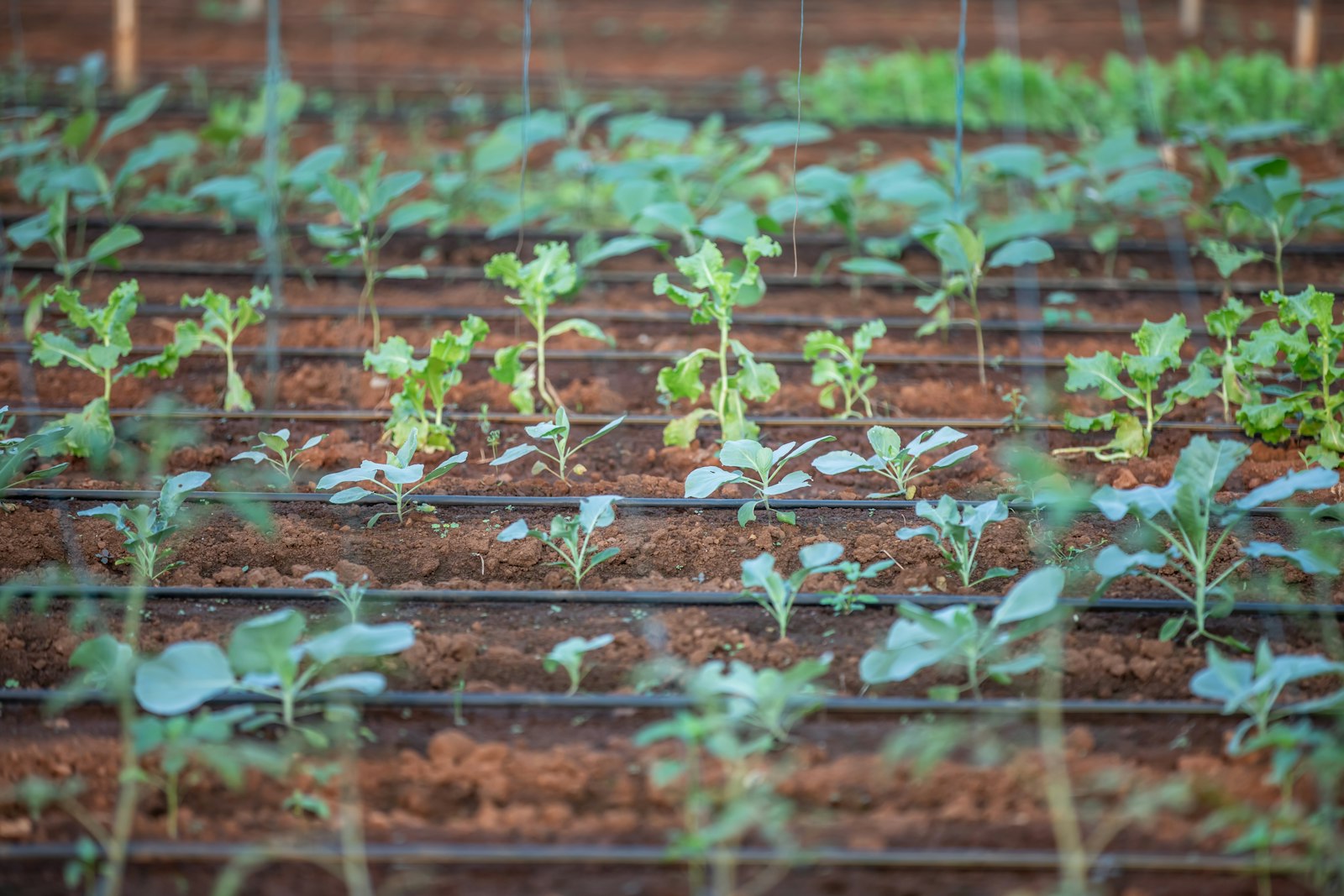
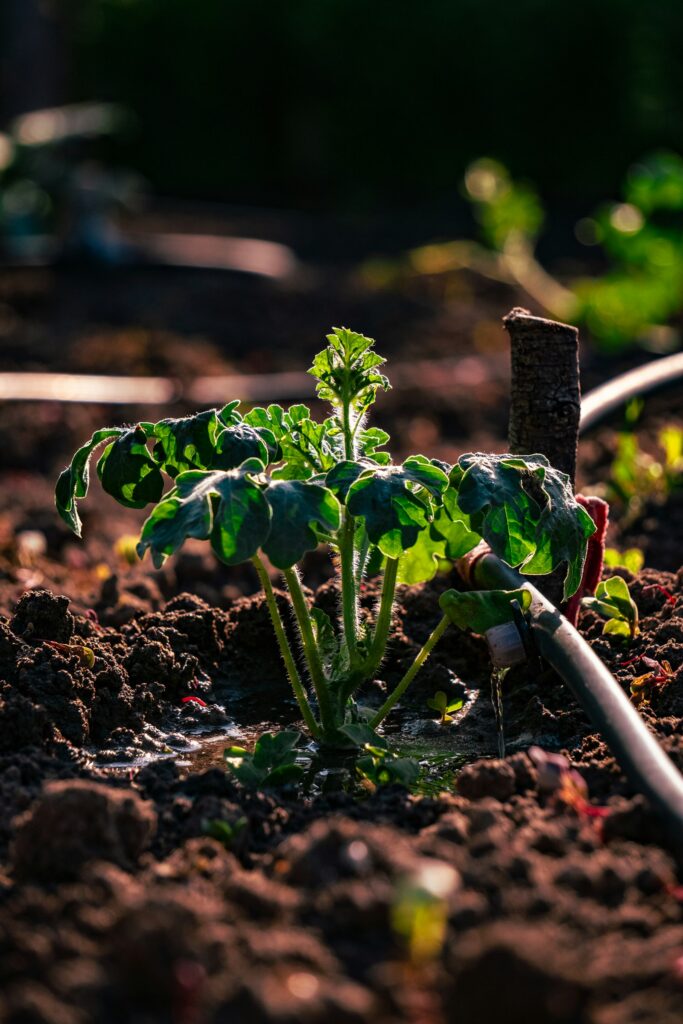
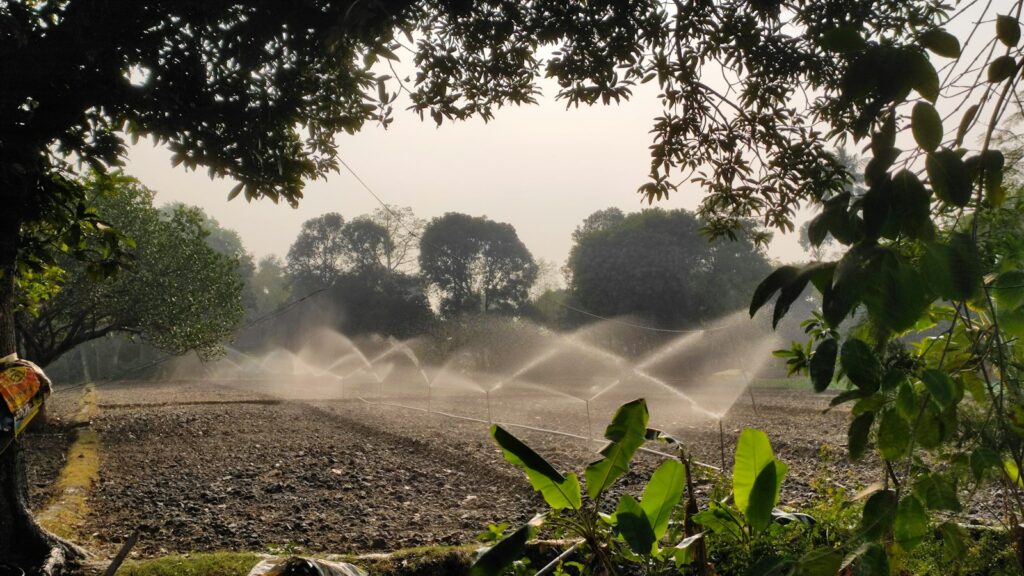
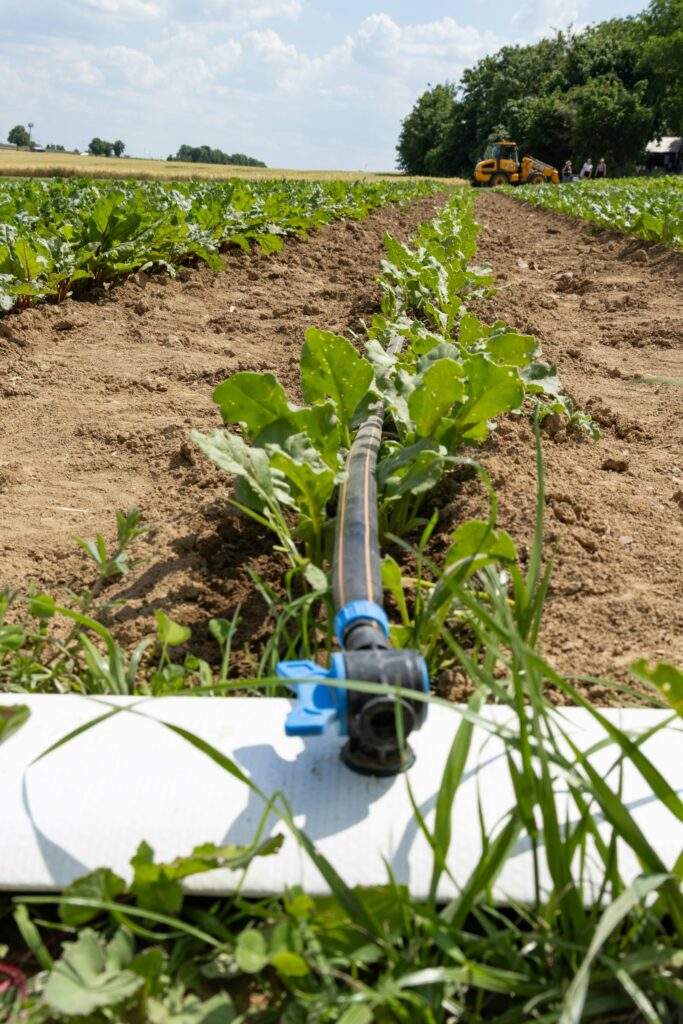
Drip irrigation delivers water close to the root zone through pipes, laterals and emitters; sprinkler systems spray water over the crop under pressure. Both need pipework and water under pressure, so they carry an up-front cost that the subsidy is meant to share. India’s scheme covers both technologies under one heading.
The case for public money rests on water savings. In a Lok Sabha answer of 4 December 2025, the Jal Shakti ministry said that according to the Indian Council of Agricultural Research (ICAR), the water use efficiency of micro irrigation, including drip irrigation, is as high as 80% to 95%, against 30% to 50% for conventional flood irrigation. States also report yield gains: Uttar Pradesh informed the Jal Shakti ministry, which told the Lok Sabha in December 2025, that farmers in the Etawah and Fatehpur constituencies had registered around 25% to 30% higher crop yields after adopting micro irrigation.
The 4 December 2025 answer set micro irrigation inside wider water policy. One goal of the National Water Mission is to raise water use efficiency by 20%, and a Bureau of Water Use Efficiency was set up to meet it. The bureau ran the mission’s Sahi Fasal campaign, which encourages farmers in water-stressed areas to grow less water-intensive crops and explains micro irrigation techniques, planning 14 campaigns across seven states in 2024-25, all completed.
Support has a long history. According to the PIB backgrounder, it began in January 2006 as a centrally sponsored scheme for micro irrigation, was upgraded to the National Mission on Micro Irrigation in 2010-11 and in 2014-15 became the On Farm Water Management component of the National Mission for Sustainable Agriculture. It has been called Per Drop More Crop since 2015-16.
Per Drop More Crop: how the micro irrigation scheme works
PDMC was launched in 2015-16 as a component of the Pradhan Mantri Krishi Sinchayee Yojana (PMKSY), the umbrella irrigation programme whose other components include the Ministry of Jal Shakti’s irrigation projects and a watershed component. From 2022-23 it has been implemented under the Pradhan Mantri Rashtriya Krishi Vikas Yojana (PM-RKVY), as several parliamentary answers, including one on 28 July 2026, confirm.
The Department of Agriculture and Farmers Welfare sets the rules and releases central assistance; the states run it according to their Annual Action Plans. Money flows in stages. In a reply on 28 July 2026, the ministry said Maharashtra had been allocated central assistance of INR 249.76 crore for 2026-27 under PDMC-PMRKVY, against which a first mother sanction of INR 124.88 crore had been issued.
Because PDMC now sits inside PM-RKVY, it has no separate line in the Union Budget. The Notes on Demands for Grants 2026-27 show Rashtriya Krishi Vikas Yojana at INR 8,550 crore for 2026-27, against a revised estimate of INR 7,000 crore for 2025-26 and actual spending of INR 7,386.14 crore in 2024-25.
How much of that goes to micro irrigation depends on the states, which can move PM-RKVY money between components, according to the PIB backgrounder. It said INR 3,226.36 crore of the INR 8,957.72 crore released or sanctioned under PM-RKVY in 2025-26 was for PDMC.
Micro irrigation subsidy rates and limits
The central assistance rates are uniform across states. In a Lok Sabha answer of 17 March 2026, the ministry said financial assistance for installing drip and sprinkler systems is provided at 55% of the unit cost for small and marginal farmers, 45% for other farmers and 90% for holders of pattas under the Forest Rights Act. It said the pattern applies to all states and union territories without any difference by area or district, including flood-prone regions.
- Area cap: assistance is limited to 5 hectares per beneficiary, according to the December 2025 answer.
- Repeat claims: a beneficiary is eligible for subsidy again on the same land after seven years, according to an August 2025 answer.
- Top-ups: many states add their own subsidy on top of the central rate, which can bring the farmer’s share close to zero.
- No blanket free supply: in August 2025 the ministry said no proposal for 100% subsidy in drought-prone talukas was under consideration.
For suppliers, the unit cost matters as much as the percentage, because the subsidy is calculated on the scheme’s unit cost rather than on the invoice. The agriculture ministry told the Lok Sabha in July 2025 that the operational guidelines allow a 25% higher unit cost for North Eastern and Himalayan states and 15% higher for other low-penetration states, including Punjab. We could not open the guidelines themselves, which hold the cost norms and technical standards, so this explainer does not quote them.
How much land is under micro irrigation in India
The headline figure is cumulative. The August 2026 PIB backgrounder put the area covered since the scheme began at over 115 lakh hectares as of July 2026, about 8.11% of India’s net sown area. An earlier Lok Sabha answer of 29 January 2026 gave 107.71 lakh hectares since 2015-16, of which 11.82 lakh hectares, about 11%, was in Maharashtra. We found no official split between drip and sprinkler area.
Recent annual figures, from the August 2025 answer, show a steady pace rather than growth:
- 2023-24: 11.40 lakh hectares covered, with central assistance of INR 2,103.50 crore released.
- 2024-25: 11.19 lakh hectares covered, with central assistance of INR 2,793.37 crore released.
- Last three years: central assistance of INR 8,123.24 crore released, according to the August 2026 backgrounder, which said 12.30 lakh farmers benefited in 2025-26, about 20% of them women.
State figures show how concentrated activity is. The PIB said Maharashtra, Karnataka, Andhra Pradesh, Tamil Nadu, Gujarat and Rajasthan recorded the largest areas in 2025-26. Maharashtra received INR 909.79 crore of central assistance from 2022-23 to 2024-25 and covered 4,15,501.09 hectares in its districts over the last three years, with Jalgaon alone at 71,513.97 hectares, according to the January 2026 answer. In Madhya Pradesh, the ministry reported in July 2026 PDMC releases of INR 185.25 crore and spending of INR 170.46 crore in 2025-26.
The government wants faster growth. A PIB backgrounder of 9 May 2026 said it has set a target of bringing 100 lakh hectares under micro irrigation over the five years from 2025-26 to 2029-30, which needs coverage of at least 20 lakh hectares a year through PDMC.
Our reading of these numbers is that India added roughly 11 lakh hectares a year under the scheme in 2023-24 and 2024-25, about half the pace the target needs, while central assistance released rose by about a third as area covered dipped slightly. We found no official national figure for 2025-26 area coverage alone as of 31 October 2026.
The Micro Irrigation Fund with NABARD
Alongside the subsidy, the government runs a lending window for states. According to the Jal Shakti ministry’s December 2025 answer, it created a Micro Irrigation Fund (MIF) with an initial corpus of INR 5,000 crore with NABARD in 2018-19. The agriculture ministry pays interest subvention of 2% on loans taken by states, met from the budget of PM-RKVY-PDMC. The same answer said the Union Cabinet approved doubling the corpus to INR 10,000 crore at its meeting on 3 October 2024.
The fund lends to state governments, not to farmers. Its main purpose, the ministry said in a reply of 10 March 2026, is to help states raise money for top-up or additional incentives to farmers over and above the PDMC subsidy. States may also use it for innovative or integrated micro irrigation projects. Rajasthan, for example, had a project sanctioned in 2021-22 to give farmers additional top-up subsidy for micro irrigation installed under PDMC.
Lending has been concentrated in a few states. In a Lok Sabha answer of 29 July 2025, the agriculture ministry listed MIF loans to eight states totalling INR 4,709.06 crore sanctioned and INR 4,061.31 crore disbursed. Tamil Nadu had the largest sanction, at INR 1,357.93 crore, followed by Haryana, Gujarat and Rajasthan. We found no later total as of 31 October 2026.
For lenders and suppliers, the practical effect is that a state’s top-up, and therefore the farmer’s final cost, can depend on the state’s borrowing as well as its budget.
State programmes and top-up subsidies
States decide how generous micro irrigation becomes for the farmer. The details given to Parliament in 2026 show wide variation.
Maharashtra
Maharashtra adds 25% for small and marginal farmers and 30% for others under its Chief Minister Sustainable Agriculture Irrigation Scheme, plus 10% for Scheduled Caste and 15% for Scheduled Tribe farmers through two state schemes. The January 2026 answer said total subsidy reaches up to 80% for small and marginal farmers, 75% for others and up to 90% for Scheduled Caste and Scheduled Tribe farmers. Of the INR 909.79 crore of central assistance the state received from 2022-23 to 2024-25, Solapur accounted for INR 66.24 crore and Nandurbar for INR 57.77 crore.
Tamil Nadu
Tamil Nadu gives small and marginal farmers 100% subsidy through PDMC and its additional state share, and the state also bears the 5% GST on micro irrigation components, according to information the state gave for the July 2026 answer. It said about 80% of its PDMC allocation goes to small and marginal farmers, and that applications, from registration to final fund release, run through a portal.
Other states
Rajasthan had a Micro Irrigation Fund project sanctioned in 2021-22 for top-ups, and Dausa district alone had 13,046 hectares under micro irrigation through PDMC as on 28 February 2026. Punjab also routes its top-up through the fund, taking effective subsidy to 90% for Scheduled Caste, small and marginal and women farmers and 80% for others, according to the July 2025 answer.
In Assam, 68,607 farmers had benefited since the scheme began, and the state received INR 107.03 crore of central assistance over the last three years, according to the March 2026 answer. Assam is also among the states that provide top-up subsidy.
Canals, solar pumps and groundwater: where micro irrigation fits
Micro irrigation needs pressurised water at the farm gate, and two newer programmes aim to provide it. On 9 April 2025 the Cabinet approved Modernization of Command Area Development and Water Management (M-CADWM) as a sub-scheme of PMKSY. The December 2025 answer said it would build backend infrastructure for micro irrigation from existing canals or other water sources up to the farm gate, about 1 hectare, through pressurised pipe networks, with pilots in 23 states and union territories.
The second link is solar pumping. The guidelines of PM-KUSUM, the solar pump scheme, give priority to farmers who use micro irrigation, and allow diesel pumps in groundwater dark zones to be converted to solar only if the farmer uses micro irrigation. Suppliers of pumps and drip systems can therefore sell into the same subsidised projects; both appear in our farm energy and irrigation and water supplier listings.
The pressure behind both is groundwater. In an answer of 4 August 2026, the agriculture ministry said an ICAR assessment found about 2.89 million hectares of rice grown in 68 districts receiving less than 650 mm of rain a year, and about 0.721 million hectares of sugarcane in 91 districts receiving less than 700 mm. Rice, sugarcane, cotton and jute together occupy about 62.7 million hectares, nearly one-third of the gross cropped area, the answer said.
The ministry added that ICAR has standardised irrigation scheduling and drip fertigation for different crops, and that the Prime Minister Dhan-Dhaanya Krishi Yojana covers irrigation development among its interventions in 100 aspirational agricultural districts. After a weak 2026 monsoon, the Centre also asked states to plan rabi crops around water budgets.
What micro irrigation means for drip and sprinkler makers, dealers and financiers
This section is our analysis of the official data. For drip and sprinkler manufacturers, PDMC sets the size of the subsidised market and the state action plans set its timing. Demand of around 11 lakh hectares a year is spread across states with very different top-ups, so a supplier’s order book depends heavily on the six states the PIB says covered the largest areas in 2025-26. Reaching the government’s pace of at least 20 lakh hectares a year would nearly double the annual market. Coverage of the equipment side appears on our Machinery desk.
The seven-year rule creates a replacement market: land that received subsidised drip irrigation in 2015-16 or later becomes eligible again after seven years, so the oldest scheme installations are already eligible again. Makers that keep records of past installations, and service networks that can assess worn laterals and filters, are best placed for that business.
For dealers and installers, cash flow follows subsidy release. Central money reaches states in tranches, as the Maharashtra mother sanction shows, and states then pay out; Tamil Nadu, for one, runs every step to final fund release through a portal. MPs from Maharashtra asked in July 2026 whether the government would address delays in drip subsidy payments; the reply did not announce a special scheme. Dealers that extend credit while subsidy is pending carry that timing risk.
For banks, NBFCs and other financiers, the farmer’s share, 45% to 55% of the cost norm before any state top-up, is the lending opportunity, along with the cost above the norm and the 5-hectare cap for larger growers. Lenders already serving farm borrowers through the Kisan Credit Card meet the same customers here; our agri-finance listings cover that market. The Micro Irrigation Fund is a state-level product, so it shapes top-ups rather than retail lending.
For pipe makers and EPC contractors, M-CADWM’s pressurised pipe networks and the solarised pumps under PM-KUSUM extend the market upstream of the farm. For farmer producer organisations that aggregate demand or run custom services, explained in our FPO guide, shared pumps and pipe networks may matter more than individual drip kits.
What is still unsettled, in India and beyond
Three points remain open. First, we found no official national area figure for 2025-26 alone as of 31 October 2026, so it is unclear how close the scheme is to the 20 lakh hectare annual pace its target needs. Second, states can move PM-RKVY money between components, which makes the central budget line a weak guide to demand. Third, the latest Micro Irrigation Fund lending figures we found date from July 2025, so it is unclear how much of the enlarged fund has been used.
Water scarcity is also a live issue for growers in England. As we reported on 1 October 2026, the Environment Agency let licence holders who fill storage reservoirs for spray or trickle irrigation abstract outside their licensed period from 1 to 31 October 2026. On 15 October the government declared severe drought in parts of six English counties. Its drought package for farmers, announced on 14 August 2026, includes up to £15 million for on-farm reservoirs. Related coverage is on our Soil, water and climate desk.
Micro irrigation: frequently asked questions
What is micro irrigation?
Micro irrigation is the application of water close to the crop through drip lines with emitters or through sprinklers, instead of flooding the field. In India it is promoted mainly through the Per Drop More Crop scheme. According to ICAR, as cited by the Jal Shakti ministry in December 2025, its water use efficiency can reach 80% to 95%, against 30% to 50% for conventional flood irrigation.
What is Per Drop More Crop?
Per Drop More Crop is the centrally sponsored scheme that subsidises drip and sprinkler systems in India. It was launched in 2015-16 as a component of the Pradhan Mantri Krishi Sinchayee Yojana and, from 2022-23, has been implemented under the Pradhan Mantri Rashtriya Krishi Vikas Yojana. The Department of Agriculture and Farmers Welfare provides the central assistance, and states run it through annual action plans.
How much subsidy is available for drip irrigation in India?
The central rate is 55% of the unit cost for small and marginal farmers, 45% for other farmers and 90% for Forest Rights Act patta holders, applied uniformly across states. Assistance is limited to 5 hectares per beneficiary. Many states add top-ups: Maharashtra takes the total to up to 80% for small and marginal farmers, while Tamil Nadu gives them 100%.
How much land is under micro irrigation in India?
A PIB backgrounder of 29 August 2026 said Per Drop More Crop had brought over 115 lakh hectares under micro irrigation as of July 2026, about 8.11% of net sown area. Annual coverage was 11.40 lakh hectares in 2023-24 and 11.19 lakh hectares in 2024-25, according to an August 2025 Lok Sabha answer. The government’s target is 100 lakh hectares from 2025-26 to 2029-30.
What is the Micro Irrigation Fund?
The Micro Irrigation Fund is a lending window with NABARD, created in 2018-19 with an initial corpus of INR 5,000 crore. It lends to state governments so they can pay top-up incentives beyond the central subsidy or fund integrated projects, with the agriculture ministry paying 2% interest subvention. The Jal Shakti ministry told the Lok Sabha that the Union Cabinet approved doubling the corpus to INR 10,000 crore on 3 October 2024.
Can a farmer get the subsidy again for the same land?
Yes, but only after seven years. The agriculture ministry told the Lok Sabha in August 2025 that a beneficiary becomes eligible for subsidy again on the same land after a seven-year period. Assistance remains capped at 5 hectares per beneficiary. For equipment makers, this rule means land covered in the early years of the scheme is already eligible for replacement systems.