APEDA, the Agricultural and Processed Food Products Export Development Authority, is the Indian government body that registers exporters of rice, meat, fruit, vegetables and processed foods, funds export infrastructure and runs the traceability systems that importers and foreign regulators use to check Indian produce. Its products made up more than half of India’s agricultural exports in 2024-25.
This explainer covers the law behind the authority, the products it controls, how registration works, the latest official export figures, the new export support scheme for 2026-27 to 2030-31, its traceability and organic certification systems, and what all of it means for exporters, FPOs and processors.
What APEDA is and the law behind it
The authority is a statutory body. It was created under the Agricultural and Processed Food Products Export Development Authority Act, passed by Parliament in December 1985 as Act No. 2 of 1986, and took effect on 13 February 1986 through a Gazette notification. It replaced the Processed Food Export Promotion Council, according to APEDA’s own account.
The authority works under the Ministry of Commerce and Industry. It has its head office in New Delhi and lists 18 regional offices, from Ahmedabad and Bengaluru to Guwahati, Raipur, Srinagar, Varanasi and Visakhapatnam. The Raipur office opened in January 2026.
Section 4 of the Act sets out a large board. The chairman is appointed by the Central Government, and the members include the Agricultural Marketing Adviser, three Members of Parliament, representatives of central ministries such as agriculture, commerce, finance and food, rotating state and Union Territory members, bodies such as ICAR, twelve industry representatives and two specialists.
Section 10 sets out its duties: developing export industries through financial assistance and feasibility studies, registering exporters for a fee, fixing standards and specifications for exports, inspecting meat and meat products, improving packaging and overseas marketing, collecting statistics and training people in the trade.
The scheduled products, and what falls outside them
The remit is defined by the Act’s schedules, so the authority covers some farm exports and not others. Its website groups the scheduled products as follows.
- Fruits, vegetables and their products; meat, poultry and dairy products.
- Confectionery, biscuits and bakery products; honey, jaggery and sugar products.
- Cocoa and chocolate, and alcoholic and non-alcoholic beverages.
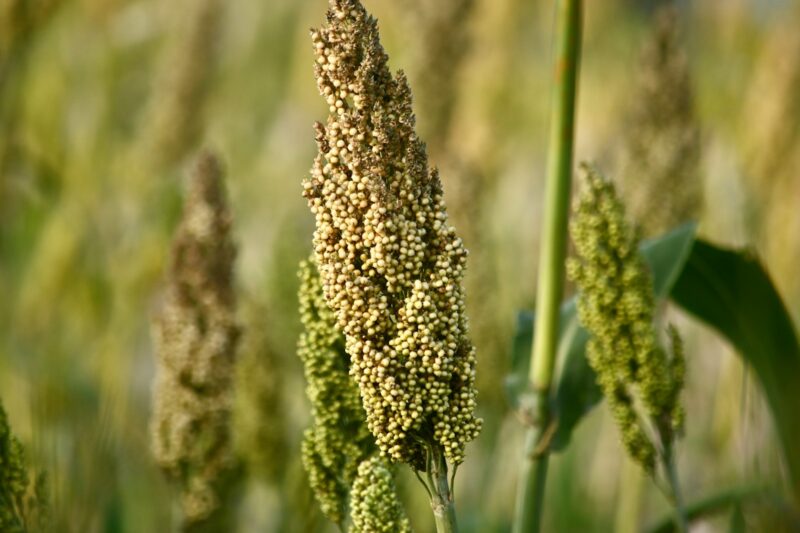
- Cereals and cereal products; groundnuts, peanuts and walnuts; cashew nuts and their products.
- Pickles, papads and chutneys; guar gum; floriculture products; de-oiled rice bran; green pepper in brine.
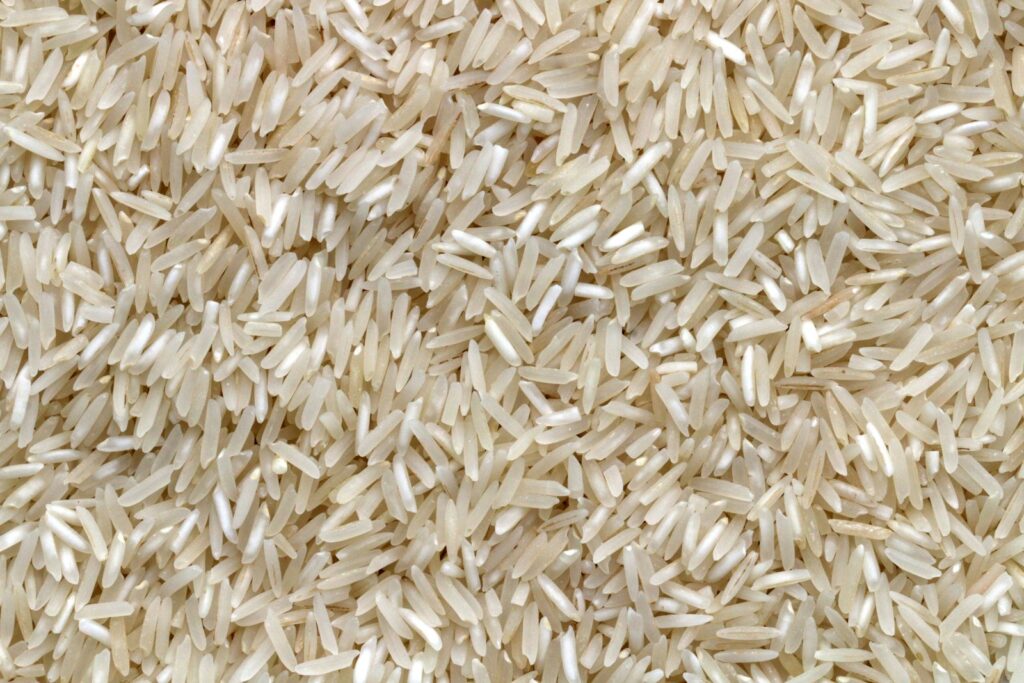
Basmati rice sits in the Second Schedule, added by an amendment published on 6 March 2009. Under a DGFT notification dated 14 June 2021, cashew kernels, cashew nut shell liquid and cardanol also come under the authority, which also monitors sugar imports.
What it does not cover matters just as much for a new exporter. Coffee and natural rubber, for example, have their own statutory commodity boards under the Department of Commerce, the Coffee Board and the Rubber Board. An exporter should check which body governs its product before applying for registration. That is general guidance; the schedules themselves are the legal test.
Registration: the RCMC and who needs one
Registration is a legal duty, not an option. Section 12 of the Act says every person exporting a scheduled product shall apply to the authority for registration within one month of undertaking the export. Under the original Act, registration stayed in force until the authority cancelled it.
In practice exporters apply for a Registration-cum-Membership Certificate (RCMC). Since 17 July 2023 the application has been filed online as an e-RCMC on the DGFT portal, after the exporter has an Importer Exporter Code, according to an APEDA circular. Its registration procedure sets out the terms below.
- Fee: INR 5,900, made up of a INR 5,000 registration fee and INR 900 GST at 18%.
- Validity: five years, with renewal at the same INR 5,900 fee. Amendments are free.
- Merchant exporters need a signed copy of the IEC. Manufacturers also need proof of manufacturing, from FSSAI, Udyam registration or an MSME certificate for most foods, the state horticulture department for flowers and seeds, or the excise commissioner for alcoholic drinks.
APEDA’s annual report for 2024-25 lists 31,702 RCMCs at 1 April 2024, 9,580 new ones and 1,458 that expired in the year, and gives a total of 42,740. That total adds the expired certificates rather than deducting them; opening plus new minus expired would be 39,824, by TAD’s arithmetic, so the report does not show clearly how many RCMCs were valid at 31 March 2025. The same report counts 51,491 basmati Registration-cum-Allocation Certificates and 38,602 peanut Certificates of Export issued in 2024-25.
Agricultural exports of scheduled products: the latest official figures
The most recent full-year breakdown of APEDA products in an official document is for 2024-25. According to the APEDA annual report 2024-25, published on 13 April 2026, exports of APEDA scheduled products reached USD 28,601 million (INR 236,391 crore) in 2024-25, up 11% from USD 25,667 million in 2023-24. Other tables in the same report give USD 28,590 million and USD 28,682 million for the same year.
India’s total agricultural exports were USD 51,913 million in 2024-25, up 6% from USD 48,757 million, the report says. Scheduled products therefore made up 55% of agricultural exports, against 53% a year earlier. Processed value-added products accounted for USD 8,222 million, which the report gives as 28.67% of a USD 28,682 million total.
The largest product groups in 2024-25
- Non-basmati rice: USD 6,528 million.
- Basmati rice: USD 5,944 million.
- Buffalo meat: USD 4,061 million.
- Miscellaneous processed items: USD 1,680 million.
- Fresh fruits: USD 1,171 million; processed fruits and juices: USD 1,029 million.
- Cereal preparations: USD 934 million; fresh vegetables: USD 894 million; groundnut: USD 795 million; pulses: USD 778 million.
Markets differ by product. Benin, Guinea and Côte d’Ivoire were the largest buyers of non-basmati rice; Saudi Arabia, Iraq and Iran of basmati; and Vietnam, Egypt and Malaysia of buffalo meat. Iraq, the UAE and the Netherlands led for fresh fruit, and Bangladesh, the UAE and Malaysia for fresh vegetables. The top ten markets took 49% of exports of scheduled products.
TAD found no official total for APEDA’s scheduled products in 2025-26. The Department of Commerce put India’s agricultural exports at a record USD 52.55 billion in 2025-26, up 2.8% from USD 51.12 billion in 2024-25, with rice the largest item at USD 11.5 billion, according to a government release of 10 June 2026. Its 2024-25 total is lower than the USD 51,913 million in APEDA’s annual report, so the two series should not be compared directly.
Export support: from FAS to Bharat Krishi Niryat Yojana
For the 15th Finance Commission cycle, 2021-22 to 2025-26, the authority gave support under its Agriculture and Processed Foods Export Promotion Scheme, which it also calls the Financial Assistance Scheme, according to a government release of 27 March 2026. The annual report shows INR 80.00 crore sanctioned and spent in 2024-25, including INR 46.00 crore of subsidies, INR 23.60 crore of grants for capital assets and INR 5.40 crore for the North Eastern Region.
The new guidelines say the Financial Assistance Scheme has been renamed the Bharat Krishi Niryat Yojana for the 16th Finance Commission cycle, covering 2026-27 to 2030-31. APEDA’s scheme page lists guidelines dated 6 October 2026. The scheme supports exporters, FPOs, food manufacturers, traders, state governments and testing laboratories through three main components: export infrastructure, quality development and market development.
Assistance rates under the new scheme
- Integrated pack houses and processing units: 40% of cost, or 75% for FPOs, PACS, SC and ST entrepreneurs, women, startups and the north-east, Ladakh, Jammu and Kashmir and island territories, up to INR 250 lakh.
- Reefer vans, mobile pre-coolers and livestock carriers: 40% or 75%, up to INR 200 lakh. Pack house, processing, upgrade and reefer items together are capped at INR 300 lakh per beneficiary per plan period.
- Common infrastructure in the north-east, Ladakh, Jammu and Kashmir and the islands: 90% for government bodies, up to INR 600 lakh.
- Certifications: 50%, up to INR 5 lakh each. Traceability hardware and software for startups: 50%, up to INR 20 lakh; infrastructure and quality projects of BHARATI-registered startups: 50%, up to INR 100 lakh.
- Trial shipments and feasibility studies: 50% or 75%, up to INR 10 lakh each. Brand and IPR registration abroad: up to INR 50 lakh per plan period.
Quality, laboratory and market support
- Testing charges: 50%, up to INR 5,000 a sample and INR 20 lakh per beneficiary over the plan period.
- Upgrading listed laboratories: 50%, or 75% for priority groups, up to INR 200 lakh; in-house laboratory equipment up to INR 100 lakh.
- Sanitary and phytosanitary compliance work: 50%, up to INR 25 lakh per beneficiary.
- Imported plant material: 60% for RCMC holders and 90% for research institutes, up to INR 50 lakh per product.
- Retail listing and slotting fees abroad: 50%, up to INR 8 lakh a year; GI brand promotion: up to INR 100 lakh per beneficiary.
Infrastructure projects carry a processing fee of 5% plus GST on the eligible amount. The 80-page guidelines do not state a total outlay, and TAD did not find one on the scheme page or in APEDA’s tender of 20 July 2026 for a project management unit for the scheme.
The authority also runs BHARATI, short for Bharat’s Hub for Agritech, Resilience, Advancement and Incubation for Export Innovation. Its page names the top 100 startups for the first cohort of an export acceleration programme under the BHARATI Business Challenge 2026.
Traceability: Hortinet, GrapeNet, Basmati.Net and TraceNet
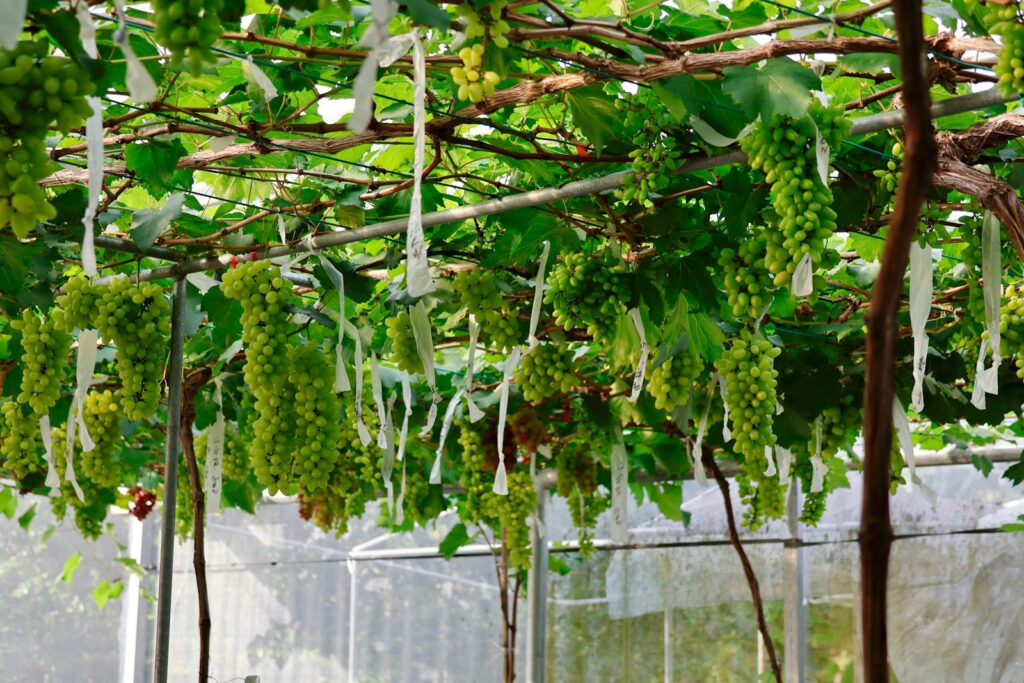
APEDA’s online traceability systems sit behind a large share of Indian fresh food exports. Hortinet is a web service for certifying and tracing fresh horticultural exports. State horticulture departments register farms, laboratories record residue tests, Agmark grades consignments and plant protection authorities issue phytosanitary certificates, all in one chain. It covers grapes through GrapeNet, pomegranate through AnarNet, mango, 44 vegetables, betel leaves, citrus, onions and 13 other fruits.
The system grew out of mango, which the authority calls the first initiative of its kind in India’s fresh produce sector, started in 2006-07. The grape section carries procedures for exporting fresh table grapes to the European Union, dated February 2026, along with residue monitoring plan notices. According to the annual report, 101 pack-houses received recognition or renewal in 2024-25 and about 70 were approved for grape exports to China for 2025.
Other systems cover other chains. Basmati.Net was built under Section 10A of the Act and Section 21 of the Geographical Indications Act, 1999, so buyers can check that rice sold as basmati is genuine; basmati was registered as a GI on 5 February 2016. According to the annual report, Peanut.Net checks peanut consignments for quality compliance before dispatch, and Meat.Net handles health certificates for meat exports. As of 3 January 2025, APEDA had recognised 73 integrated abattoir-cum-meat processing plants, 7 meat processing plants and 4 standalone slaughterhouses.
TraceNet does the same for organic exports, recording forward and backward traces entered by operators, producer groups and certification bodies.
Organic certification under NPOP
APEDA is the secretariat of the National Programme for Organic Production (NPOP), India’s national organic programme. The NPOP portal publishes the eighth edition of the NPOP regulations (2024), which DGFT notified on 5 January 2025 according to the annual report, and links to the list of accredited certification bodies. According to the annual report, 37 certification bodies were active on 31 March 2025; the National Accreditation Body accredited five during the year, two were reinstated and one was suspended.
Organic exports under NPOP were 368,155.04 tonnes in 2024-25, worth INR 5,394.32 crore (USD 665.97 million), to more than 50 destinations, the annual report says. The Bharat Krishi Niryat Yojana guidelines, citing TraceNet certification data, value organic exports at USD 635.10 million in 2025-26. APEDA’s organic products page gives 2023-24 exports of about 2.61 lakh tonnes worth USD 494.80 million, with 7.3 million hectares under organic cultivation: 4.5 million hectares of farm area and 2.8 million hectares of wild area.
The same page says the European Commission and Switzerland recognise NPOP standards and accreditation as equivalent to their own for unprocessed plant products, and that it has been negotiating with Australia, South Korea, Taiwan, Canada and Japan. The NPOP portal also publishes detailed procedures for an organic mutual recognition arrangement between India and Taiwan. For how organic differs from natural farming, see our natural farming explainer.
What APEDA means for exporters, FPOs and food processors
For a new exporter, the first practical point is registration. Section 12 makes it a duty for scheduled products, and the new scheme’s guidelines tie most infrastructure and quality support to APEDA-registered exporters holding an RCMC. At INR 5,900 for five years, the cost is small next to the risk of being shut out.
For FPOs, women-led firms and startups, the new scheme’s enhanced rates matter most: 75% of the cost of a pack house or reefer van instead of 40% changes the payback on export infrastructure. For processors, the support for certification, packaging lines, testing and brand registration abroad lowers the cost of entering regulated markets. That is TAD’s reading of the guidelines, not an APEDA estimate.
For fresh produce and meat exporters, the traceability systems are a condition of trade rather than a service. A grape shipment to the EU needs a registered farm, residue testing and the Hortinet record behind it. Buyers’ food safety regulators act quickly when checks fail, as the UK’s withdrawal of Ukrainian eggs in October 2026 showed.
For importers in the UK, the EU and elsewhere, the practical effect is that an Indian supplier’s APEDA registration number and its Hortinet, Basmati.Net or TraceNet records are documents a buyer can ask for during supplier approval. That is TAD’s reading of how the systems are used, not an APEDA requirement placed on foreign buyers.
For suppliers, the scheme’s spending creates demand for post-harvest and storage equipment and for testing and certification services. Rice traders should read our explainer on India’s rice export policy, and firms selling into Europe our guide to the EUDR. GI products are another opening: APEDA helped ship the first GI-tagged Joha rice from Assam to the UK and Italy on 12 March 2026 and the first GI-tagged Tandur redgram to Australia on 28 October 2026.
What is still unclear about the figures and schemes
Three gaps stand out on 1 November 2026. First, the Bharat Krishi Niryat Yojana guidelines are public, but TAD could not find a total budget for the five-year scheme. Second, the annual report for 2025-26 had not been published, so the latest full-year official breakdown is for 2024-25. Third, the 2024-25 report’s registration total adds expired certificates to new ones, so the number of valid RCMCs is unclear.
On organics, the EU and Swiss recognition covers unprocessed plant products only; in TAD’s reading, processed organic foods for those markets must meet the importer’s own certification route. The annual report records one certification body suspended in 2024-25, a reminder that the integrity of the NPOP system is watched by importers. TAD’s Policy and trade desk and Markets desk will report the 2025-26 agricultural exports data when APEDA publishes it.
APEDA: frequently asked questions
What does APEDA stand for?
APEDA stands for the Agricultural and Processed Food Products Export Development Authority. It is a statutory body created by an Act passed by Parliament in December 1985, Act No. 2 of 1986, which took effect on 13 February 1986. It replaced the Processed Food Export Promotion Council and works under the Ministry of Commerce and Industry, with its head office in New Delhi and 18 regional offices.
Is APEDA registration compulsory for exporters?
Yes, for scheduled products. Section 12 of the APEDA Act says every person exporting a scheduled product shall apply for registration within one month of undertaking the export. Exporters apply online for an e-RCMC on the DGFT portal after obtaining an Importer Exporter Code. The fee is INR 5,900 including GST, and the certificate is valid for five years.
How large are agricultural exports of APEDA products?
According to APEDA’s annual report for 2024-25, exports of its scheduled products were USD 28,601 million in 2024-25, up 11% from USD 25,667 million in 2023-24. That was 55% of India’s agricultural exports of USD 51,913 million. Non-basmati rice, basmati rice and buffalo meat were the three largest product groups by value. The Department of Commerce put total agricultural exports at USD 52.55 billion in 2025-26 but gave no APEDA breakdown.
What is the Bharat Krishi Niryat Yojana?
It is APEDA’s export support scheme for the 16th Finance Commission cycle, 2026-27 to 2030-31, and the new name of its Financial Assistance Scheme. Guidelines dated 6 October 2026 cover export infrastructure, quality development and market development. Pack houses get 40% of cost, or 75% for FPOs, women, startups and other priority groups, up to INR 250 lakh per project.
Does APEDA certify organic products?
APEDA does not certify farms itself. It is the secretariat of the National Programme for Organic Production, under which the National Accreditation Body accredits certification bodies; 37 were active on 31 March 2025. Its TraceNet system records organic supply chains. NPOP organic exports were 368,155.04 tonnes worth USD 665.97 million in 2024-25, according to the annual report.
Which products are outside APEDA’s remit?
APEDA covers only the products in its Act’s schedules, including fruits, vegetables, meat, dairy, cereals, basmati rice, processed foods, nuts, guar gum, floriculture and beverages. Coffee and natural rubber, for example, come under the Coffee Board and the Rubber Board. Exporters should check the schedules, and the commodity board for their product, before registering with any body.