The EUDR, the European Union’s regulation on deforestation-free products, takes effect for most companies on 30 December 2026. From that date, large and medium-sized businesses that place cattle, cocoa, coffee, oil palm, rubber, soya or wood products on the EU market, or export them from it, must show those goods did not come from land deforested after 31 December 2020.
The rules have changed several times since the law was adopted in 2023. This explainer sets out the EUDR as it stands on 1 November 2026, after two delays, a simplification package and a revised product list that takes leather out of scope, and what it means for exporters in India and the UK.
What the EUDR is and what it prohibits
The EUDR is Regulation (EU) 2023/1115, dated 31 May 2023 and published in the Official Journal (L 150) on 9 June 2023. It entered into force on 29 June 2023. The older EU Timber Regulation keeps applying until the new rules replace it, according to a Defra explanatory memorandum submitted on 20 January 2026.
Article 3 sets three conditions. A relevant commodity or product may be placed on the EU market, made available on it or exported from it only if it is deforestation-free, was produced in accordance with the relevant legislation of the country of production, and is covered by a due diligence statement. If any one condition fails, the goods cannot be traded.
Deforestation-free means the commodity was produced on land that has not been subject to deforestation after 31 December 2020, the cut-off date, and, for wood, that it was harvested without inducing forest degradation after that date. The regulation defines deforestation as the conversion of forest to agricultural use, whether human-induced or not. Planting before the cut-off date is therefore not a problem in itself; clearing after it is.
The obligations sit with operators and traders. Article 7 deals with goods from outside the bloc: where a company established outside the Union places relevant products on the market, the first company established in the Union that makes them available is deemed to be the operator. In practice the EU importer carries the legal duty under the deforestation regulation, and it needs data from its suppliers to meet it.
Which commodities and products the EUDR covers
The regulation names seven relevant commodities: cattle, cocoa, coffee, oil palm, rubber, soya and wood. Annex I then lists the products made from them by customs code, so whether a shipment is caught depends on its tariff heading rather than on the commodity alone. The European Commission’s EUDR page names chocolate, tyres and furniture among the derived products linked to deforestation.
Annex I has been revised twice. Regulation (EU) 2025/2650 deleted printed books, newspapers, pictures and other products of the printing industry. Then Commission Delegated Regulation (EU) 2026/2102, adopted on 13 July 2026 and published on 17 September 2026, made a wider revision. It entered into force on the day after publication.
What the delegated regulation removed
- Raw cattle hides and skins, tanned or crust cattle hides, and cattle leather (ex 4101, ex 4104 and ex 4107).
- Conveyor and transmission belts and other articles of vulcanised rubber (ex 4010 and ex 4016).
- Retreaded and used tyres: only tyre treads remain under ex 4012.
- Soya beans for sowing, and aircraft and motor vehicle seats.
What it added from 30 December 2027
Coffee extracts, essences and concentrates (2101 11 00), which covers soluble coffee, come into the EUDR from 30 December 2027, together with frozen cattle tongues and certain palm oil derivatives used in oleochemicals. The same act excludes samples of negligible value, products sent for examination, analysis or testing, reusable packing, waste, used and second-hand goods, and palm oil derivatives to the extent they are used to make medicines. Rubber means only Hevea brasiliensis, and bamboo and rattan sit outside wood.
When the deforestation regulation applies: the dates after two delays
The original timetable has been pushed back twice. Regulation (EU) 2024/3234 of 19 December 2024 moved application to 30 December 2025, with 30 June 2026 for eligible micro and small undertakings. It also gave the Commission until 30 June 2025 to publish its list of low-risk and high-risk countries.
A year later the EU delayed again and changed the substance. Regulation (EU) 2025/2650 of 19 December 2025 was published on 23 December 2025 and entered into force on 26 December 2025. Its recitals point to projections of far more traffic on the EU information system than expected, and to the need to give third countries, member states and companies time to prepare.
The application dates in force on 1 November 2026
- 30 December 2026: large and medium-sized operators, downstream operators and traders of all sizes, and micro and small operators handling products covered by the old EU Timber Regulation, which in practice means wood products.
- 30 June 2027: operators that are natural persons or micro or small undertakings, established as such by 31 December 2024, for all other products.
- 30 December 2027: the products added by Delegated Regulation 2026/2102, such as soluble coffee.
The size split and the timber exception are summarised in the Commission’s Access2Markets notice of 28 January 2026. On 4 May 2026 the Commission’s simplification review, COM(2026) 191, said it did not consider it appropriate to propose further amendments to the basic legal text. Its July 2026 announcement again described the EUDR as applying from the end of December 2026.
Due diligence statements, geolocation and the simplified regimes
An operator’s core duty is to collect information, assess the risk of non-compliance, mitigate it and then file a due diligence statement in the EU information system before the goods move. Article 9 requires the geolocation of every plot of land where the commodity was produced, which the regulation defines as coordinates using at least six decimal digits. For plots of more than four hectares used for commodities other than cattle, a polygon describing the perimeter is needed.
The 2025 amendment to the EUDR narrowed who files. Only the operator that first places a product on the market or exports it submits the statement. Downstream operators and traders no longer file, and only the first of them after the operator must collect and keep its reference number. Those that are not SMEs must still register in the information system. Operators keep their statements, and downstream operators and traders their supplier and customer details, for five years.
The simplified declaration for micro and small primary operators
The amendment created a new category, the micro or small primary operator: a natural person or a micro or small undertaking established in a country classified as low risk that places on the market or exports products it has itself grown, harvested or raised. Such a producer files a one-time simplified declaration with the content set out in a new Annex III, receives a declaration identifier, and may give the postal address of its plots or establishment instead of geolocation.
The EUDR information system has been rebuilt around these changes. Commission Implementing Regulation (EU) 2026/1565, adopted on 13 July 2026 and published the next day, came into force three days after publication, though its rule on which member state receives each statement applies from 15 October 2026. It covers statement submission, the simplified declaration, contingency arrangements if the system fails and other simplifications. The Commission said on 13 July 2026 that the system had reopened at the end of June and that training for companies would start at the end of July.
The Commission’s report estimates that the changes made since 2023 cut annual compliance costs for companies by about 75%, from EUR 8.1 billion a year at entry into force to EUR 2.0 billion a year. The figure covers recurring operating costs, not capital spending on traceability systems.
Country benchmarking: India’s EUDR risk category
Article 29 asks the Commission to classify countries, or parts of them, as low, standard or high risk. The first list is Commission Implementing Regulation (EU) 2025/1093 of 22 May 2025, published on 23 May 2025. India, China and the United Kingdom are on its low-risk list. Four countries are high risk: Belarus, the Democratic People’s Republic of Korea, Myanmar and the Russian Federation. Every country not listed, including Brazil and Indonesia, stays at standard risk.
Under the EUDR, the category matters in two ways. Under Article 13, an operator sourcing only from low-risk countries may use simplified due diligence: it is relieved of the risk assessment and mitigation steps in Articles 10 and 11, but must show the authorities, on request, documents proving a negligible risk of circumvention or mixing, and the full duties return if it learns of a risk. Under Article 16, national authorities must each year check at least 1% of operators handling low-risk products, against 3% for standard risk and 9% for high risk.
The Commission’s May 2026 report says more countries were classed as low risk than its impact assessment had assumed. In its cost estimate, the share of importing operators assigned half the standard compliance cost rose from 20% to 51% as a result.
The ranking is not fixed. As of 1 November 2026, the Commission’s online country classification list did not refer to any revised list, and TAD found no amending act in the Official Journal. In TAD’s reading, a move to standard risk for any sourcing country would bring back full risk assessment for EU buyers of its goods.
The UK angle: Northern Ireland, EU exports and Britain’s own rules
The EUDR is EU law and does not apply in Great Britain, but it reaches UK businesses in two ways. The government’s policy paper on the UK’s approach to deforestation regulations, first published on 23 June 2026 and updated on 2 September 2026, says the regulation will apply in Northern Ireland as part of the arrangements that preserve its access to the EU single market.
The same paper says the UK is classed as a low-risk country, so operators may use simplified due diligence for goods produced in Great Britain that are exported to the EU or moved to Northern Ireland. In Northern Ireland, the Office for Product Safety and Standards is the competent authority for rubber and wood, and DAERA covers palm oil, soy, cocoa, cattle and coffee.
Britain is preparing its own regime alongside the EUDR. The government proposes that businesses in Great Britain with annual turnover over £1 million that use wood, cattle, cocoa, coffee, palm oil, rubber or soy set up a due diligence system, report on it and hold proof of compliance, including geolocation data. Unlike the EUDR, it targets illegal deforestation, though the paper says the government intends in due course to move towards a deforestation-free standard. It says legislation should be delivered in 2027.
The paper aims to keep the information British companies hold broadly the same as an EU due diligence statement needs, so that one process serves both markets. A Defra memorandum on the December 2025 amendment, signed by Mary Creagh, Parliamentary Under-Secretary of State (Minister for Nature) at Defra, says that Article 13(3) of the Windsor Framework applies to it.
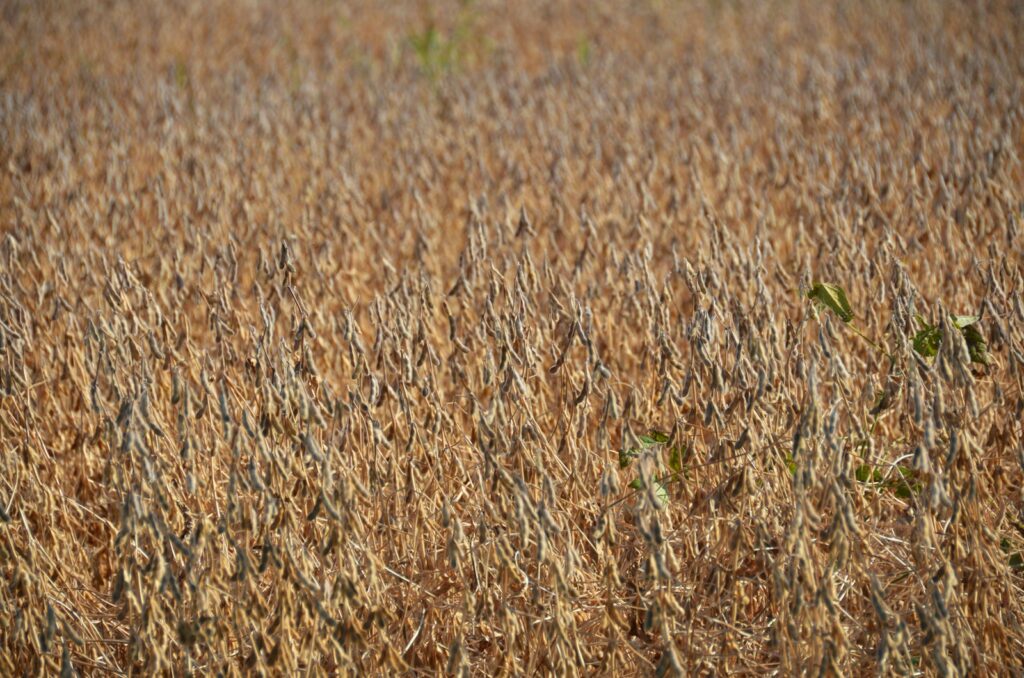
What the EUDR means for Indian coffee, rubber and wood exporters
For Indian and UK suppliers the legal duty sits with the EU buyer, but the evidence starts at the farm or forest. For exporters, the practical effect is that EU importers will ask for plot geolocation, proof of legal production and a clean chain of custody before 30 December 2026. Suppliers who can provide that data quickly will be easier to buy from. That is TAD’s reading, not an official forecast.
Coffee and rubber exporters
Low-risk status removes the risk assessment for EU buyers of Indian coffee and rubber, but in our reading of Article 13 it does not remove the information duty, so plot coordinates are still needed. In a Lok Sabha answer on 3 December 2024, commerce minister Piyush Goyal said the Rubber Board had engaged a service provider to map rubber areas and was developing a traceability system for rubber exports. Instant coffee makers face a later date: soluble coffee enters scope on 30 December 2027.
Indian lawmakers have been critical. According to a PTI report published by The Week on 12 August 2025, a parliamentary panel’s report on the performance of commodity boards called the deforestation regulation a non-tariff barrier, urged the government to raise it at the WTO and said the Coffee Board’s compliance mechanism for growers, still being developed, should be speeded up.
Leather, rubber goods, wood and furniture
In TAD’s reading, leather tanners and hide traders gain most directly from Delegated Regulation 2026/2102, which removes cattle hides, skins and leather. Makers of conveyor belts, vulcanised rubber articles and retreaded tyres also drop out. Wood, timber products and furniture remain covered, and micro and small timber operators get no extra six months.
What it means for EU importers, UK firms and traceability providers
Traceability, mapping and data firms
The geolocation rule creates work for farm software and data providers and for testing and certification firms. India’s public land records may help: our explainer on AgriStack covers the geo-referenced village maps being built under it. Palm oil buyers should read the EUDR alongside our guide to India’s edible oil imports, since certain palm oil derivatives join the scope from 30 December 2027.
EU importers and traders
For EU importers of Indian goods, the deemed-operator rule in Article 7 means they file the EUDR statement, carry the checks and face the penalties that member states set. Article 25 requires fines proportionate to the environmental damage and to the value of the goods concerned, rising for repeated infringements; for a legal person the maximum fine must be at least 4% of its total annual Union-wide turnover. Traders further down the chain keep supplier and customer records for five years; only the first after the operator keeps the reference number.
UK processors and traders
British businesses that ship covered goods to the EU or Northern Ireland need EU-ready data from 30 December 2026, and a GB regime is planned for 2027. Building one data set that meets both, as the government’s paper suggests, avoids doing the work twice.
What is still unsettled about the EUDR
Several pieces were still open on 1 November 2026. The Commission’s report said it planned to launch two repositories before the EUDR applies in December 2026, one listing the relevant legislation of producing countries and one listing certification schemes. As of 1 November 2026, its EUDR implementation page listed both as under construction, with the International Trade Centre. In TAD’s view, whether they arrive in time, and how much weight a certificate will carry, will shape the cost of compliance.
The information system is another test. The recitals of the December 2025 amendment record projections of much higher traffic on the system than anticipated, and the Commission said in July 2026 that more functions would follow. EUDR enforcement will be national, by each member state’s competent authority, so, in TAD’s view, consistency across 27 countries is not assured.
Country benchmarking may change, the EU’s general review of the deforestation regulation is due by 30 June 2030, and Britain’s own rules are still a proposal. TAD’s Policy and trade desk will follow each step.
EUDR: frequently asked questions
When does the EUDR apply?
The EUDR applies from 30 December 2026 to large and medium-sized operators, to downstream operators and traders of all sizes, and to micro and small operators handling timber products covered by the old EU Timber Regulation. Other operators that are natural persons or micro or small undertakings, established by 31 December 2024, have until 30 June 2027. Products newly added in 2026, such as soluble coffee, are covered from 30 December 2027.
Is India classed as low risk under the EUDR?
Yes. Commission Implementing Regulation (EU) 2025/1093 of 22 May 2025 lists India, China and the United Kingdom as low risk. Only Belarus, the Democratic People’s Republic of Korea, Myanmar and the Russian Federation are high risk, and countries on neither list are standard risk. Low risk lets EU operators use simplified due diligence and means authorities check at least 1% of operators each year.
Does an Indian exporter file the due diligence statement?
Usually not. Under Article 7, when a company outside the EU places products on the market, the first EU-established company that makes them available is deemed the operator and files the statement. The Indian supplier still has to supply the information that statement needs, including the geolocation of the plots where the commodity was produced and evidence that it was produced legally.
Is leather still covered by the deforestation regulation?
No. Commission Delegated Regulation (EU) 2026/2102, published on 17 September 2026, removed raw cattle hides and skins, tanned or crust hides, and cattle leather from Annex I. The same act removed conveyor and transmission belts, other vulcanised rubber articles, retreaded tyres, soya beans for sowing and aircraft and motor vehicle seats, and added soluble coffee from 30 December 2027.
Does the EUDR apply in the UK?
It applies in Northern Ireland, under the arrangements that keep its access to the EU single market, but not in Great Britain. British firms that export covered goods to the EU or move them to Northern Ireland must support EU due diligence. The UK is rated low risk. The government plans a separate GB regime against illegal deforestation, with legislation expected in 2027.
What is the cut-off date under the EUDR?
The cut-off date is 31 December 2020. A commodity is deforestation-free only if it was produced on land that has not been subject to deforestation after that date. The regulation defines deforestation as the conversion of forest to agricultural use, whether human-induced or not, so land cleared for a plantation after 2020 disqualifies the produce grown on it.