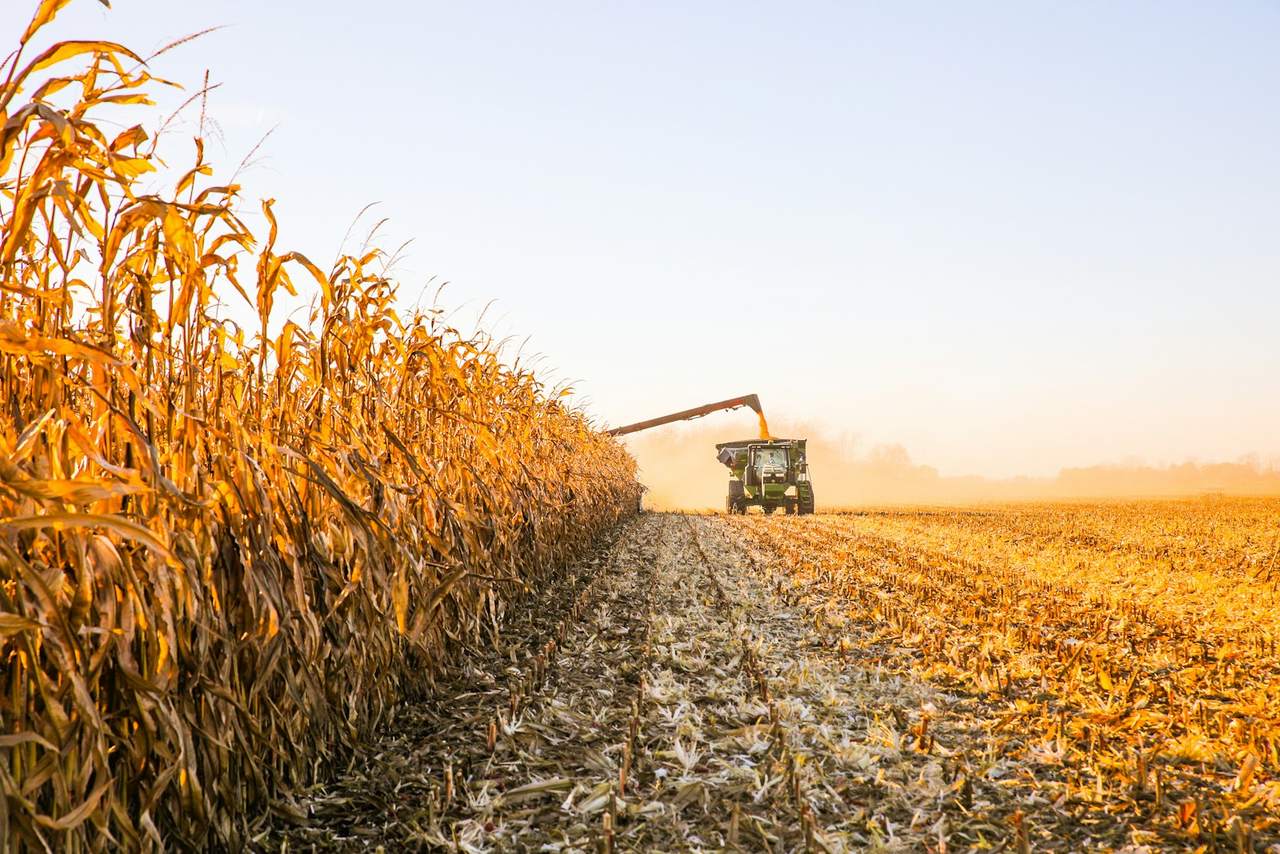
The US Department of Agriculture raised its forecast of the 2026/27 US corn crop by 234 million bushels to 16.0 billion bushels in the October World Agricultural Supply and Demand Estimates (WASDE), approved by the World Agricultural Outlook Board on 9 October 2026. The increase rests on a 2.7 bushel rise in projected yield to 181.2 bushels per acre, with harvested area unchanged at 88.5 million acres. Commodity consultancy McKeany-Flavell said the yield increase surprised the market.
The same report cut USDA’s forecast of India’s 2026/27 rice exports to 24.00 million tonnes from 25.00 million tonnes in September. According to the report, lower Indian exports are the main reason world rice trade for 2026/27 is now projected 1.3 million tonnes lower at 61.4 million tonnes.
Corn and wheat
US corn beginning stocks were raised by 173 million bushels on the basis of the 30 September Grain Stocks report. Total use rises 125 million bushels to 16.3 billion, exports rise 25 million bushels to 3.3 billion and ending stocks rise 282 million bushels to 1.8 billion. USDA lowered the projected season-average price received by US corn producers by $0.10 to $4.70 per bushel. World corn ending stocks are put at 280.4 million tonnes, up 8.3 million tonnes, mainly on larger US stocks, while global coarse grain production is forecast 1.0 million tonnes lower at 1.589 billion tonnes. USDA said corn production in France is forecast 38% below the prior year.
For wheat, the National Agricultural Statistics Service put US production slightly higher at 1,534 million bushels, which USDA says is still the smallest US crop since 1970. US exports were cut 25 million bushels to 750 million. Globally, EU production was lowered 0.8 million tonnes to 133.0 million tonnes and world trade was cut 2.8 million tonnes to 209.0 million tonnes. Russia’s exports are now forecast at 40.0 million tonnes, the lowest in five years, which USDA attributes to logistical disruptions caused by the continuing conflict in the Black Sea region. World wheat ending stocks are put fractionally lower at 276.0 million tonnes. USDA left India’s 2026/27 wheat production unchanged at 121.00 million tonnes and the United Kingdom’s at 12.00 million tonnes.
Rice, oilseeds and cotton
In the world rice table, India’s 2026/27 beginning stocks were raised to 59.00 million tonnes from 58.50 million and its production was left at 147.00 million tonnes. With exports cut, India’s projected ending stocks rise to 57.00 million tonnes from 55.50 million. World rice ending stocks are raised 1.5 million tonnes to 198.5 million tonnes on increases for India and Japan, partly offset by reductions for China, the Philippines and Indonesia. The report does not give a reason for the lower India export forecast.
Global soybean production was increased 0.4 million tonnes to 442.7 million tonnes on a larger US crop, partly offset by lower production for India and the EU. USDA lowered Indonesia’s palm oil production by 2.2 million tonnes to 45 million tonnes because of dry weather, and said global palm oil production in 2026/27 is forecast to fall 2.5 million tonnes from the previous year, leaving global stocks at their lowest since 2017/18. In cotton, India’s 2026/27 imports were raised to 3.30 million bales from 3.00 million and its ending stocks to 10.43 million bales. The next WASDE is scheduled for 10 November 2026.
TAD’s reading
- Rice exporters and millers: USDA now pictures India exporting less and carrying more rice into 2027/28. If that view holds, it adds to the pressure to dispose of surplus stocks at home rather than through export markets.
- Edible oil importers and refiners: A smaller Indonesian palm crop and the lowest global palm stocks since 2017/18 point to a tighter supply year for buyers that depend on imported palm oil.
- Feed and starch users: A 16.0 billion bushel US corn crop and higher world corn stocks ease the global feed grain balance, even as USDA trims EU corn output.
- Wheat buyers: Lower Russian and US export forecasts, with world stocks broadly flat, leave importers leaning more on Argentina and Canada for the rest of the season.