The Centre and the Government of Maharashtra have signed an agreement to upgrade and extend the BharatNet rural broadband network across the state, backed by ₹10,520 crore of central financial support. The agreement was signed on 1 October 2026 at Sanchar Bhawan in New Delhi, according to a release from the Ministry of Communications.
The signatories are Digital Bharat Nidhi (DBN), the universal service fund attached to the Department of Telecommunications (DoT); the Government of Maharashtra; MahaNet Digital Infrastructure Limited (MDIL); Bharat Sanchar Nigam Limited (BSNL); and Maharashtra Information Technology Corporation Limited (MahaIT). The project will follow the state-led model of the Amended BharatNet Program, with MDIL as the implementing agency.
Officials present included Shyamal Misra, Administrator, DBN; Virendra Singh, Secretary, Department of Electronics, Information Technology and Artificial Intelligence, Government of Maharashtra; Buveneswari S., Managing Director, MahaIT; Papa Sudhakara Rao, Director (Enterprise Business), BSNL; and Dinesh Kumar Garg, Deputy Director General (ABP Implementation-I), DoT.
What the programme covers
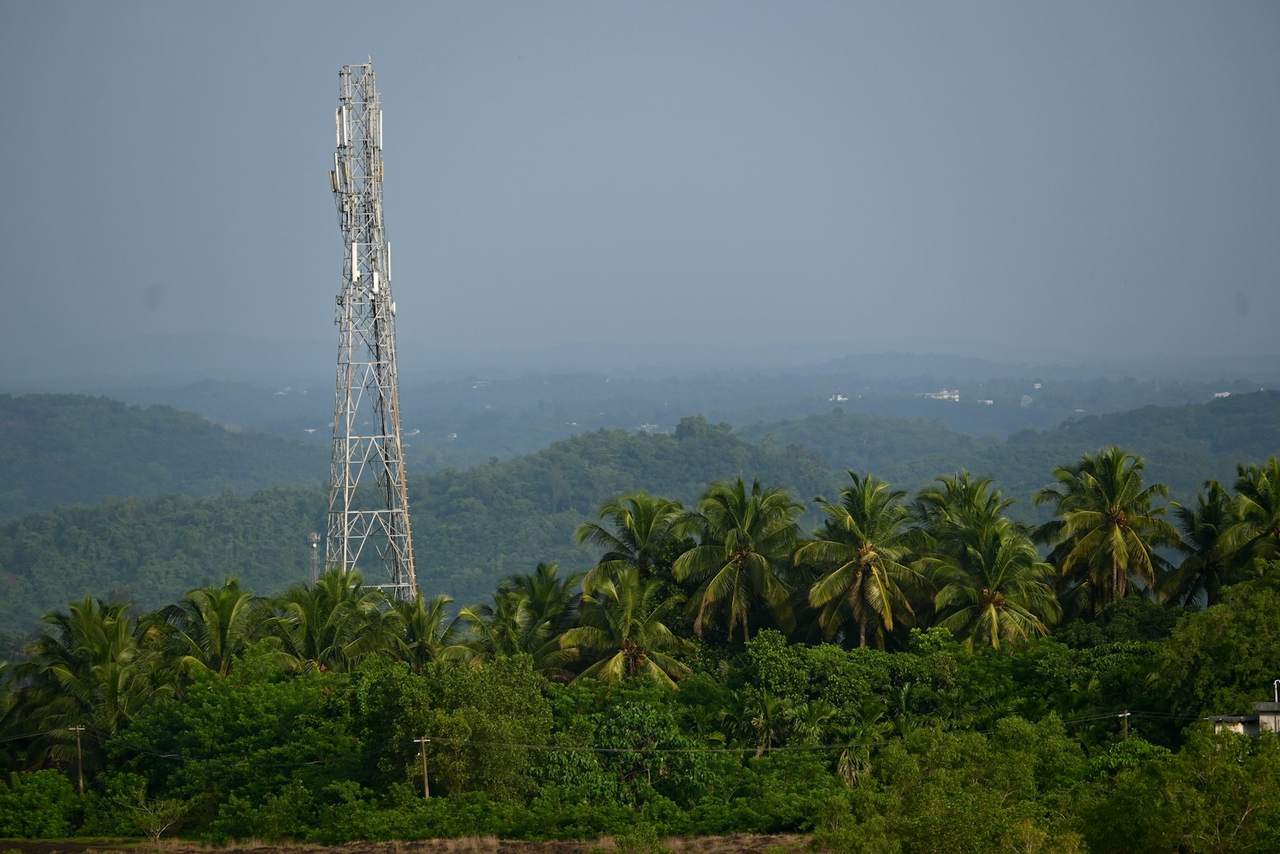
The Maharashtra scope covers 28,237 gram panchayats. Of these, 15,171 panchayats connected in BharatNet’s first phase will be moved from a linear layout to a ring topology, which the ministry says will improve network resilience. A further 12,740 Phase II panchayats and 326 newly created panchayats are included. Another 15,799 villages will be connected on a demand basis.
The ministry says the programme is expected to support more than nine lakh rural home fibre connections with central financial support, and to improve delivery of e-governance, online education, telemedicine, digital payments and other citizen services in rural and remote parts of the state.
The Union Cabinet approved the Amended BharatNet Program on 4 August 2023 to upgrade, consolidate and expand the existing network so that all gram panchayats, and villages on demand, have broadband. DBN is the former Universal Service Obligation Fund, renamed under the Telecommunications Act, 2023.
The release does not give a completion date, the share of costs carried by the state, the operating role BSNL will play or the prices households and businesses will pay for connections. ETTelecom reported the same scope and funding figures on 3 October.
Why it matters for farm data
The agreement comes as the Union agriculture ministry presses states to finish digital farmer registries. At the National Agriculture Conference for the Rabi Campaign 2026 on 28 September, Union Agriculture Minister Shivraj Singh Chouhan asked states to complete the remaining Farmer ID and AgriStack work at a faster pace, including land parcel-related work, according to a ministry release. He also said tenant farmers and farmers cultivating land in different locations must not be left out of the Farmer ID framework.
Neither release links the Maharashtra broadband rollout to AgriStack directly, and the communications ministry did not name agriculture among the services it expects to benefit.
TAD’s reading
- For agtech and input companies: Village-level fibre is the plumbing for app-based advisory, digital payments and field data capture. Firms selling into rural Maharashtra should track the order in which MDIL upgrades panchayats, because upgraded clusters are the obvious places to test connected services first.
- For FPOs and cooperatives: Reliable broadband at panchayat level makes digital records for procurement, input sales and traceability more practical. Until tariffs are published, the cost case for small producer organisations cannot be judged.
- For policy watchers: AgriStack, Farmer ID and digital crop surveys depend on officials being able to update land and crop records from the field. The ministry presents the ring upgrade as a resilience measure; the rollout timetable will decide whether it helps in this rabi season or only in later ones.